
Blog
Wool Drum Carder Guide for Small Fiber Studios
Jul
Quick answer: a wool drum carder is useful when you want to open, blend, and organize wool into batts with less hand-card repetition. It is not a shortcut around washing or teasing fiber. It is a bench tool for makers who already know that wool prep affects spinning, felting, dye blending, and the look of finished batts.
Wool has opinions. Some locks open politely. Some cling together. Some dyed fiber looks beautiful until it is fed too quickly and turns into a lumpy sheet. A drum carder gives you a way to slow that process down and make it repeatable. For a small studio, repeatability is often the whole point.
Why Wool Prep Rewards A Drum Carder
Wool carding is about alignment, air, and control. You are not trying to crush the fiber into submission. You are opening it enough that spinning or felting becomes easier. A drum carder helps by building a batt in thin layers. Each light layer gives the teeth a chance to catch and distribute fiber instead of dragging a thick clump across the surface.
That matters for studio work because wool is rarely one single task. One day you may blend natural colors. Another day you may mix dyed wool with alpaca. Later you may prepare a batt with silk or sparkle for a textured yarn. The carder becomes a repeatable surface where those choices can be tested and refined.
What A Wool-First Buyer Should Look For
A wool-first buyer should think about rhythm more than spectacle. Can you feed with both hands free enough to control the fiber? Can you turn the handle without shifting the carder around? Can you see where the fiber is building up? Can you remove the batt without tearing the whole sheet into frustration?
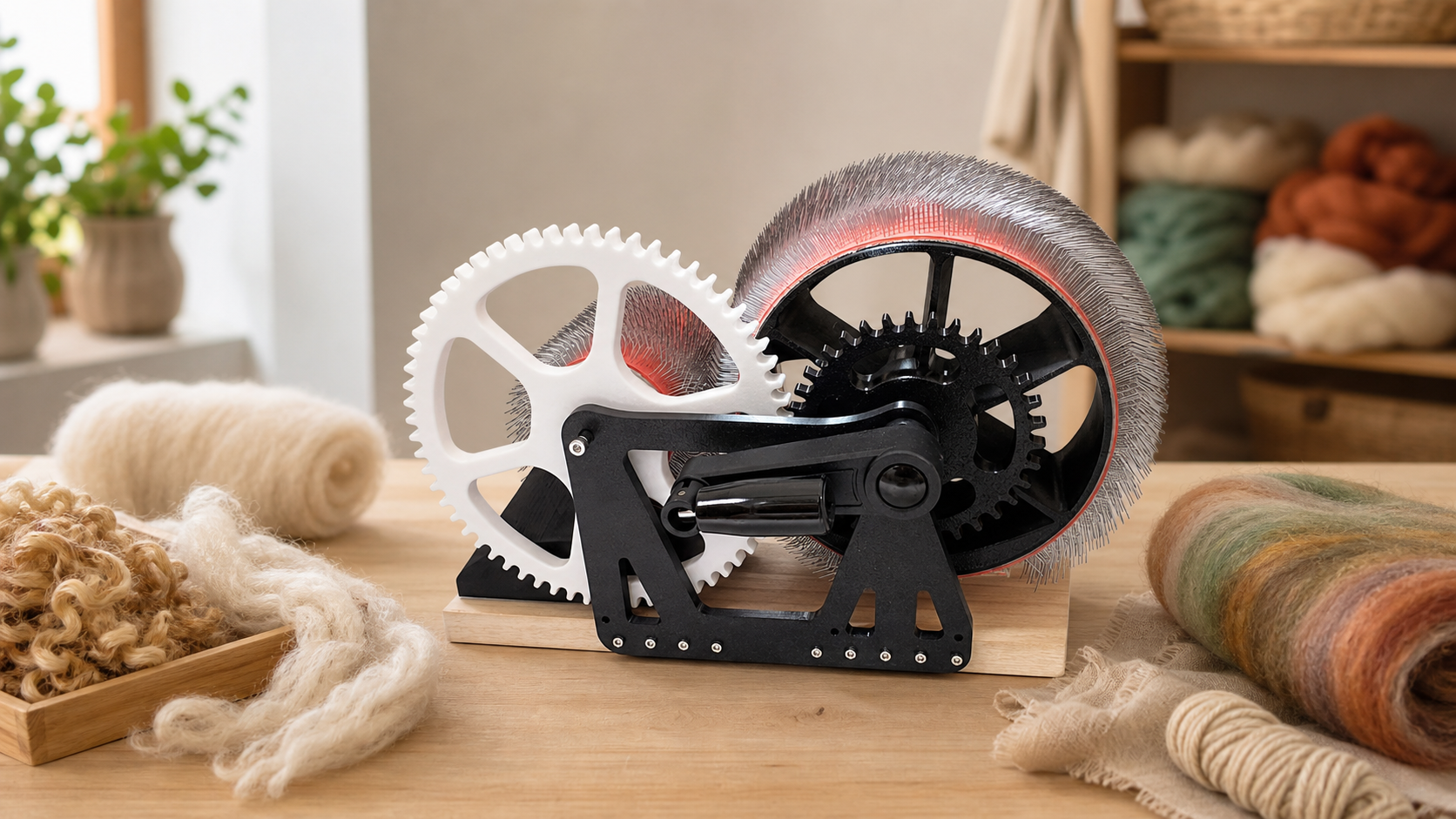
Those are ordinary questions, but they are the ones that decide whether the tool earns its place. Product photos should help you inspect the working side of the tool. Written details should help you understand what is included and how to ask about anything unclear. If you are considering the Studio Drum Carder, read the page with those practical motions in mind.
Prepare Wool Before It Touches The Carder
The simplest way to improve a wool batt is to feed better fiber. Wash and dry fleece properly before carding. Remove obvious debris. Tease locks open if they are compacted. Keep the fiber dry enough that it moves instead of sticking. If you are using commercially prepared wool, loosen it with your hands so it enters as a light web, not a rope.
Overfeeding is the mistake that makes a good tool look bad. A thin layer may feel slow at first, but it usually produces a cleaner batt. Thick handfuls can ride over the teeth, catch unevenly, or create dense patches. If the batt looks uneven, first reduce the amount you feed. Then consider whether the fiber needed more opening before the pass.
Use Wool Blending As A Studio System
A small fiber studio benefits from notes. Write down the wool type, color order, add-ins, and number of light passes you used. You do not need a complicated record. A small notebook beside the bench is enough. The point is to make the second batt less mysterious than the first one.
This is especially helpful when you sell batts or teach workshops. If a customer asks for a similar colorway, notes keep you from guessing. If a student asks why one batt drafted better than another, notes help you explain the difference. A drum carder gives the physical repeatability; your records give the creative repeatability.
When Wool And Alpaca Share The Same Batt
Many makers blend wool with alpaca because wool can add structure while alpaca adds softness and drape. The blend needs patience. Alpaca can be smooth and dense, so feeding it in light, opened layers helps avoid heavy streaks. Wool can act as the organizing fiber when the blend needs more spring.
Do not assume one pass will solve every blend. Sometimes a second light pass improves distribution. Sometimes too many passes flatten the character you wanted. The goal is not to erase each fiber. It is to create a batt that drafts or felts the way you intended.
Who Should Choose Another Tool First
If your wool work is mostly tiny samples, hand cards may be more direct. If you want to paint color across a board and pull rolags, a blending board may be more satisfying. If you process large amounts of raw fleece and have not solved washing and picking yet, start there. A wool drum carder belongs after the basic prep problems are under control.
That boundary is not discouraging. It protects the purchase. A carder used for the right job feels steady and useful. A carder asked to compensate for messy prep feels disappointing.
Buying With Confidence
For wool-centered work, confidence comes from matching the carder to your routine. Read the product page, study the photos, and compare the visible details with the way you prepare fiber now. If you need information that is not listed, use the contact page before buying.
A wool drum carder should make your studio calmer. Fewer repeated hand-carding motions. More consistent batts. Better control over blends. Cleaner decisions about which fibers belong together. When the tool does those things, it has a real place in the room.
See The Wool Carding Setup
Review the Studio Drum Carder product page and compare it with the wool prep routine you want to improve.
FAQ
What wool works best on a drum carder?
Clean, dry, opened wool is easiest to card. The exact breed matters less than preparation, feed control, and whether the fiber is suited to the batt you want to make.
Can I card dyed wool on a drum carder?
Yes, if the dyed wool is dry and opened before feeding. Use light layers to avoid clumps and to keep colors from turning muddy too quickly.
Do I still need hand cards if I own a wool drum carder?
Many makers keep both. Hand cards are useful for samples and small fixes. A drum carder is better for repeated batts, larger blends, and more consistent studio prep.
How do I avoid lumpy wool batts?
Start with better-opened fiber, feed less at a time, and slow down. Lumps often come from asking the carder to handle thick or compacted fiber in one pass.