
Blog
How to Plan Seasonal Fiber Blends With a Drum Carder
Jul
Quick answer: to plan seasonal fiber blends with a drum carder, choose a seasonal mood, build a limited palette, prepare small test batts, record fiber and pass count, then scale only the blends that still look good after handling. Seasonal blends work best when they feel intentional, not when every autumn, winter, spring, or summer color is added at once.
Seasonal fiber blending is fun because it gives a batt a story. Spring can be tender and pale. Summer can be bright and high contrast. Autumn can be warm, smoky, and textured. Winter can be quiet, icy, or deep. A drum carder helps turn those ideas into repeatable batts when the palette stays disciplined.
Pick A Mood Before A Color
Start with mood words, not a basket of fiber. Spring might mean fresh, misty, floral, or new grass. Summer might mean coastal, berry, garden, or festival. Autumn might mean orchard, rust, smoke, or harvest. Winter might mean frost, evergreen, candlelight, or night sky.
Mood words keep the palette focused. Without them, seasonal blends easily become predictable or crowded. You do not need every color associated with a season. You need the few colors that tell the story clearly.
Keep one mood per batt. A blend that tries to be spring meadow, summer beach, and autumn market at once usually loses its point. Save extra ideas for the next sample.
Seasonal restraint makes the color story clearer.
Use A Three-Part Palette
A simple seasonal palette has a base, a bridge, and an accent. The base is the main fiber color. The bridge softens transitions. The accent adds seasonal personality. For autumn, the base might be warm brown, the bridge muted gold, and the accent copper or cranberry. For winter, the base might be natural white, the bridge gray-blue, and the accent deep green.
This three-part structure also makes shopping and storage easier. If you want a stronger gradient, the guide to making ombre batts on a drum carder can help you build smooth seasonal transitions.
Make A Small Test Batt First
Seasonal blends can look beautiful in loose piles and disappointing after carding. Make a small test batt before scaling. Use the same feed order you expect to use later. Keep pass count low enough that the colors still have life.
After the test, ask what changed. Did the accent vanish? Did the warm colors become muddy? Did the pale base look too blank? Did the texture support the mood? Adjust one thing at a time before making a larger batch.
Keep the first test honest by using the same fiber types planned for the final blend. A palette tested in wool may not behave the same when alpaca, locks, or shiny add-ins enter the batt. Seasonal color is only part of the recipe; fiber behavior matters too.
Plan Seasonal Use Cases
The same palette can become different products. A spring batt for spinning may need soft movement. A winter batt for wet felting may need thin layout layers. An autumn art batt may invite locks, texture, and bolder contrast. A summer teaching sample may need clear color steps so students understand the blend.
When the final project is a scarf, the guide to preparing batts for wet felted scarves can help translate the seasonal palette into layout sections.
Create A Repeatable Seasonal Recipe
If a blend works, record it immediately. Write the season, mood words, base fiber, bridge fiber, accent fiber, feed order, pass count, and final use. Photograph the loose fiber and the finished batt. A year later, you will not remember the difference between “a little gold” and “too much gold.”
Repeatable recipes are especially useful for small sellers, gift batches, workshop kits, and annual color stories. They also help you decide which seasonal ideas are worth returning to and which were just fun experiments.
Name the recipe in buyer or project language. “Early spring mist” is more useful than “green mix” when you are choosing between several batts months later. A clear name also helps you remember the mood that guided the color choices.
Set Up The Studio For Seasonal Batches
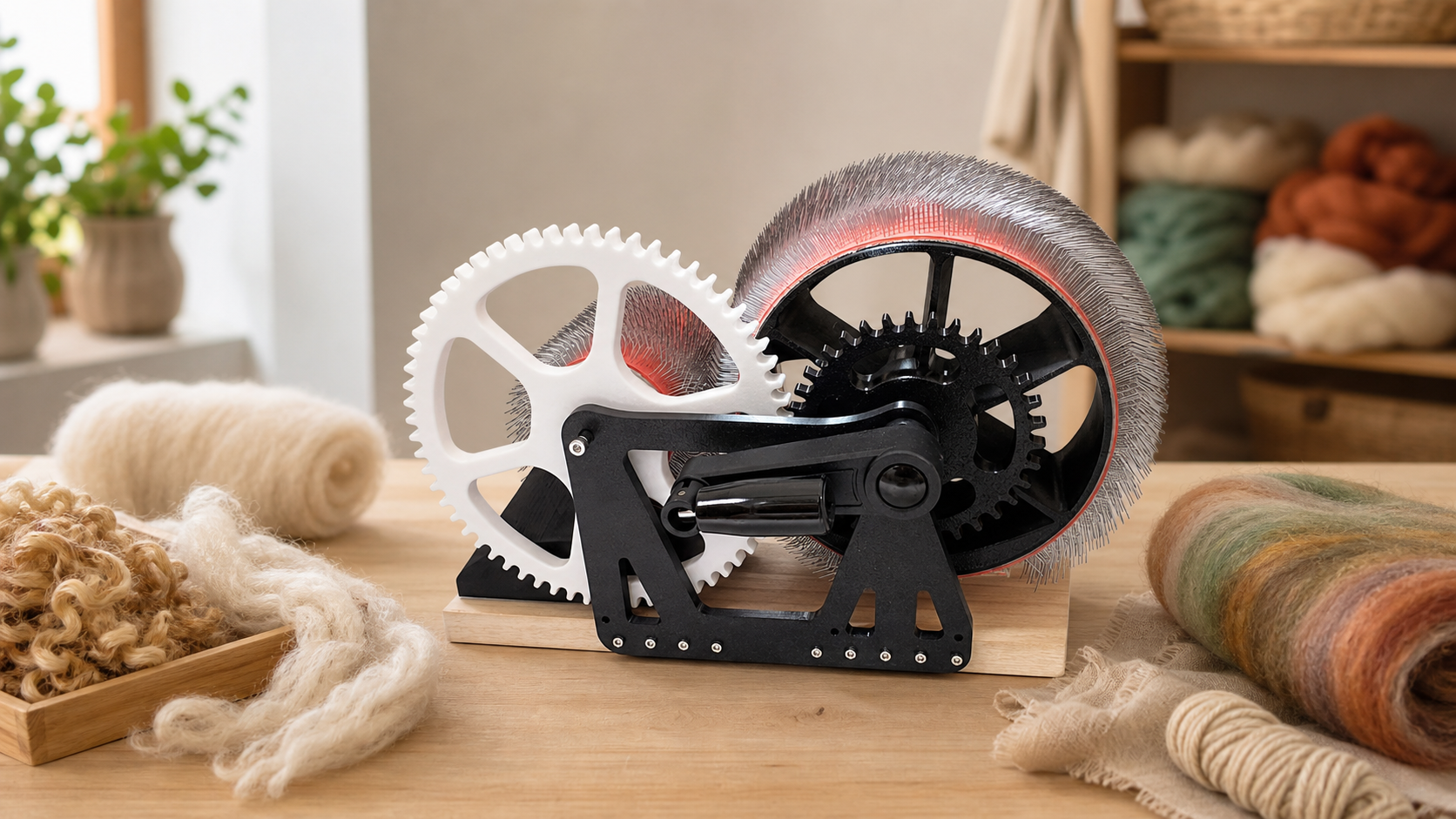
The Studio Drum Carder is worth reviewing if you plan seasonal wool, alpaca, art batt, or small-batch color work. Start from the DrumCarder homepage, then compare the product with your table, fiber storage, and batching habits.
Before ordering, review the shipping policy and refund and returns policy. For setup or product questions, use the contact page and describe the kind of seasonal blends you want to make.
Keep one seasonal idea intentionally simple. A clean winter neutral, spring green, autumn copper, or summer blue can become the reference point that keeps the rest of the palette from becoming too busy.
Turn Seasonal Palettes Into Better Batts
Review the Studio Drum Carder for small seasonal batches, color samples, art batts, scarf fiber, and repeatable studio recipes.
FAQ
How many colors should a seasonal blend use?
Start with three: base, bridge, and accent. Add more only after the first test batt proves the palette needs it.
Why did my seasonal blend look muddy?
Too many colors, too many passes, or strong warm and cool shades blended heavily can make a batt muddy. Simplify the palette and test again.
Should seasonal batts be made as ombre batts?
They can be, especially when the season suggests movement, such as sunrise, frost, leaf change, or ocean color. Keep the color order controlled.
Can I repeat a seasonal blend next year?
Yes, if you record the fibers, rough amounts, feed order, pass count, and photos. Without notes, seasonal blends are hard to recreate accurately.
What is the easiest first seasonal project?
Make one small wool batt with a base, bridge, and accent color. Use related colors first so the blend stays harmonious while you learn the process.