
Blog
How to Card Wool With a Drum Carder
Jul
Quick answer: to card wool with a drum carder, start with clean and dry wool, open it lightly by hand, feed thin layers onto the carder, build the batt gradually, remove it carefully, and clean the working area before the next blend. The smoothest batts usually come from patience, not pressure.
Drum carding looks simple from across the room. Fiber goes in, a batt comes out. Up close, the difference between a lovely batt and a stubborn clump is often the amount of wool in your hand. Too much fiber at once makes the carder work harder and gives you less control. Thin feeding feels slower, but the finished batt usually pays you back.
Prepare The Wool First
Start by checking the wool with your hands. It should be clean enough for your project, fully dry, and free of obvious debris. If the locks are compacted, tease them open. If the fiber is in a dense rope or strip, spread it into a thin web. The carder can open fiber further, but it should not be asked to swallow a tight lump.
This first step is where many beginners rush. They want to get to the handle. Resist that urge. Good preparation makes the carding motion calmer. It also lets you notice problems before they reach the drum: damp spots, vegetable matter, matted tips, or a dyed section that needs loosening.
Set Up The Bench
Place the carder on a stable surface with room for fiber on one side and batt removal on the other. Keep only the current fiber near the feed area. A crowded bench leads to accidental color mixing and stray texture in the batt. If you are following a recipe, set the ingredients in order before you begin.
Make sure your body position is comfortable. You should be able to feed with control and turn the handle without reaching awkwardly. Drum carding should feel steady. If the setup makes you tense, fix the bench before blaming your technique.
Feed Thin Layers
Hold a small amount of opened wool and let the carder take it gradually. Do not push a thick handful into the teeth. Spread the fiber across the working width when possible so the batt builds evenly. If one area starts to look heavy, feed the next bit somewhere else.
Listen to the tool and watch the fiber. If the wool bunches, pulls, or refuses to distribute, stop adding more. Open the next handful better, reduce the amount, or check whether the fiber is too compacted. Many carding problems are solved before the next handful enters the carder.
Build The Batt With Intention
For a simple wool batt, keep the layers light and even. For a color blend, decide whether you want clear streaks or a more mixed look. For a textured batt, save delicate add-ins for lighter placement so they do not vanish. The carder will blend what you give it, so the order of feeding matters.
If you need a more blended batt, you may remove the batt and run it through again in lighter sections. Do this with care. More passes can improve distribution, but they can also reduce the visible character of colors or textures. Stop when the batt suits the project, not when you feel obligated to keep refining.
Remove The Batt Carefully
When the batt is ready, remove it with patience. Work along the removal path rather than yanking at one stubborn spot. Support the batt as it comes away so it keeps its shape. If it separates unevenly, slow down and use smaller motions.
Once removed, inspect the batt. Are there dense areas? Thin gaps? Neps or clumps? A finished batt is also feedback. It tells you whether the wool was prepared well, whether you fed too much, and whether the blend needs another light pass next time.
Clean Between Batts
Clean the carder between noticeably different fibers or colors. Stray dark wool in a pale batt may be charming once. After that, it starts to feel careless. Remove loose fiber from the working areas and keep the bench tidy before the next blend.
Cleaning is also a moment to check your pace. If fiber is packed where it should not be, you may have been feeding too heavily. If one color keeps contaminating the next batt, build a better color order. Move from light to dark when that suits the session, or reserve extra cleaning time when switching between high-contrast fibers.
Troubleshooting Smoother Wool Batts
If the batt is lumpy, open the wool more before feeding and use smaller amounts. If the batt is uneven across the width, pay attention to where your hands are placing fiber. If colors turn muddy, use fewer blending passes or keep color blocks more deliberate. If the batt feels too dense, slow down and let more air remain in the fiber.
Beginners sometimes expect a perfect batt on the first session. That is a harsh standard. A better goal is visible improvement: lighter feeding, cleaner removal, better notes, and a clearer sense of when the wool is ready.
Where The Studio Drum Carder Fits
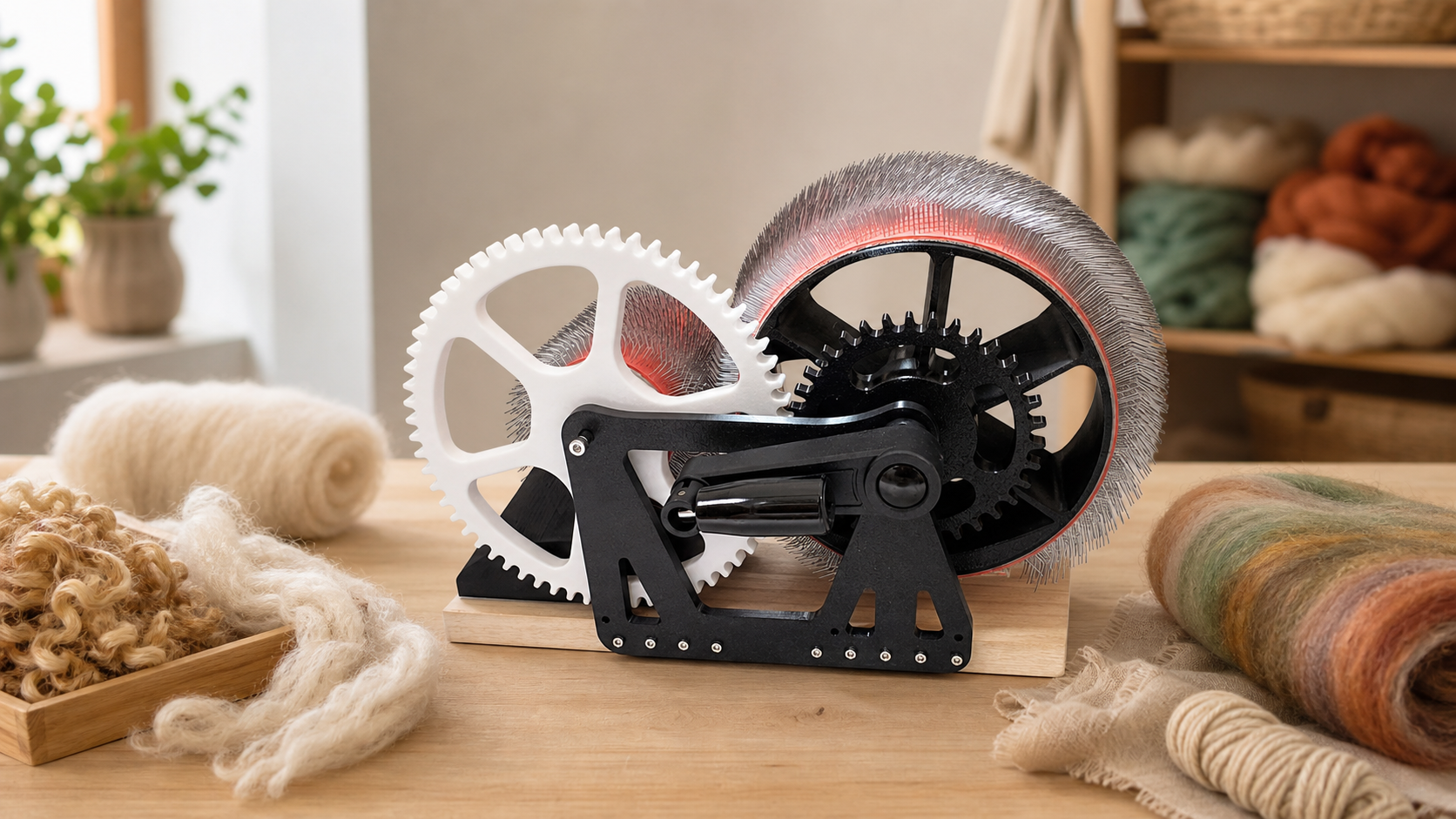
If you are still choosing a tool, compare this workflow with the Studio Drum Carder product page. Look at how the product photos support feeding, bench setup, and batt removal. If you need clarification about current product details, use the contact page before purchasing.
The main thing is to buy for the work you want to repeat. If wool carding is becoming a regular part of your studio, a dedicated drum carder can turn a fussy process into a calmer routine.
Practice This Workflow On A Studio Carder
Review the Studio Drum Carder and decide whether it fits your wool prep bench, batt goals, and learning routine.
FAQ
How much wool should I feed at once?
Use small, opened amounts rather than thick handfuls. If the wool bunches or rides unevenly, reduce the feed amount before changing anything else.
Do I need to card wool more than once?
Sometimes. A second light pass can improve blending, but too many passes may flatten color or texture. Let the project decide when the batt is finished.
Why is my wool batt lumpy?
Lumps usually come from compacted fiber, overfeeding, or not opening the wool enough before carding. Start by preparing the fiber better and feeding thinner layers.
Should I clean the drum carder after every batt?
Clean whenever leftover fiber could affect the next batt. High-contrast color changes, different fiber types, and textured add-ins all deserve extra attention.