
Blog
Drum Carder Buying Guide for Wool and Alpaca Studios
Jul
Quick answer: a drum carder is worth considering when your fiber prep has moved beyond occasional hand carding and into repeatable wool, alpaca, or art batt work. The right choice is the one that fits your fiber, your bench, your hands, and the kind of batts you want to make. A careful buyer looks past the first pretty batt photo and asks how the tool will behave during a normal studio session.
For a small fiber studio, the buying decision usually starts with friction. Hand cards take too long. Blends are hard to repeat. Locks look good in the basket but turn uneven once you start spinning. A drum carder can solve some of that, but only when you choose it for the work you already do, not for a fantasy version of the studio you may build someday.
Start With The Job, Not The Tool
Before comparing brands or prices, name the job. Are you opening washed wool for spinning? Blending alpaca with wool for a softer batt? Making textured art batts for sale? Preparing a few ounces after dye day? Those are different studio problems, and they do not all reward the same buying choice.
A wool-first buyer should care about steady opening, light feeding, and clean batt removal. An art batt buyer should care about color placement and texture control. A seller should care about repeatability, because a customer who loves one batt may come back hoping for something similar. If the carder does not support the main job, extra features will not save the purchase.
Check Your Fiber Habits Honestly
Good carding begins before fiber reaches the carder. Clean, dry, opened fiber is easier to manage than damp, packed, or matted fiber. If you often work from carefully washed fleece, dyed top, or teased locks, a drum carder can become a regular part of the process. If most of your fiber still needs heavy picking, sorting, or washing, plan for that labor too.
Also think about staple length and texture. Fine wool may need gentle feeding. Alpaca can feel slippery and dense if packed in too quickly. Locks, silk, sparkle, and other add-ins may need to be layered lightly so they remain visible. A carder is a blending tool, not a magic repair tool for fiber that was not prepared well enough to enter the feed area.
Match The Carder To Your Bench Routine
The best drum carder on paper can be annoying if it does not fit your workspace. Picture the whole motion: setting out fiber, turning the handle, feeding gradually, removing the batt, cleaning stray fibers, and storing the tool afterward. If your bench is narrow or shared with dye supplies, measuring the working area matters.
Some makers leave the carder out all week. Others bring it out only for blending sessions. Neither habit is wrong. What matters is whether the tool feels easy enough to use often. A carder that is awkward to move, difficult to clean, or always in the way will quietly become a shelf object. That is a bad purchase even if the tool itself is capable.
Use A Studio-Fit Buying Scorecard
A simple scorecard keeps the decision grounded. Give each factor a plain yes, maybe, or no. Do not average the score mechanically. Use it to reveal the weak points you need to clarify before buying.
- Fiber fit: the carder suits wool, alpaca, and the add-ins you use most often.
- Batch fit: it supports the amount of fiber you normally prep in one sitting.
- Bench fit: there is enough room for feeding, turning, removal, and cleanup.
- Learning fit: you are comfortable practicing light feeding before expecting perfect batts.
- Support fit: the seller gives you a clear path for product questions before checkout.
Read The Product Page Like A Working Maker
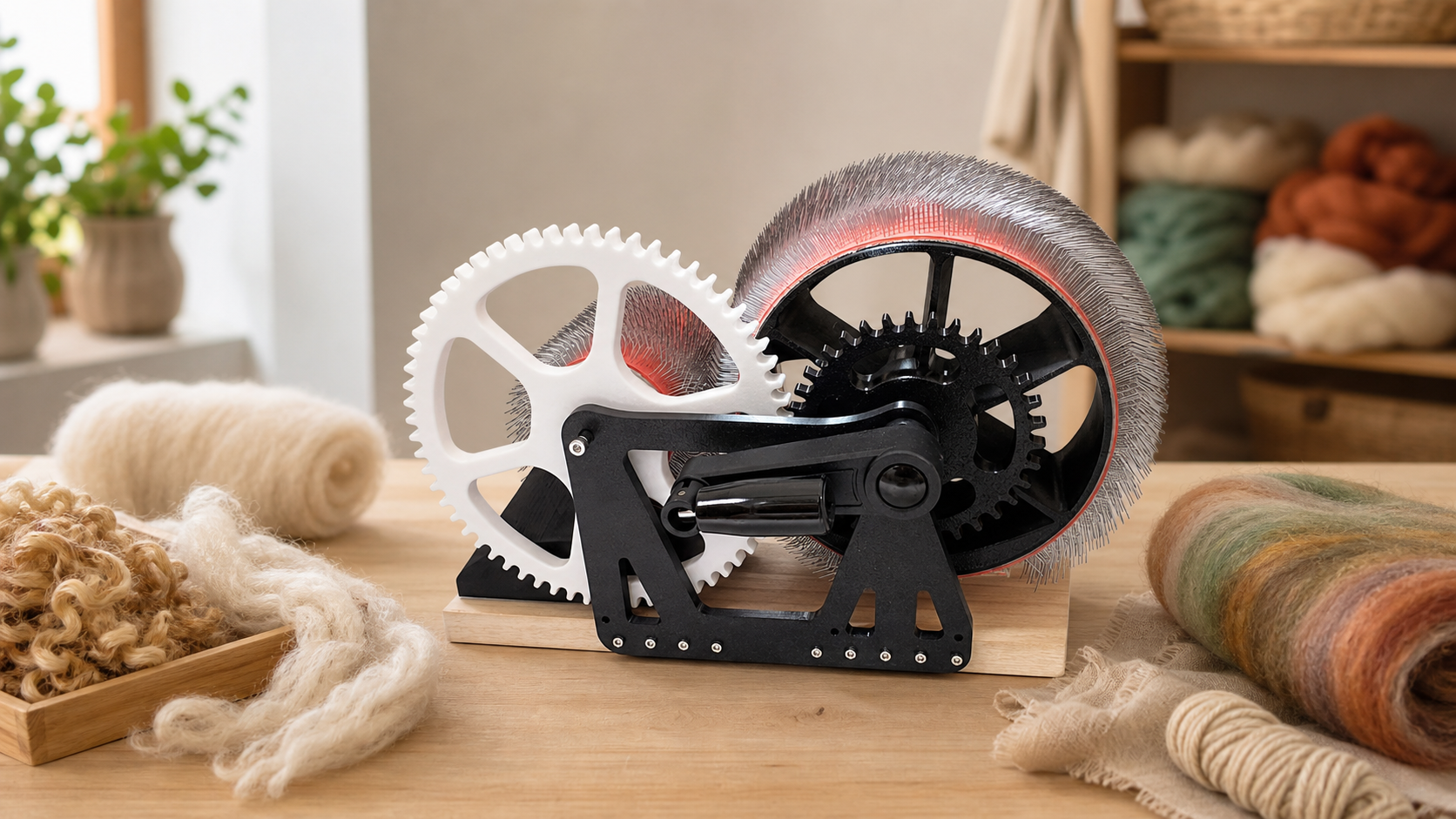
When you open the Studio Drum Carder product page, read it with your own workflow in mind. Look at the photos for feed position, handle access, drum layout, and batt removal. Review the visible product details, then compare them with your bench and storage plan. If a detail is not stated, do not invent it from the photo.
It is also worth checking store pages that affect the buying experience, including the contact page and current shipping policy. That does not mean you need every answer before you buy. It means you should know where to ask about dimensions, included items, maintenance, shipping terms, and return conditions if those details matter to your studio.
Know Who Should Wait
A drum carder is not the first tool every fiber person needs. If you only make a tiny batt now and then, hand cards may be enough. If you mostly want rolags with painterly stripes, a blending board may feel more direct. If your main challenge is dirty fleece, you may need better washing, drying, picking, or sorting before a carder becomes useful.
Waiting is sensible when the tool would sit idle. Buy when the problem is frequent enough that the carder changes your week: fewer tired hands, more consistent blends, cleaner photography for batts, or a smoother path from dyed fiber to spinning prep. That is a stronger reason than simply wanting a new piece of equipment.
Make The Final Decision
If your work centers on wool, alpaca, and small-studio batt prep, a compact drum carder can be a practical next tool. The strongest sign is repeated need. You are making batts often. You want cleaner blending. You care about repeatable texture or color. You have a place to use the tool without fighting your workspace.
If those points are true, compare the product page against your scorecard and ask any unresolved questions before checkout. If they are not true yet, keep learning with the tools you already have. A good drum carder purchase should feel like a workflow answer, not a bet.
Review The Studio Drum Carder
Compare the product photos, page details, and support links against your fiber prep routine before deciding.
FAQ
What is the first question to ask before buying a drum carder?
Ask what job you need it to do every week. Wool prep, alpaca blending, art batt layering, and small shop production each put different pressure on the tool. A clear job makes the buying decision much easier.
Is a drum carder better than hand cards for every spinner?
No. Hand cards are inexpensive, portable, and useful for small samples. A drum carder makes more sense when repeated batt making, blending, or hand fatigue becomes a real problem.
Should I buy a drum carder for art batts?
Consider one if you want layered batts, repeatable color placement, and a smoother studio rhythm. If you only make occasional textured rolags, a blending board may still be enough.
What should I confirm before checkout?
Confirm the current product details, included items, shipping policy, return terms, and support path. If a photo suggests something but the text does not state it, ask the seller instead of assuming.