
Blog
Used Drum Carder Buying Risks and Checks
Jul
Quick answer: used drum carder buying risks checks should focus on carding cloth wear, drum alignment, handle movement, rust, missing tools, hidden fiber residue, seller clarity, packing risk, and whether the price still makes sense after repairs or uncertainty. A used carder can be a good find, but only if the working surfaces and movement are sound.
Buying used appeals to many fiber artists because drum carders are durable tools and new equipment can feel like a serious purchase. The risk is that a carder can look acceptable in one photo while hiding the exact problems that affect batt quality. A worn cloth, bent shaft, sticky handle, or poorly cleaned drum may turn a bargain into a frustrating project.
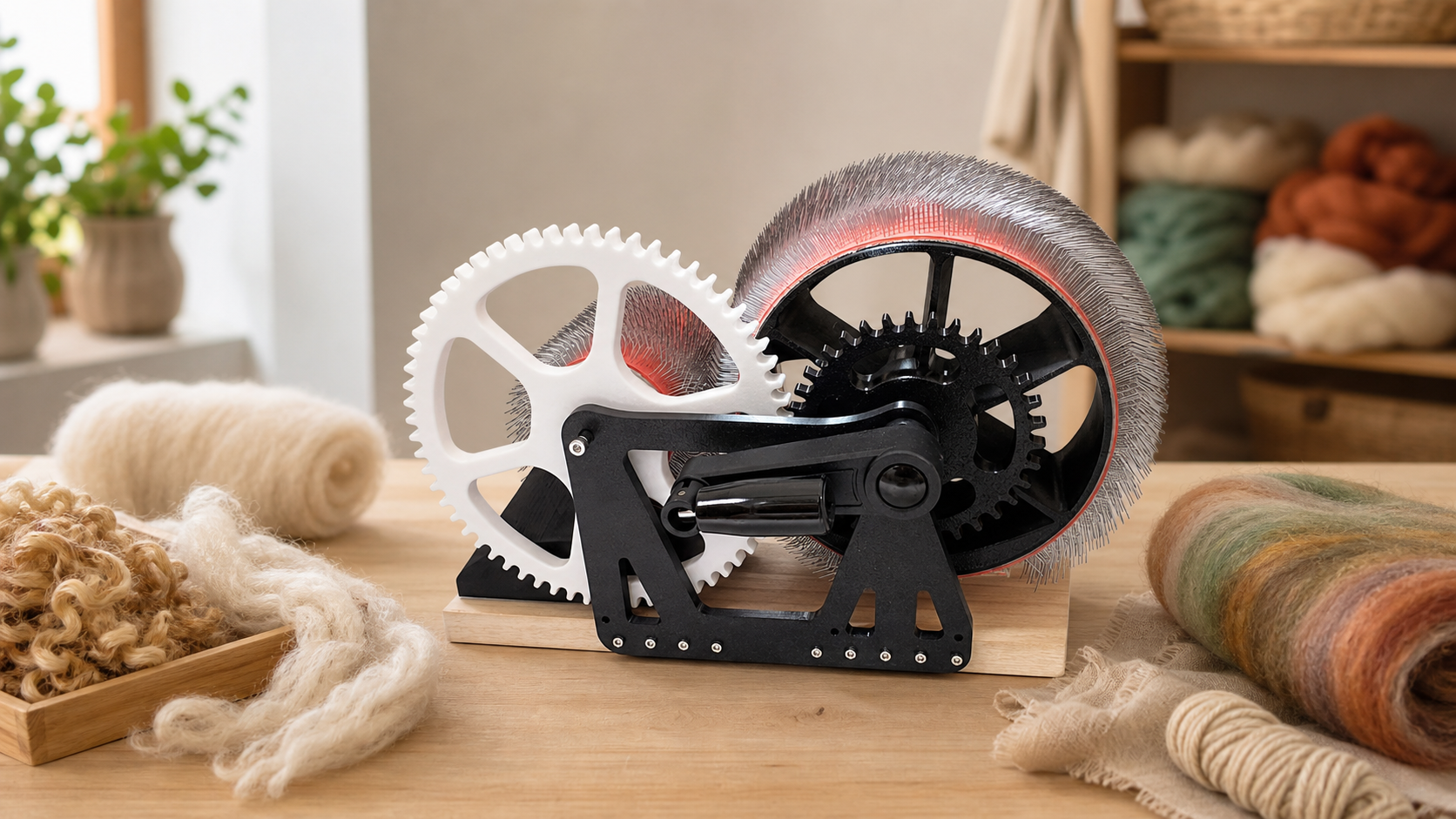
If you want to compare against a current compact option, review the DrumCarder Studio Fiber Carder. For general site navigation, use the DrumCarder home page before checking policies and support.
Inspect The Carding Cloth First
The carding cloth is the heart of the tool. Ask for clear close photos of the main drum and the smaller intake drum. Look for flattened teeth, missing sections, rust, heavy debris, loose edges, or uneven wear. A few stray fibers are normal. Serious damage is different. If the cloth cannot hold and transfer fiber evenly, the carder will not make consistent batts.
Also check whether the cloth looks appropriate for your intended fiber. You may not be able to identify every technical detail from a photo, but you can still spot obvious problems. If the seller cannot provide a clear view, treat that as a reason to slow down.
Check Movement And Alignment
A drum carder should turn smoothly. Ask whether the handle rotates without grinding, slipping, wobbling, or sudden tight spots. If possible, request a short video showing the handle turning and both drums moving. Listen for scraping. Watch whether the drums stay aligned as they turn.
Alignment matters because fiber transfer depends on steady spacing. A carder that was dropped, stored poorly, or forced through heavy fiber may still turn, but it may not card evenly. Repair may be possible, but that should be reflected in the price and your willingness to fix the tool.
Account For Missing Parts And Shipping Risk
Used listings often omit small tools. Ask what is included: doffer, brush, clamps, instructions, box, or any original accessories. Missing items may be easy to replace, but they still affect total cost and first-use readiness.
Shipping also matters. A drum carder has working surfaces that can be damaged by pressure, moisture, or impact. Ask how it will be packed. A low price is less attractive if the tool arrives with bent teeth or a cracked base. Before choosing any product, review current terms such as the shipping policy and the refund and returns policy for comparison.
Compare Used Price With Real Cost
The used price is only one part of the decision. Add possible cleaning time, missing tools, travel, shipping, repair parts, and the risk of no return path. A used carder at a modest discount may not be a good choice if the condition is unclear. A higher-priced used carder may be fair if it is clean, complete, and well documented.
If you are new to drum carding, clarity has value. A current product page with support contact and policy links can reduce uncertainty. That does not mean used is wrong. It means you should compare the whole buying experience, not only the number in the listing.
Write down the questions the listing does not answer. Can you see both drums? Do you know whether the handle turns smoothly? Are the tools included? Is the carder coming from a clean craft space or long storage? A short question list keeps enthusiasm from outrunning inspection.
FAQ
What is the biggest used drum carder risk?
The biggest risk is damaged or worn carding cloth because it directly affects fiber results. Handle or alignment problems can also be serious, especially if the carder has been dropped or stored poorly.
Should I buy a used carder without seeing it turn?
It is better to see a short video if you cannot inspect it in person. Smooth turning, quiet movement, and steady drum spacing tell you more than a single still photo.
How clean should a used carder be?
It does not need to look brand new, but it should not be packed with old fiber, grease, rust, or mystery residue. Heavy residue can hide wear and may contaminate your first projects.
Is a used drum carder good for beginners?
It can be, if the condition is clear and the tool is complete. Beginners may struggle when they cannot tell whether poor results come from technique, fiber prep, or a damaged carder.
When is buying new the safer decision?
Buying new may be safer when the used price is close to the current price, the photos are vague, parts are missing, shipping is risky, or you want a clearer support path.
A Simple Used Buying Rule
Only treat a used drum carder as a bargain after it passes three checks. First, the carding cloth looks sound. Second, the drums turn smoothly and stay aligned. Third, the total cost still makes sense after tools, shipping, cleaning, and risk. If one of those checks fails, slow down and compare a current option.
For product-specific questions before buying current equipment, use the contact page. A clear answer before purchase is often worth more than a small discount on a tool you cannot inspect properly.
Compare With A Current Studio Carder
Review the DrumCarder Studio Fiber Carder when you want clear product information, support links, and a compact carding setup.