
Blog
Manual vs Electric Drum Carder for Fiber Prep
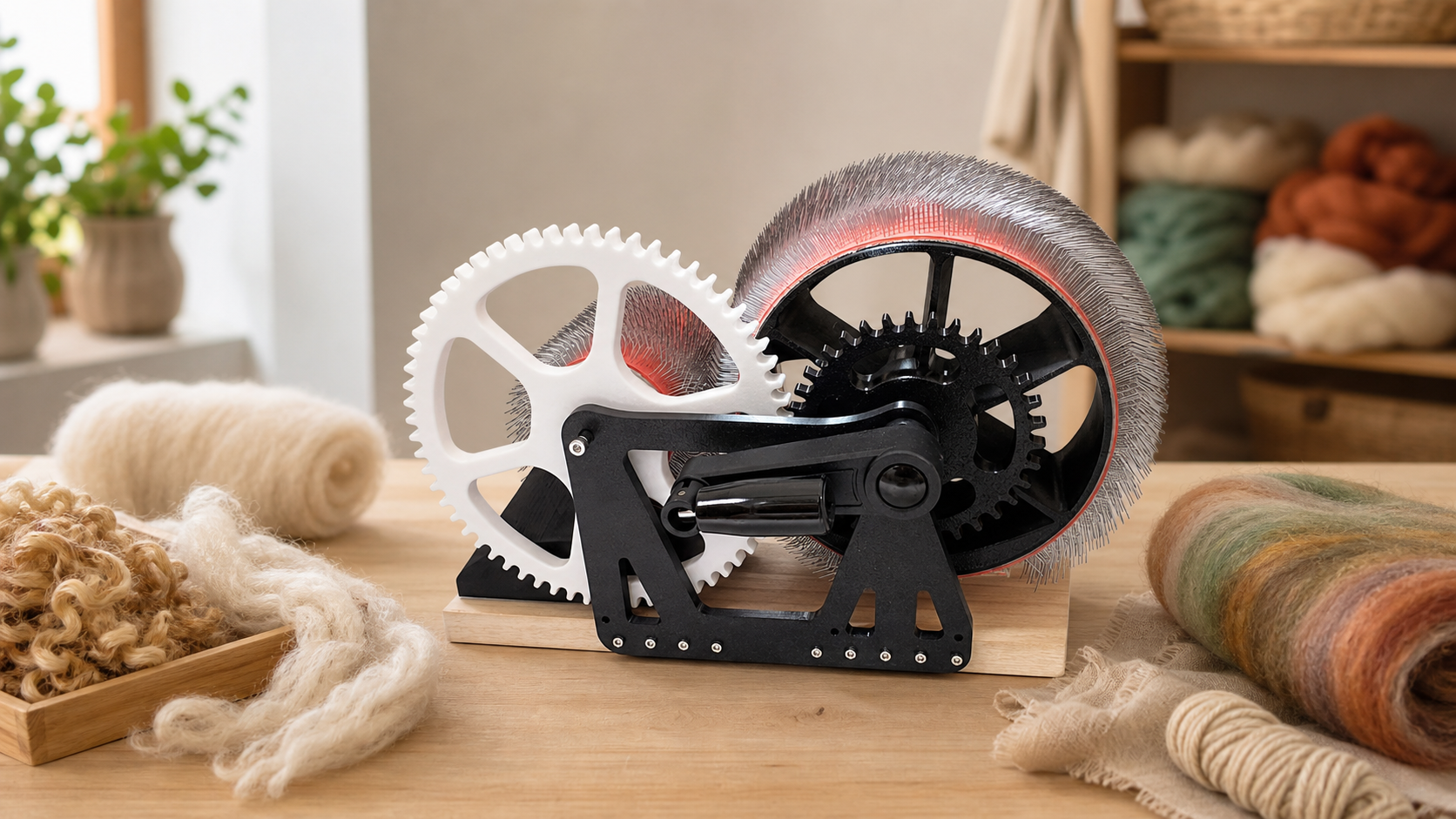
Jul
Quick answer: choose a manual drum carder when you want slower feed control, simpler setup, quieter small-batch work, and a tool that fits a hands-on studio rhythm. Consider an electric drum carder when volume, repeated sessions, or physical strain make powered operation more important. The better choice depends less on the word “manual” or “electric” and more on how much fiber you prepare, how often you work, and how carefully you need to build each batt.
Manual and electric drum carders can both prepare fiber, but they feel different in a real studio. One invites you to slow down and control every layer. The other can make repeated batches less tiring when the rest of the setup supports that pace. Buyers often compare them too abstractly, as if electric always means better and manual always means beginner. That is too simple.
This guide compares the trade-offs without inventing specifications for any product. Use it while reading the drum carder buying guide and the current DrumCarder Studio Fiber Carder page.
Manual Carders Reward Control
A manual carder makes the operator part of the rhythm. You feel the feed, slow down when fiber begins to pack, and stop quickly when a layer needs adjustment. That feedback can be valuable for beginners and for experienced fiber artists who care about color placement, lock texture, or delicate alpaca handling.
Manual work is not automatically slow in a bad way. For art batts, sampling, and small studio sessions, slower operation can prevent muddy color, overfed patches, and fiber that disappears into the batt before you meant it to. The handle gives you a physical reminder that the carder is not a shredder. It is a blending and opening tool.
Electric Carders Can Reduce Repetition
An electric carder may make sense when repeated turning becomes the bottleneck. If you prepare many batts in one session, card for long stretches, or have hand or shoulder fatigue, powered operation can be appealing. It can also help a production workflow where the fiber is already well prepared and the operator has a steady feed habit.
The caution is that power does not replace judgment. A powered tool can still be overfed. It can still make uneven batts if fiber enters in clumps. It can still require cleaning, storage, and careful attention around moving parts. Electric operation changes the effort, but it does not remove the craft.
Compare Batch Size Before Features
Batch size is the cleanest way to compare manual and electric options. If you usually make one or two batts, sample color blends, or prepare fiber for personal spinning, a manual setup can feel direct and manageable. If you prepare many similar batts for a shop, class, or busy dye studio, the effort of repeated turning may matter more.
Ask what a normal month looks like, not your most ambitious weekend. A buyer who makes occasional art batts should not choose a tool as if every Saturday will be a production day. A seller who cards regularly should not underbuy just because a manual tool feels charming in theory.
Think About Maintenance And Storage
Manual carders are often appealing because the setup feels simple: a bench, a tool, prepared fiber, and your hands. Electric carders add power, controls, cords, and a different kind of attention. That may be completely worth it, but it belongs in the decision.
Storage matters too. Where will the carder live between sessions? Will you need to move it? Can the cloth be protected from dust and moisture? Can you clean around the drums after wool, alpaca, dyed locks, or textured add-ins? The right choice should fit the room as well as the fiber.
Match The Tool To The Fiber Result
For smooth wool batts, the winning choice is the one that helps you feed light, even layers. For alpaca, gentle handling and avoiding packed fiber may matter more than speed. For art batts, control over color and texture placement is often the whole point. For repeated sale batches, consistency and comfort may move higher on the list.
Manual versus electric is not only a technology question. It is a result question. If your favorite work depends on stopping, lifting a lock, changing a color, or checking a surface, manual control can feel friendly. If your work depends on preparing a run of similar batts without tiring your hands, electric may deserve a closer look.
Use A Practical Decision Grid
- Choose manual if: you make small batches, want tactile control, work in a shared or compact space, or are still learning feed technique.
- Consider electric if: you card often, repeat similar batches, need less hand turning, or have a workflow built around prepared fiber and steady operation.
- Pause if: you are using the word electric as a shortcut for quality. Better operation still depends on fiber prep, feeding, cleanup, and fit.
- Ask support if: you cannot tell whether the product page fits your fiber, bench space, or expected batch routine.
Compare The Current Product Page Calmly
If you are leaning toward a manual studio setup, read the product page carefully and compare it with the way you actually prepare fiber. Check photos, written description, checkout details, and contact options. If an electric option is also on your list, compare the total workflow, not only the drive type.
The contact page is useful if your question is specific: fiber type, batch habit, workspace concern, or a detail you cannot confirm from the current listing. Specific questions get better answers than “Is this good?” Try “I make small wool and alpaca batts for spinning and art yarn. Is this setup intended for that kind of work?”
Compare The Studio Drum Carder
Review the product page, photos, support links, and checkout details while deciding whether a hands-on studio carder fits your fiber workflow.
FAQ
Is an electric drum carder always better than a manual drum carder?
No. Electric operation can reduce repetitive turning, but it does not automatically make better batts. Fiber prep, feed control, carding habits, cleanup, and workspace fit still matter.
Who should choose a manual drum carder?
A manual carder often fits buyers who make small batches, want close control, need a quieter hands-on rhythm, or are learning how fiber behaves on the drum.
When does an electric drum carder make sense?
It can make sense for frequent carding, repeated batches, physical comfort, or a workflow where prepared fiber is fed steadily for longer sessions.
Can manual and electric carders both make art batts?
Yes, but the process feels different. Manual control can help with deliberate texture placement, while electric operation may help when repeated batches are the priority.