Blog
Drum Carder Machine vs Wool Carding Machine
Jul
Quick answer: a drum carder machine is usually a bench-scale fiber-prep tool that uses drums and carding cloth to open, align, and blend wool or similar fibers into batts. A wool carding machine can mean a much broader range of equipment, from small studio carders to larger processing machines. If you are shopping for a home studio, art batt table, or small fiber room, the exact page and use case matter more than the word “machine.”
Search results can make this niche sound more confusing than it is. One page says drum carder. Another says wool carding machine. Another says carding drum, carder machine, wool carder, or fiber carding tool. Buyers who are close to purchase may wonder whether these are different products, different sizes, or simply different ways sellers describe the same job.
This article separates the terms so you can read product pages more confidently. It also helps you decide whether a compact tool like the DrumCarder Studio Fiber Carder belongs in your search, or whether you are actually looking for a larger wool-processing setup.
What People Mean By Drum Carder Machine
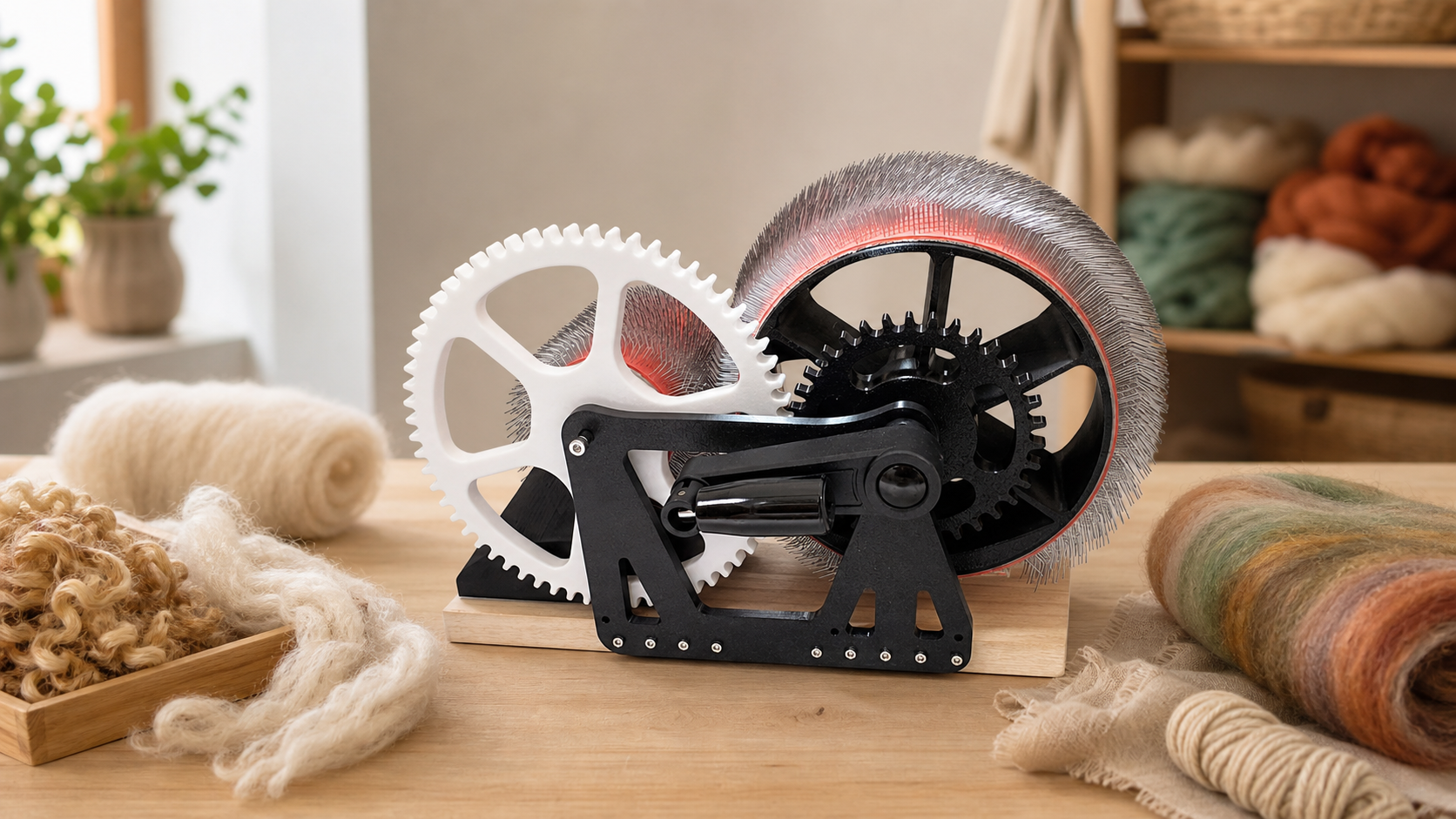
When fiber artists say drum carder machine, they usually mean a drum carder: a tool with a large drum, a smaller feed area, carding cloth, and a way to turn or operate the drums so fiber opens and collects as a batt. The word machine here does not automatically mean factory equipment. It often means “the tool that does the carding job.”
A drum carder is commonly compared with hand cards and blending boards because all three can prepare fiber, but they do it differently. A drum carder is especially useful when you want a batt, repeated color blends, or a more continuous prep surface than hand cards provide.
What People Mean By Wool Carding Machine
Wool carding machine is a wider phrase. It can describe a small tool for a craft studio, a powered carder, or much larger equipment used by mills and processing shops. That breadth is why search results can feel messy. Two sellers may use similar words while offering tools meant for very different amounts of fiber.
If you are preparing fleece by the pound for commercial processing, a small studio tool may not be the right comparison. If you are making spinning batts, alpaca samples, felting prep, or textured art batts, a compact drum carder may be exactly the category you meant.
Use Page Clues To Identify The Real Tool
Do not rely on the title alone. Read the page details. Look at the photos. Does the product sit on a bench? Does it show drums and carding cloth? Is the copy written for spinners, felters, art batt makers, and small fiber studios? Or does it describe large-scale processing, high-volume production, or installation requirements?
The DrumCarder homepage keeps the language around wool, alpaca, art batt blending, and small-batch fiber prep. That tells you the intended use case. If a page uses broader machine language, look for similar clues before deciding whether it fits your studio.
Why Terminology Matters Before Checkout
Confusing terms can lead to overbuying, underbuying, or asking the wrong questions. A buyer who only searches carding machine may land on tools far larger than needed. A buyer who only searches wool carder may see hand cards, drum carders, and other fiber tools mixed together. A buyer who searches drum carder machine is usually closer to the bench-scale tool, but still needs to verify the page.
Good terminology saves time. It helps you compare the right products, contact support with clearer questions, and avoid assuming that every “machine” is built for the same studio.
Choose Based On Fiber Volume And Output
For a small studio, the key question is not whether the product name sounds serious. The key question is how much fiber you prepare and what result you want. If you make batts for spinning, art yarn, felting, color tests, or small shop listings, a drum carder may fit the job. If you need to process large quantities of fleece as a service, your equipment needs may be different.
Output matters too. A batt is a particular kind of preparation. If that is what you want, search and compare around drum carders. If you want rovings, mill-style processing, or larger-scale prep, make sure the tool category actually supports that path before you spend time on checkout pages.
A Simple Term-Matching Checklist
- Drum carder: likely the best search phrase for a batt-making studio tool.
- Drum carder machine: often the same buyer intent, with machine added for clarity or shopping language.
- Wool carder: broad phrase that may include hand cards, drum carders, or other wool-prep tools.
- Wool carding machine: broadest phrase, ranging from compact tools to larger processing equipment.
- Carding drum: can refer to part of the tool or be used loosely in listings.
Ask Better Product Questions
Once you understand the terminology, your support questions improve. Instead of asking “Is this a wool carding machine?” ask what you really need to know: “I want to prepare wool and alpaca batts in small batches. Is this product intended for that use?” or “Does this page show the kind of drum carder used for art batt blending?”
Specific questions are easier to answer through the contact page. They also protect you from buying the wrong category because a search engine mixed several meanings into one results page.
Compare The Drum Carder Machine For Studio Fiber Prep
Open the product page to check the compact carder, photos, checkout details, and support contact for wool, alpaca, and art batt work.
FAQ
Is a drum carder machine the same as a wool carding machine?
Sometimes the terms overlap, but wool carding machine is broader. It can describe small studio tools or much larger processing equipment. A drum carder is a more specific bench-scale fiber-prep tool.
Why do search results use so many carding terms?
Buyers, sellers, and search engines mix practical craft language with broader machine language. Wool carder, carding machine, carding drum, and drum carder can point to related but not identical tools.
Which term should a small studio buyer search first?
Start with drum carder if you want batts for spinning, felting, blending, or art fiber work. Add wool, alpaca, manual, or electric only when those details match your needs.
How do I know if a page is for a large machine?
Look for clues about scale, installation, processing volume, intended users, and product photos. If the page does not clearly match small-studio batt making, ask before buying.