
Blog
How to Use a Drum Carder Without Overfeeding Fiber
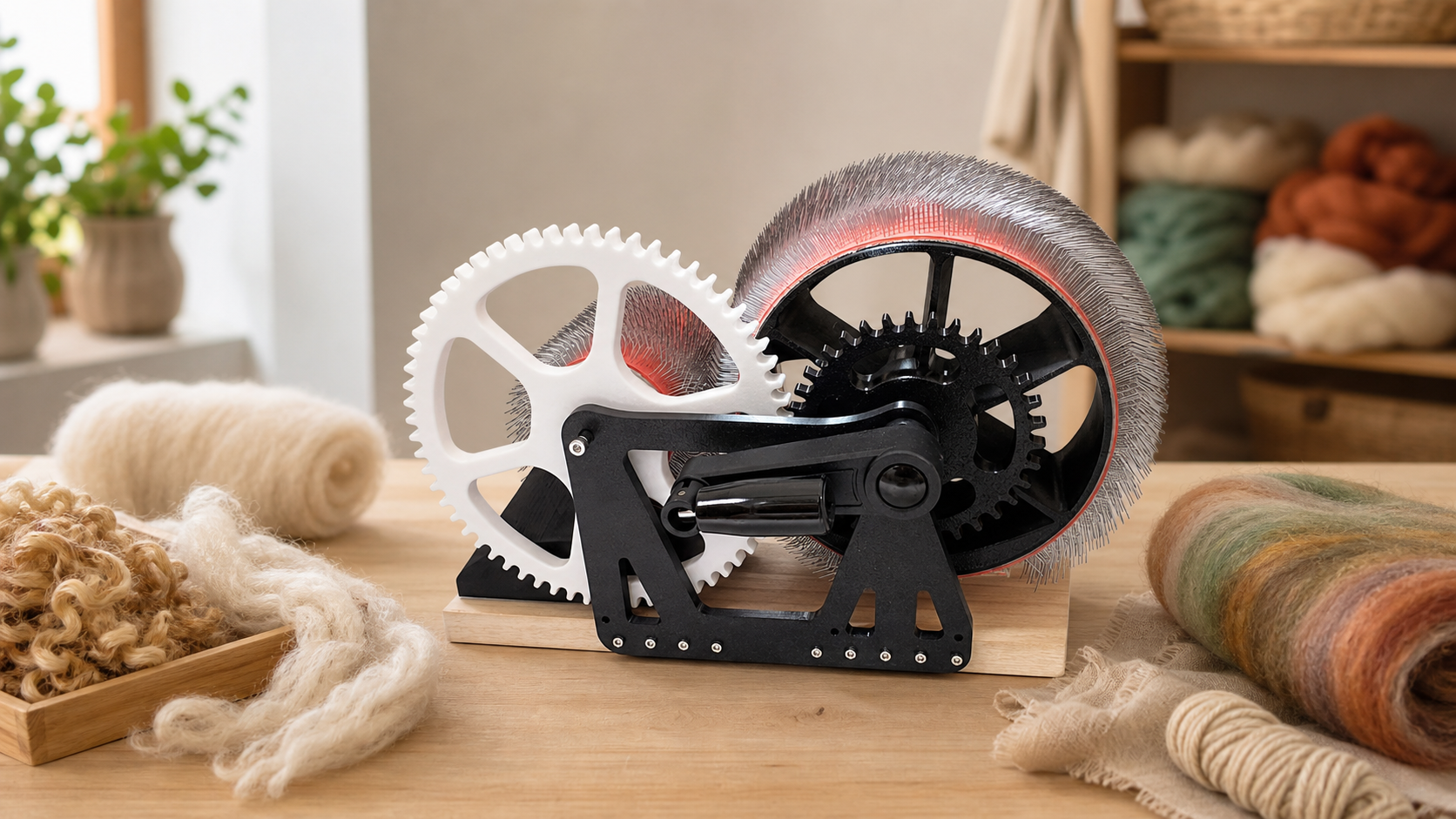
Jul
Quick answer: use a drum carder without overfeeding by preparing small wisps, feeding only what the drum can take smoothly, spreading fiber across the width, and stopping before the batt becomes packed. Overfeeding is not a sign of ambition. It is the fastest way to create lumps, drag, and a batt that is harder to remove.
Many first-time users think drum carder use is mainly about turning the handle. The real skill is deciding how little fiber to feed at one time. A steady, patient feed gives the teeth room to open and arrange the fiber. A heavy feed asks the carder to do too much at once.
This tutorial stays focused on handling and use. For a full first-batt routine, see Drum Carding Wool: First Batt Workflow. If you are comparing the current product path, review the DrumCarder Studio Fiber Carder.
What Overfeeding Looks Like
Overfeeding happens when more fiber enters the carder than the drum can spread cleanly. The surface may form ridges. Fiber may bunch near the intake. The handle may feel less smooth. The batt may look thick in one strip and thin elsewhere. These signs matter more than any exact amount of fiber.
Some fibers make overfeeding obvious. Dense wool, compacted dyed top, and alpaca can all build bulk quickly. Decorative fibers can also catch if they are fed as clumps. When the carder feels like it is being forced, stop and reduce the feed before continuing.
Prepare Smaller Pieces First
The easiest way to prevent overfeeding is to prepare the fiber before it reaches the carder. Pull wool into thin sections. Open locks. Spread dyed top into a loose sheet. Keep slippery or shiny add-ins in tiny amounts. If you can see air through the fiber, it is usually easier to feed.
Arrange those pieces beside the carder. This keeps your hands calm and prevents the common habit of grabbing a large handful when the handle is already moving. Drum carder use becomes smoother when the next small wisp is ready before you need it.
Feed With A Light Touch
Hold the fiber lightly and let the carder draw it in. Do not shove it forward. If a section does not catch cleanly, pull it back, open it more, and try again. The best feed is usually quieter and less dramatic than beginners expect.
Move side to side as you feed. This helps the batt build across the drum instead of forming a single thick ridge. If you are right-handed, you may naturally favor one side. Notice that habit and correct it. Even movement is one of the simplest ways to avoid overfeeding without changing anything else.
Build Layers Instead Of Bulk
Think in layers, not handfuls. A light base layer gives later fiber something to sit on. Additional layers can add color, softness, or texture. Each layer should still be thin enough that the surface remains open. If the drum looks packed, the next layer is not really a layer. It is pressure.
For color blending, many light placements work better than one heavy pile of color. For art batts, place accents where you want them and surround them with enough base fiber to hold the batt together. For alpaca or other dense fibers, use even more restraint.
Know When To Stop Feeding
A batt does not need to be maximum size to be successful. Stop when the surface is even, the fiber still has loft, and removal looks manageable. If you need more finished fiber, make another batt in the same pattern. Two clean batts are usually more useful than one compressed batt.
If you are unsure, stop early and test. Remove a small section or inspect the batt before continuing. You can often add more fiber later, but it is harder to rescue a packed batt without tearing it apart and starting again.
Fix Overfeeding During A Session
If you notice overfeeding, do not keep going as if the problem will disappear. Stop turning. Open the next fiber more thoroughly. Shift to a thin area of the drum. If a ridge has already formed, you may need to remove the batt, loosen it by hand, and run a lighter second pass.
Use the mistake as feedback. Was the wool too compact? Were you feeding from one side only? Did you add alpaca or texture too heavily? A good carding session teaches your hands how much fiber is enough. For product-specific handling questions, the contact page is the safer place to ask.
Clean Up Before The Next Batt
Overfeeding often leaves extra fiber behind. After removal, inspect the carding cloth and edges for trapped wool. Remove loose strands gently so they do not become hidden lumps in the next batt. This is especially important when you switch colors or move from wool to alpaca.
A short cleanup also resets your rhythm. You can look at the finished batt, decide what changed, and begin the next one with smaller pieces. Overfeeding becomes less common when every session ends with a quick inspection instead of a rush into the next blend.
Use A Drum Carder With More Control
Review the DrumCarder Studio Fiber Carder for small-batch wool, alpaca, and art batt preparation in a home fiber space.
FAQ
How do I know if I am feeding too much fiber?
Watch for ridges, drag, clumps near the intake, and a batt that looks packed in one narrow area. These signs mean you should feed less.
Can overfeeding damage my batt?
It can make the batt lumpy, dense, hard to remove, and harder to draft. Stop early and correct the feed before the problem grows.
Should I turn the handle faster to pull fiber through?
No. A faster handle does not fix a heavy feed. Open the fiber more and feed smaller amounts with a steady rhythm.
Is overfeeding worse with alpaca?
Alpaca can become dense quickly, so light feeding is especially helpful. Use thin layers and stop before the batt loses loft.