
Blog
Drum Carder Cloth and TPI Guide
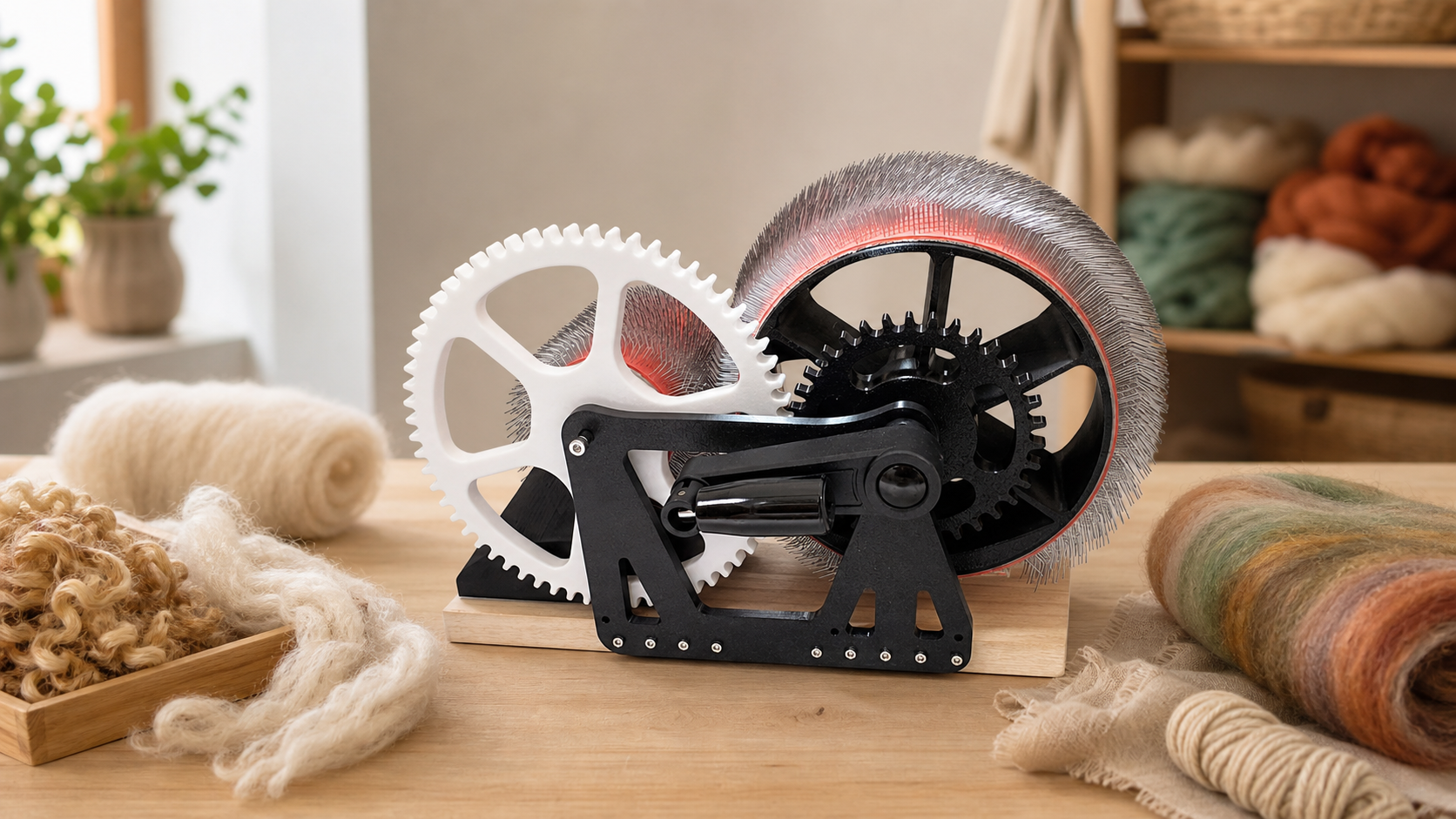
Jul
Quick answer: drum carder cloth is the toothed carding surface that opens and arranges fiber, while TPI means teeth per inch. A higher or lower TPI changes how the cloth interacts with different fibers, but it should be read as one part of the tool, not as a simple quality ranking.
Carding cloth and TPI can sound technical, especially when you are comparing tools or trying to understand why one fiber behaves differently from another. The terms matter, but they do not need to turn into a spec chase. For wool, alpaca, and art batt work, the practical question is how the cloth handles your fiber and your routine.
This guide explains the language without assigning unsupported specifications to any product. If you are still comparing complete tools, the drum carder buying guide gives broader context, and the product page is the right place to check current details.
What Carding Cloth Does
Carding cloth is the working surface of the carder. Its teeth catch, open, align, and transfer fiber as the drum turns. Good technique still matters. Clean fiber, light feeding, and even layers make the cloth easier to use. If fiber is fed in dense clumps, even suitable cloth can produce uneven results.
The cloth is not just a background material. It affects how the fiber sits on the drum, how easily the batt builds, how much texture remains visible, and how careful you need to be during cleanup. That is why owners ask about it when they notice changes in carding behavior.
What TPI Means
TPI stands for teeth per inch. It describes how many teeth are present in a given inch of carding cloth. People often search for numbers such as 48 TPI because they want a simple decision rule. The number is useful, but it does not tell the whole story by itself.
A TPI description should be considered alongside fiber type, tooth shape, cloth condition, drum design, feed habits, and intended output. A smooth wool batt, an alpaca blend, and a textured art batt may not ask the cloth to do exactly the same job. Technique and fiber preparation remain part of the result.
It also helps to separate search language from confirmed product language. A person may type a number into a search box because they saw it in a forum or older listing. That does not mean every current drum carder uses that cloth, or that the number alone predicts the finished batt. When accuracy matters, confirm the current detail at the source.
How Cloth Choice Affects Fiber Behavior
Fiber behavior is what the user actually feels. Does the wool open smoothly? Does alpaca pack down too quickly? Do locks stay visible or disappear into the batt? Does the batt lift off cleanly? These questions are more useful than treating one TPI number as automatically better than another.
Fine, slippery, or dense fibers often need a lighter hand. Coarser or more open wool may tolerate a different feed rhythm. Decorative add-ins such as silk, sparkle, nepps, or locks may sit on the surface rather than blend evenly. Carding cloth influences these outcomes, but it does not replace judgment.
Why TPI Is Not A Standalone Buying Rule
It is tempting to ask for the highest number, the lowest number, or the exact number someone else mentioned. That can lead to the wrong question. The better question is whether the complete carder fits your common fibers and your desired batt style. A single cloth detail should not carry the whole decision.
When reading a product page, look for current product information and ask support if a detail is unclear. Avoid assuming a specification from a blog, old listing, or third-party comment. If you need confirmation, use DrumCarder contact before making a decision based on a number.
How To Treat Carding Cloth During Use
Care matters because carding cloth is a working surface. Feed light layers. Avoid forcing fiber through. Remove batts gently. Clear leftover strands after a session. Do not dig aggressively at the teeth. A careful routine helps keep the cloth usable and makes each new batt cleaner.
Pay attention to changes. If a batt suddenly becomes lumpy, the cause may be fiber prep, overfeeding, dampness, or leftover fiber from the previous session. Do not assume the cloth is the problem first. Start with the simple variables you can control.
A small test batt is often the clearest check. Use clean wool, feed it lightly, and avoid unusual add-ins. If that simple batt works, the cloth may be fine and the earlier problem may have come from fiber choice or technique. If the simple test still behaves strangely, you have a more focused question for support.
When Cloth Questions Become Support Questions
Some questions should go to the seller or maker. If you need to confirm current cloth details, replacement options, cleaning advice, or compatibility, ask directly. That is better than relying on assumptions from another tool or an old discussion.
For related care habits, the cleaning routine at How to Clean a Drum Carder is a useful next read. Keeping the cloth clear is often the simplest way to make the next carding session feel more predictable.
Compare The Whole Carder, Not One Number
Review the DrumCarder Studio Fiber Carder and ask current product questions before making decisions based on cloth or TPI language alone.
FAQ
What does TPI mean on a drum carder?
TPI means teeth per inch. It describes tooth density on the carding cloth, but it should be considered with the whole tool and fiber type.
Is 48 TPI always the best choice?
No. A number like 48 TPI is only one detail. The best fit depends on fiber, technique, carder design, and the batt you want to make.
Can carding cloth wear or collect fiber?
Yes. It can collect leftover strands and may show wear over time. Gentle cleaning and light feeding help keep sessions more consistent.
Should I ask support about replacement cloth?
Yes, if you need current replacement or compatibility information. Avoid assuming spare-part availability unless the seller confirms it.