
Blog
How to Roll and Store Batts After Carding
Jul
Quick answer: roll and store batts after carding by letting the batt relax, removing loose debris, rolling it loosely with the fiber supported, labeling the fiber and pass notes, and storing it away from moisture, pressure, pests, and strong light. A batt should stay airy enough to draft later. If storage turns it into a tight rope or flat pad, the next project becomes harder than it needs to be.
Carding does not end when the batt comes off the drum. The way you handle the next five minutes can protect or undo the work you just did. A well-carded batt can become compact if it is rolled too tightly, stacked under weight, or shoved into a crowded bag. A beautiful color sequence can become confusing if you forget which end starts the blend. Storage is not fussy housekeeping. It is part of fiber prep.
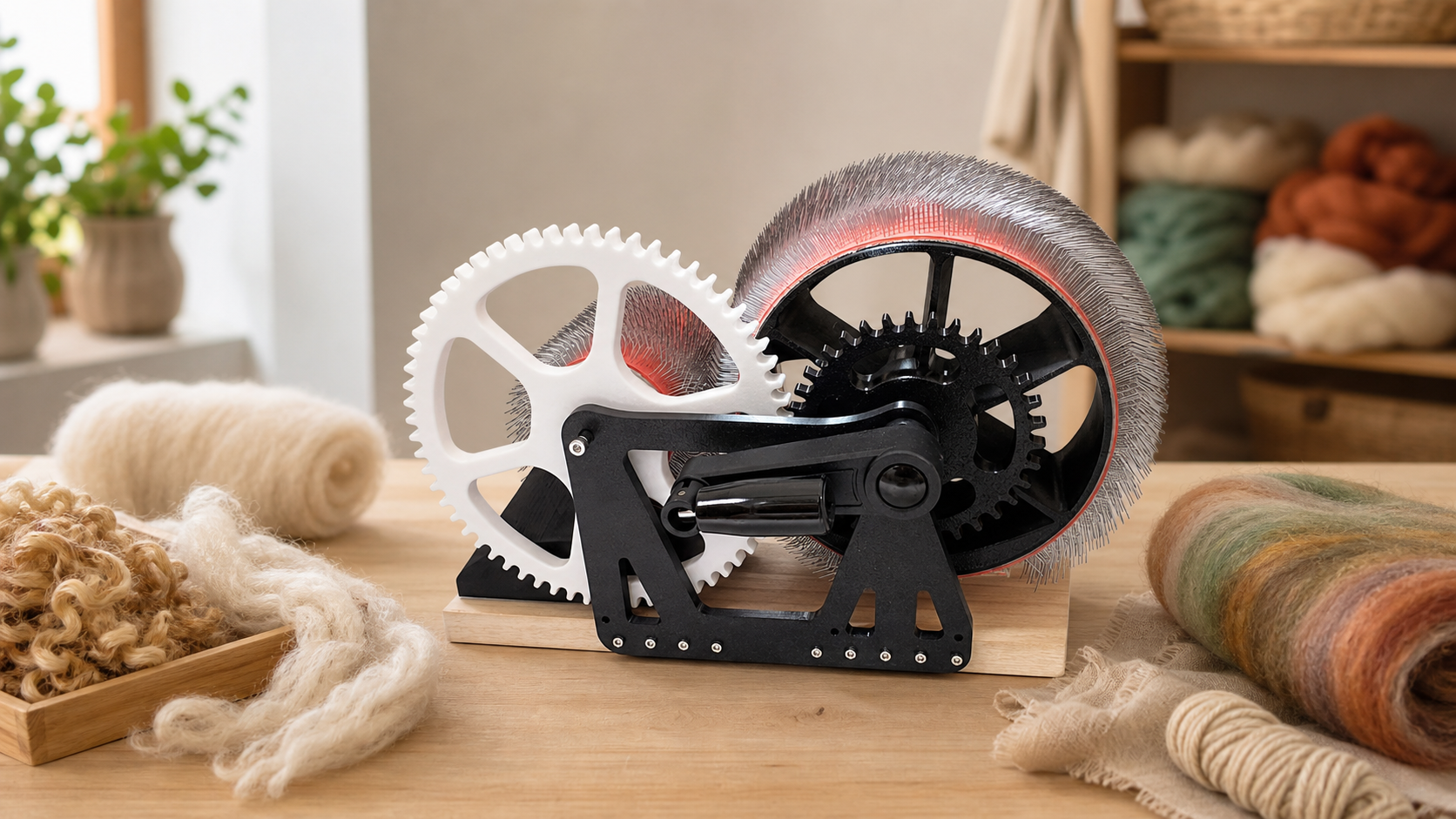
If you are building a compact carding routine, keep the Studio Drum Carder product page nearby and use DrumCarder as the main site reference for product and support links.
Let The Batt Settle First
When a batt first comes off the carder, it may be airy, uneven, and slightly springy. Lay it on a clean surface and look at it before rolling. Check for thick edges, thin centers, leftover plant pieces, or accents that shifted during removal. If you immediately roll the batt, you may hide a problem that would be easier to fix now.
This is also a good moment to decide whether the batt needs to be split. If the whole batt is too large for the way you draft, divide it before storage. The guide on splitting batts for easier drafting can help you choose a direction.
Roll Loosely, Not Tightly
A storage roll should hold the batt together without compressing it. Start at one edge and roll with gentle hands. Do not pull the batt into a narrow cord. If the roll feels hard in your hand, it is probably too tight. Looser rolls preserve loft and make the batt easier to open later.
For art batts, keep textured areas visible enough that you remember where they are. For smooth spinning batts, preserve an even roll so the fiber does not develop dense bands. If you plan to use the batt soon, a very simple loose roll may be all it needs.
Label Fiber, Color, And Pass Notes
A label saves future confusion. Include fiber type, color blend, date, and any pass notes that matter. For example: wool with alpaca, one pass, accents added last. If you tested multiple wool breeds, name the breed. If the batt was recarded, note that too. These details help you repeat a good result or avoid repeating a poor one.
Labels are especially useful when several batts look similar. Natural cream wool, pale gray wool, and a wool-alpaca blend can be easy to mix up after a week. A small paper tag or breathable bag label keeps the storage system honest.
Protect Batts From Moisture And Pressure
Store batts in a dry place with enough space. Moisture can encourage musty smells, compact fiber, and other storage trouble. Pressure can flatten loft and make drafting harder. Avoid stuffing batts into a crowded bin unless they are protected from being crushed.
Use breathable storage for short-term holding when possible. If you use sealed bags for pest control or transport, make sure the fiber is fully dry first. Do not seal warm or damp fiber. The guide on avoiding felting during fiber prep explains why moisture and pressure deserve respect.
Keep Color Order When It Matters
If the batt has a planned color sequence, mark the starting end. This matters for gradient batts, three-color blends, and accent-heavy art batts. Without a mark, you may spin from the opposite end and change the color story. That is not always bad, but it should be a choice.
For neutral base batts, color order may not matter much. For accent batts, it can matter a lot. Store related batts together and keep notes about which ones belong to the same project.
Check Stored Batts Before Use
Before spinning, felting, or blending again, open the batt gently and inspect it. If it feels compacted, loosen it by hand instead of forcing it. If the batt picked up lint or stray fiber, remove it before the next step. If it smells damp or musty, do not ignore that warning.
If you need product or ordering help, use contact. Before purchase decisions, also review shipping and returns.
Card Batts That Store And Reopen Cleanly
A practical carding setup helps you make batts that can be rolled, labeled, stored, and used without losing the work you put into them.
FAQ
Should batts be rolled or folded?
Either can work. Rolling loosely is common for storage, while folding may suit short-term layout work. Avoid tight compression either way.
Can I store batts in plastic bags?
You can for transport or pest control if the fiber is fully dry, but do not seal damp fiber. For routine short-term storage, breathable protection is often gentler.
How tight should a batt roll be?
Loose enough to preserve loft and easy opening. If the roll feels hard, narrow, or rope-like, it is too tight for comfortable drafting later.
Should I label every batt?
Yes if you care about repeating blends, tracking fiber type, or keeping color order. Labels prevent small mysteries from becoming wasted fiber.
What if a stored batt becomes compacted?
Open it gently by hand and test a small strip. If it remains dense, use it for a forgiving project and store future batts with less pressure.