
Blog
How to Blend Leftover Fiber Scraps Into Useful Batts
Jul
Quick answer: blend leftover fiber scraps into useful batts by sorting scraps by fiber type, staple length, cleanliness, color family, and texture before carding. Use a reliable base fiber, add small amounts of scraps in layers, and stop before the batt becomes muddy or overloaded. Leftovers can make excellent sample batts, but only if you treat them as materials with limits.
Every fiber workspace gathers leftovers: ends from a braid, trimmed locks, bits from batt removal, color tests, small alpaca clouds, and pieces too pretty to throw away. A drum carder can turn those scraps into a usable batt, but not by dumping everything together. The best scrap batts are edited. They have a base, a color direction, and a reason for each accent.
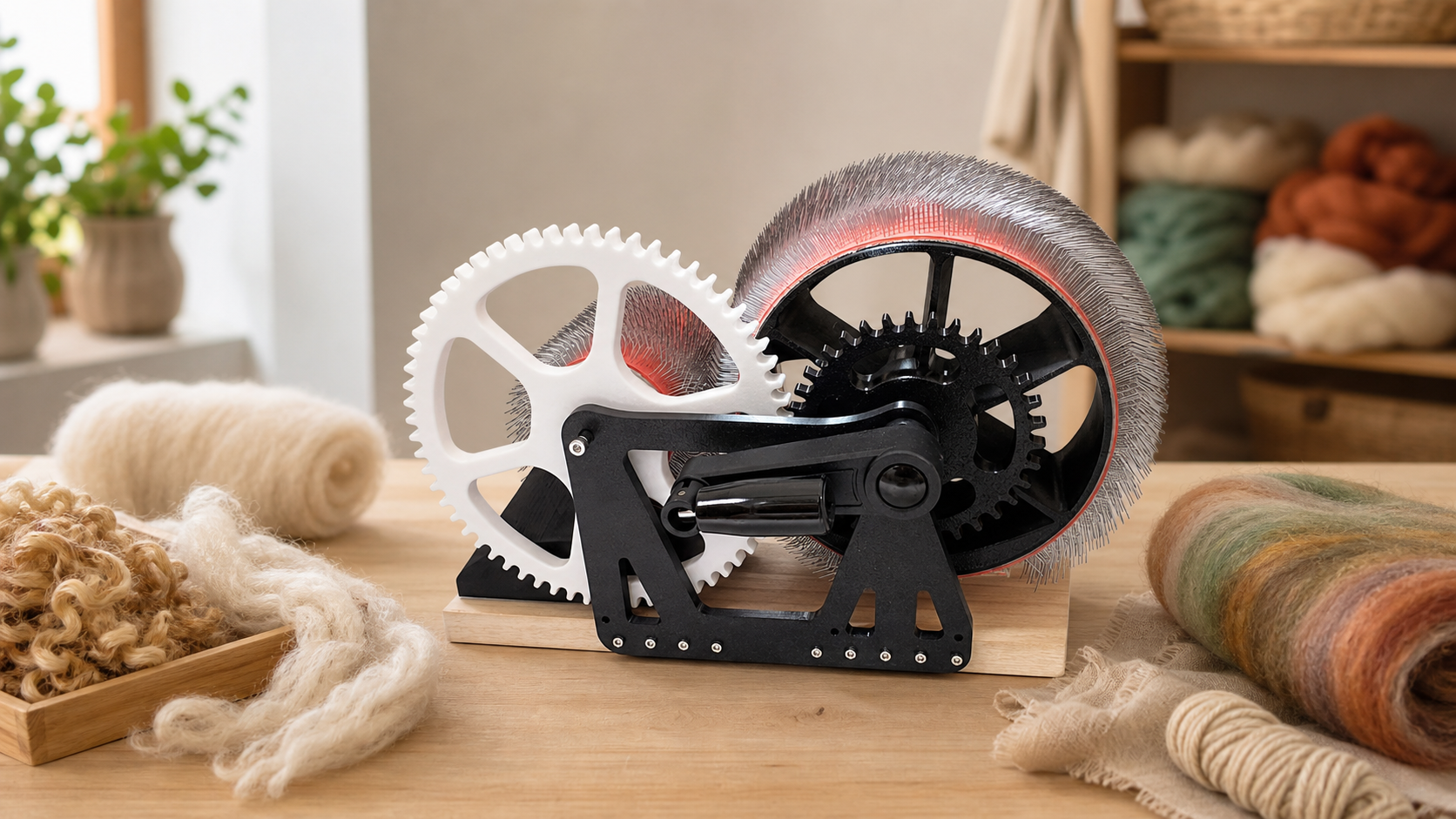
For the product side of the workflow, see the Studio Drum Carder. To move through the site from the beginning, use DrumCarder.
Sort Scraps Before You Blend
Begin by separating scraps into groups. Put clean wool in one pile, alpaca in another, sparkle or silk in another, and questionable pieces to the side. Remove debris, felted bits, and very short waste that will only create lumps. Sorting is where the batt becomes usable instead of chaotic.
Also separate by color temperature. Warm reds, golds, and browns usually blend more predictably together than a random pile of every leftover color. Cool blues, greens, and violets can make a separate family. Neutrals can become the base that holds stronger scraps together.
Choose A Base Fiber
A base fiber gives the batt structure. Clean wool is often a practical choice because it can hold smaller accents and help the batt draft. Without a base, scraps may form a weak, patchy sheet. The base does not need to hide the leftovers. It simply gives them a place to belong.
Use more base than accent for the first test. If the batt feels too plain, add more scraps next time. If it feels chaotic, reduce the accents. Small tests keep the learning inexpensive.
Layer Scraps Instead Of Dumping Them
Feed the base in light layers, then add scraps in thin, deliberate amounts. Spread color and texture across the width of the batt. Dumping a handful into one area creates dense spots that draft poorly. Layering gives you better control and a more predictable batt.
If you want strong flashes of color, place them intentionally. If you want a blended heather, use smaller pieces and fewer contrasts. The carder can combine materials, but your placement decides whether the result looks designed or accidental.
Keep Texture Under Control
Locks, silk, sparkle, nepps, and short pieces can make scrap batts lively. They can also take over. Use textured scraps in small amounts until you know how they behave. Too much texture can wrap, shed, or create hard spots in the batt.
If the batt is for spinning, pull a test strip. If the accents catch constantly, reduce them next time. If the batt is for felting, check whether the surface texture supports the layout rather than creating bulky ridges.
Avoid Muddy Color
Scrap batts often go muddy because too many unrelated colors are carded too many times. Limit the palette and stop early. A batt can have lively contrast without being fully blended. If the first pass looks interesting, do not automatically send it through again.
For color control, use the guide on adding accent colors without taking over a batt. The same idea applies to leftovers: edit before blending.
A simple scrap recipe can help. Use one handful of base, one small group of related color scraps, and one tiny texture accent. Make a sample batt, then decide whether to repeat it larger. If the sample works, write down the rough amounts and the order you fed them. Scrap blending becomes much easier when you build repeatable habits instead of trusting memory.
Keep a separate container for scraps that are not ready yet. Short pieces, questionable locks, and colors that do not fit the current blend can wait. You are not throwing them away; you are refusing to let one awkward piece spoil a good batt.
When a scrap batt turns out well, save a small strip before using the rest. That strip becomes a physical note for future blends. It shows color, texture, and density better than words alone, and it helps you decide whether the next scrap pile should be warmer, cooler, softer, or more structured.
Make Scraps Useful, Not Precious
Leftover fiber is perfect for sampling. Use scrap batts to test color combinations, practice drafting, make small felt pieces, or create textured yarn. Do not expect every scrap batt to behave like carefully prepared top. The value is in learning and using material that might otherwise sit forever.
If you are choosing a carding setup for this kind of small-batch work, ask product questions through contact, and review shipping plus returns before buying.
Turn Small Fiber Amounts Into Practical Batts
A compact carding routine is well suited to sampling, leftovers, and careful small-batch color work.
FAQ
Can I card all leftover scraps together?
You can, but the result may be muddy or lumpy. Sort by fiber type, color, cleanliness, and texture before blending.
Do scrap batts need a base fiber?
Usually yes. A clean wool base helps small scraps hold together and draft more predictably.
How much sparkle or silk should I add?
Start with a small amount. Decorative fibers can dominate quickly and may be hard to remove once blended.
Should I recard a scrap batt?
Only if it needs more integration. Extra passes can muddy color and flatten texture, so inspect after the first pass.
What scraps should I avoid?
Avoid felted clumps, dirty pieces, sharp debris, very short waste, or anything that catches and wraps during a small test.