
Blog
Art Batt Blending With a Drum Carder
Jul
Quick answer: art batt blending with a drum carder works best when you build the batt in deliberate layers: a wool base for structure, color placed with restraint, texture added where it can stay visible, and notes kept for any blend you may want to repeat. The goal is not to blend everything into sameness. The goal is controlled surprise.
Art batts are where a drum carder gets playful. A careful wool batt wants evenness. An art batt wants movement, contrast, and little moments that make a spinner pause. The trouble is that too much enthusiasm can turn bright color into mud and beautiful locks into invisible fuzz. Good blending keeps the drama without losing control.
Start With A Base Fiber
A strong art batt usually starts with a base. Wool is a practical choice because it can give structure to softer or slipperier fibers. The base does not have to dominate the finished look, but it should help the batt hold together and draft sensibly. Without a base, the batt may look exciting on the table and become frustrating at the wheel.
Choose a base color that supports the mood. Natural gray can quiet a bright palette. Cream can lift soft pastels. A deep base can make jewel tones feel richer. This is where art batt blending starts to feel less random. You are not throwing pretty things into the carder. You are building a surface that has a job.
Plan Color Before You Turn The Handle
Lay the colors out before feeding. Group them into main color, supporting color, and accent. If every color is the star, the batt may lose focus. A simple three-part plan keeps the blend readable: one color family carries the batt, another adds depth, and a smaller accent gives the eye somewhere to land.
Color mud happens when complementary or high-contrast colors are blended too thoroughly. If you want flashes of contrast, place them in thin streaks or small sections instead of mixing them through every layer. If you want a soft heathered look, use lighter passes and stop before the color becomes dull.
Add Texture Where It Can Be Seen
Locks, silk, nepps, sparkle, sari silk, and other add-ins need space. If they are buried too early or blended too many times, they can disappear. Place texture in light layers, often after part of the base has already built up. Think of texture as punctuation. A little in the right place reads clearly. Too much everywhere turns noisy.
Some texture should remain near the surface. Some can sit inside the batt for surprise while spinning. Decide which effect you want before feeding. For a smooth textured yarn, distribute add-ins lightly. For a bold batt that photographs dramatically, keep some locks or color flashes visible on the outer layer.
Use The Drum Carder As A Layering Tool
A drum carder is not only a mixer. It is also a layering tool. Feed a base layer, then color, then texture, then another whisper of base if the batt needs cohesion. Watch the surface build. If one area looks empty, add there. If one area is already crowded, leave it alone.
The best art batt sessions involve stopping to look. Turn the handle, feed a little, pause, and inspect. That pause is not wasted time. It keeps the batt from becoming overworked. It also teaches you what the carder does with each ingredient, which is more useful than any rigid recipe.
Keep Repeatable Studio Notes
Creative work still benefits from notes. Write down the base fiber, color order, approximate amounts, and when you placed the texture. If the batt is for sale, record enough detail to make a related batt later. If the batt is for your own spinning, notes help you connect the finished yarn back to the choices you made.
You do not need laboratory precision. A useful note might say: gray wool base, teal main color, rose accent near the end, locks on outer layer, one light second pass. That is enough to guide the next session. Without notes, the prettiest batt can become a one-time accident.
Avoid The Three Art Batt Traps
The first trap is overblending. If the colors looked better before the last pass, remember that feeling. Stop earlier next time. The second trap is too many ingredients. A batt can be complex without including everything in the studio basket. The third trap is ignoring the spinner. A batt that looks beautiful but drafts poorly may disappoint the person using it.
Balance beauty with function. Leave texture visible, but not so tangled that the batt becomes a fight. Add sparkle if it suits the yarn, not because it is nearby. Keep locks bold where they matter. The restraint is what makes the wild parts feel intentional.
Where The Studio Drum Carder Fits
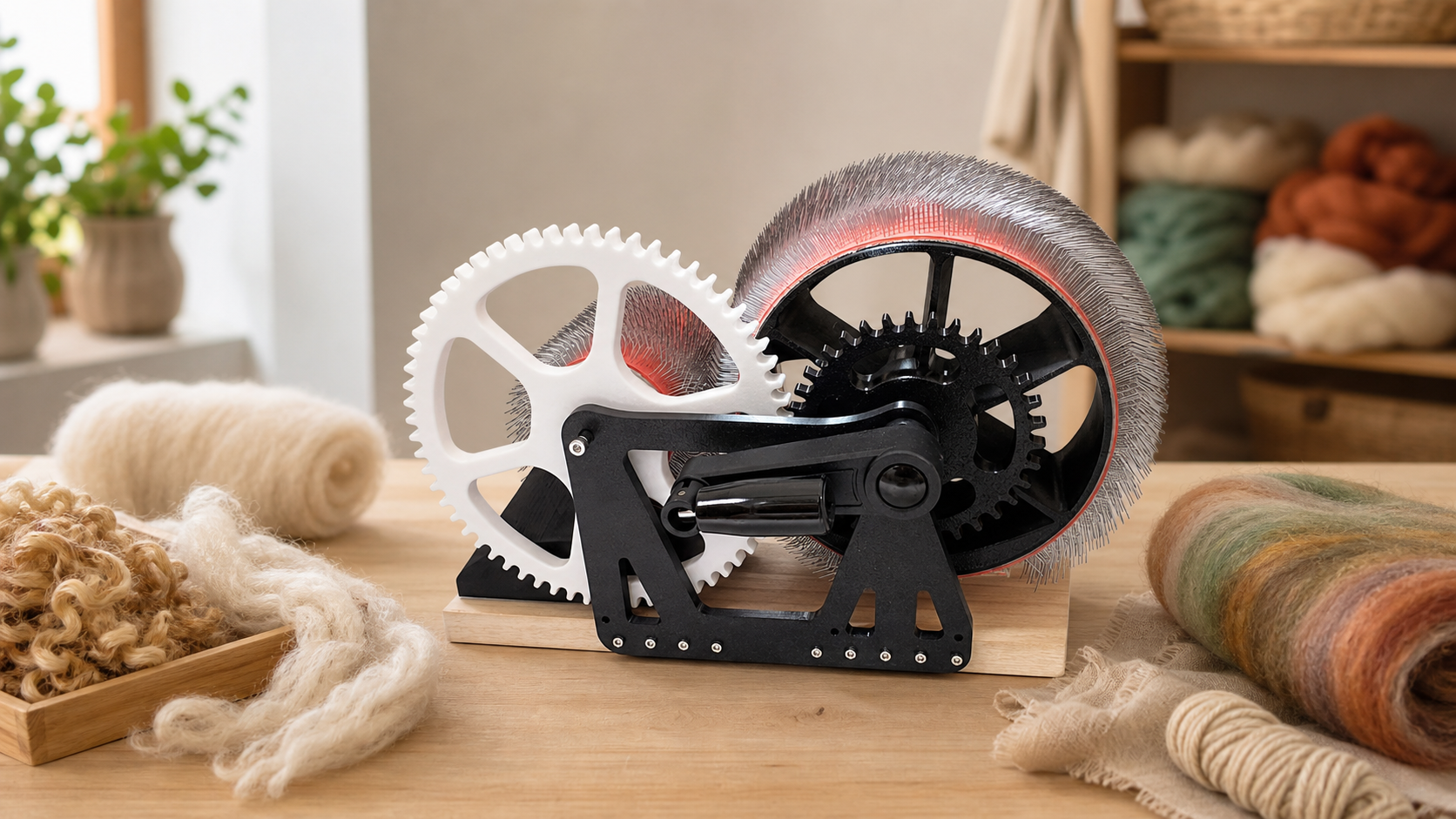
If art batt blending is becoming a regular part of your work, review the Studio Drum Carder with color and texture workflow in mind. Look for how you would feed layers, view the batt surface, remove the finished batt, and clean between high-contrast blends.
This is also where a compact setup can be appealing. Art batt makers often work with many small ingredients at once, so a manageable bench matters. If you have questions about current product details, use the contact page before ordering.
Make The Batt Feel Intentional
The difference between a messy batt and an expressive batt is intention. Choose a base. Limit the palette. Place texture where it can be seen. Stop before the carder erases the character you wanted. Then take notes while the choices are still fresh.
That process leaves room for surprise, which is the pleasure of art batts. It also keeps the surprise useful. The finished batt should invite spinning, felting, photographing, or selling without needing a long apology for why it behaves the way it does.
Build Art Batts With A Studio Carder
Review the Studio Drum Carder if you want a repeatable bench workflow for layered color, texture, and wool-based art batts.
FAQ
How do I stop art batt colors from turning muddy?
Use a smaller palette, place contrast deliberately, and avoid too many blending passes. Stop when the colors still have life and separation.
When should I add locks or sparkle?
Add delicate texture after part of the base has built up, and use light placement. If you want texture to stay visible, keep some of it near the outer layer.
Do art batts need a wool base?
Not always, but a wool base often adds structure and makes the batt easier to handle. It can support softer fibers, slick fibers, and decorative add-ins.
Can I make repeatable art batts?
Yes, if you keep notes. Record the base, color order, add-ins, and pass style. The next batt does not have to be identical, but it can belong to the same family.