
Blog
Ashford Louet and Clemes Drum Carder Comparison Notes
Jul
Quick answer: compare Ashford, Louet, Clemes, and other drum carder options by studio fit, support, carding cloth choices, space, budget, and how clearly each seller documents the current model. Use this neutral note-taking framework when you want fewer tabs open and better questions before choosing a drum carder.
Brand searches are normal in fiber tools. Ashford, Louet, and Clemes all show up because many spinners and felters have heard the names in guilds, classes, stores, and online groups. The tricky part is that a brand name alone does not tell you whether a drum carder fits your bench, your fiber, or your tolerance for setup and cleaning. Two products can share the same category and still feel very different in a small studio routine.
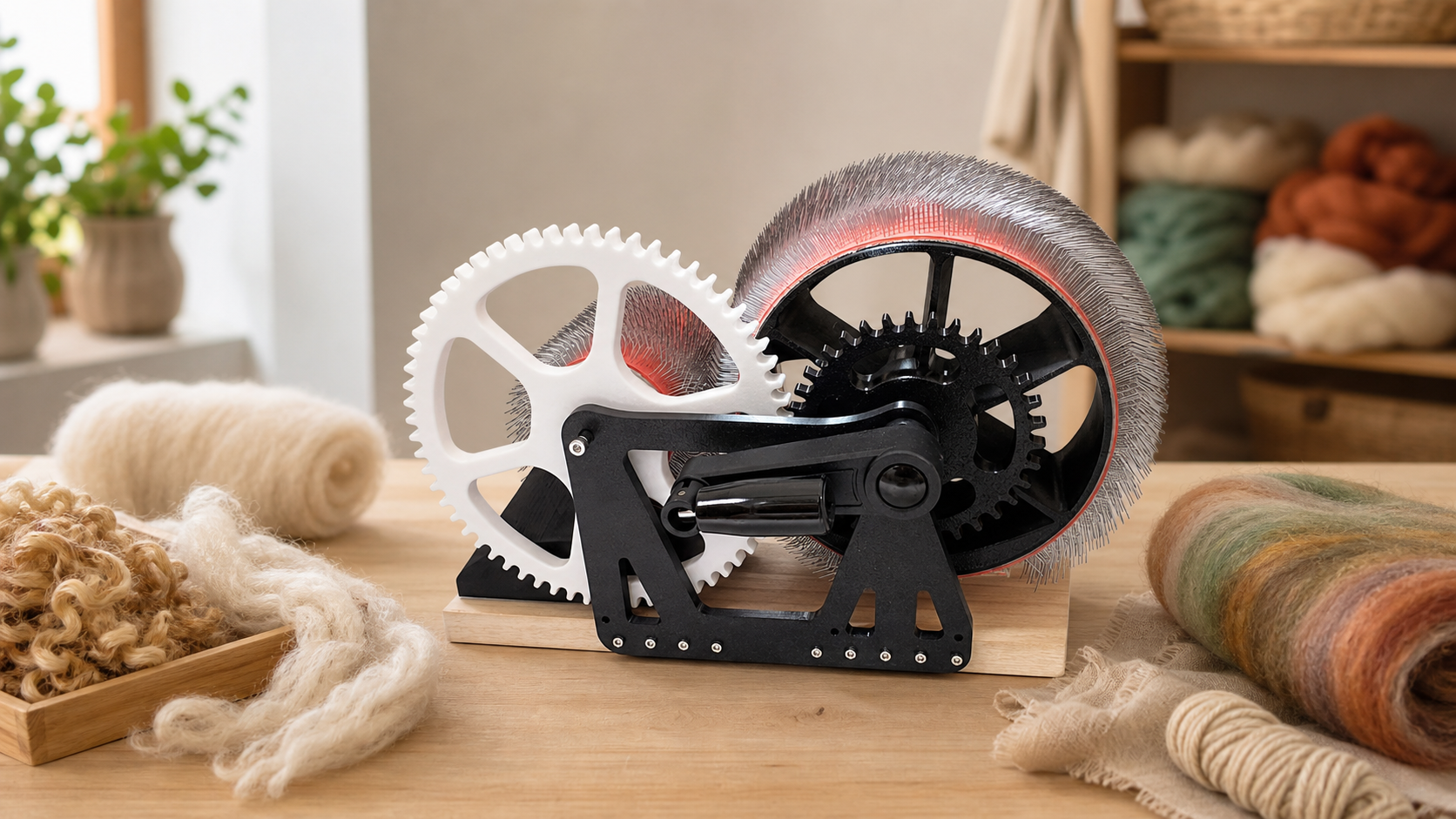
Use these comparison notes as a calm buying worksheet. If you are still learning the category, start with the broader drum carder buying guide for wool and alpaca, then come back to this page when you are weighing named options. For a compact product page to include in your comparison set, see the DrumCarder Studio Fiber Carder.
Start With The Job, Not The Brand
The first question is not “Which brand is best?” It is “What job do I need the carder to do most often?” A handspinner making small wool batts has a different priority list from a felter preparing layout fiber, an alpaca owner sampling fleece, or a fiber seller building colorways for shop updates. The same tool can be useful in one routine and awkward in another.
Write down your main job in one sentence. For example: “I want to blend dyed wool and alpaca into repeatable art batts for spinning.” Or: “I want to open small amounts of washed fleece before making felting layouts.” That sentence becomes the filter for every brand page, product photo, and used-equipment listing you read.
Compare Current Documentation
A well-known name is helpful, but current documentation matters more at purchase time. Look for clear product pages, recent photos, setup information, care instructions, and a direct way to ask questions. If a retailer or maker lists specific model details, confirm that those details match the unit you are actually buying. Product lines change. Used tools may have older parts, changed cloth, missing accessories, or local modifications.
This is especially important when comparing Ashford, Louet, Clemes, and smaller alternatives from different sellers. Do not copy a specification from one listing into your decision for another listing. Treat every page as model-specific until the seller confirms otherwise.
Check Fiber And Batt Priorities
Buyers often compare drum carders because they want smoother wool, softer alpaca blends, textured art batts, or faster prep than hand cards allow. Each goal changes the notes you should take. For wool, look at how the seller describes ordinary batt preparation. For alpaca, ask how the tool handles softness, density, and light blending with wool. For art batts, pay attention to how easy it appears to layer color, locks, sparkle, or texture without overworking the fiber.
Be honest about the fiber you actually use. A brand admired by production spinners may not be the most comfortable choice if your work is occasional, decorative, and space-constrained. A compact product may be practical for small-batch sampling, while a larger tool may suit people who routinely prepare more fiber. Neither direction is automatically superior.
Look At Space, Storage, And Handling
Many comparison notes ignore the boring part: where the tool lives. A drum carder that looks perfect online still needs a stable surface, room around the handle or feed area, a place for fiber, and a cleaning routine after the batt comes off. If your studio is a kitchen table, spare-room desk, or shared craft corner, compact handling may matter as much as brand reputation.
Before comparing prices, measure your real work zone. Include elbow room, not just the footprint. Think about whether the carder can stay out between sessions or must be moved after each use. A tool that is easy to access gets used. A tool that is always boxed under something heavy becomes a “someday” purchase.
Use Support As A Tie Breaker
Support is not glamorous, but it can decide the purchase. Look for replacement-part guidance, contact options, care information, and retailer responsiveness. If you are buying used, support questions become even more important because you may need to verify condition before money changes hands.
For a new buyer, the best support question is simple: “What should I know before choosing this carder for my fiber and my workspace?” A useful seller will answer in practical terms. If an answer feels vague, slow, or copied from a generic description, keep that in your notes.
Keep Comparison Language Neutral
It is easy to turn brand research into a fan argument. Resist that. Ashford, Louet, Clemes, and other drum carder names can all appear in serious buyer research without one needing to be dismissed. Your job is to decide which option best matches your fiber volume, budget, available space, documentation needs, and comfort with setup.
Also avoid treating forum comments as a complete answer. A spinner’s favorite tool may reflect their hands, fiber, local dealer, and years of practice. Use community comments as prompts for questions, then verify current details from the seller or manufacturer.
A Practical Brand Comparison Checklist
Use one page per option. Record the model name, seller, current price, support route, return policy if stated, space needs, fiber examples, setup notes, and unanswered questions. Do not fill blanks with guesses. If you cannot confirm something, write “ask seller” and move on.
Then choose by fit, not noise. A compact studio buyer may prioritize easy storage and small-batch blending. A frequent production user may prioritize capacity and parts availability. A beginner may prioritize clear instructions and a responsive contact path. Those are all reasonable decisions.
Compare A Compact Studio Option
Add the DrumCarder Studio Fiber Carder to your comparison notes for wool, alpaca, art batt blending, and small studio fiber prep.
FAQ
Are Ashford Louet and Clemes drum carders being evaluated here?
No. This page is a neutral comparison framework for organizing buyer questions about Ashford, Louet, Clemes, and other specific models.
What should I compare first between drum carder brands?
Start with your main fiber job, then compare current documentation, workspace fit, support, care requirements, and seller clarity.
Should a beginner buy by brand reputation alone?
No. Reputation can help you build a shortlist, but beginners also need clear instructions, support, comfortable handling, and realistic space planning.
How do I compare a compact drum carder with larger options?
Compare the size of your batches, how often you card fiber, where the tool will sit, and whether small-batch convenience matters more than capacity.
Where can I ask product-specific questions?
Use the seller’s contact path for the exact product you are considering. For DrumCarder questions, start with the contact page.