
Blog
Compact Drum Carder for Small Studio Fiber Prep
Jul
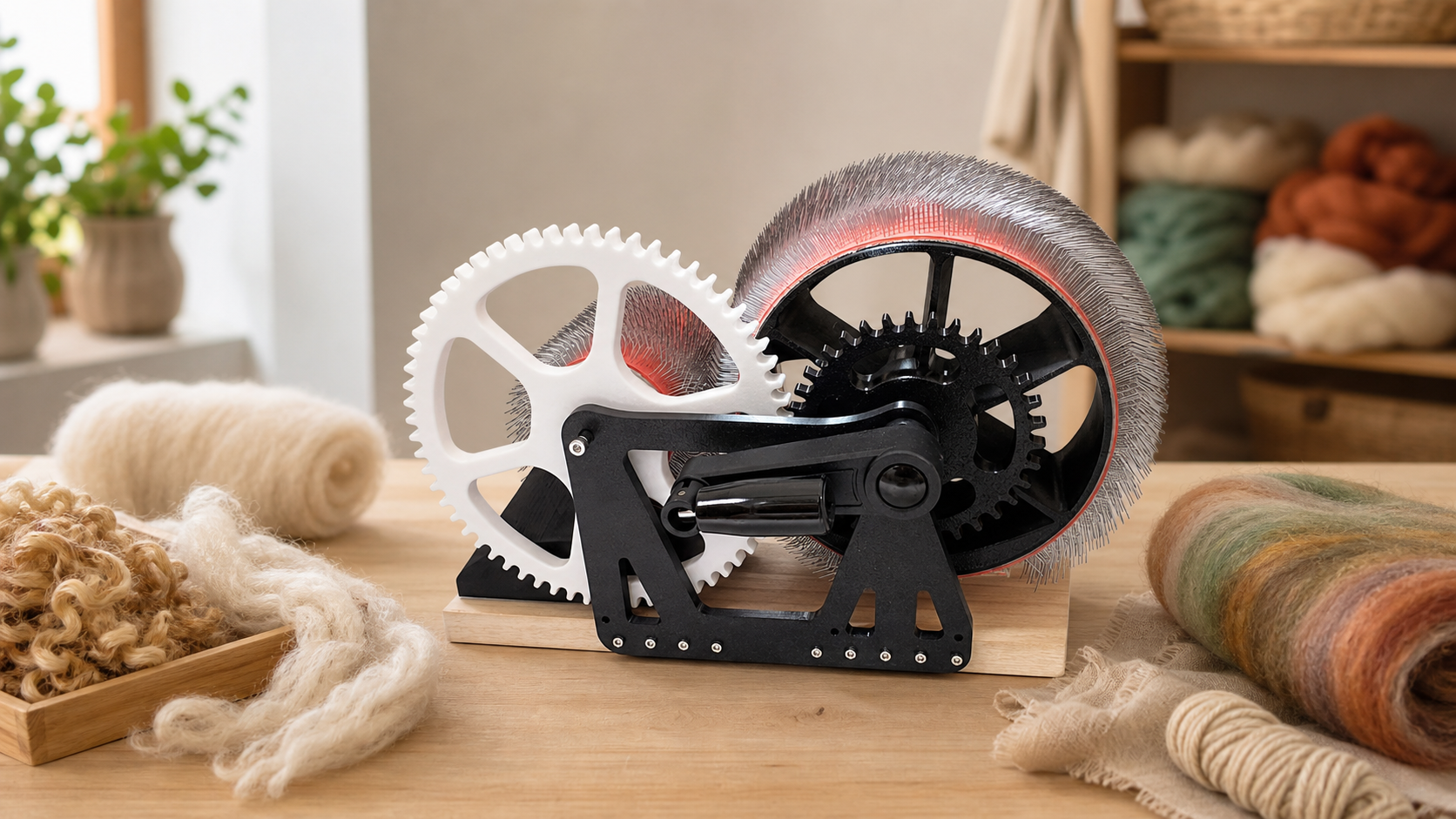
Quick answer: a compact drum carder can make sense for a small studio when your work is built around small batches, sampling, wool and alpaca blending, or art batts rather than high-volume prep. The best way to decide is to map the tool to your bench, storage habits, cleaning routine, and the amount of fiber you actually prepare in one sitting.
Small studios ask very practical questions. Where does the tool sit? Can it share a table with dye notes, scales, niddy noddies, packaging, or felting supplies? Will you leave it out, or will you put it away after each session? A compact drum carder is attractive because it promises a cleaner fit with everyday craft life, but compact only helps if it still supports the way you prepare fiber.
This guide focuses on space-aware buying decisions. For a broad category overview, the drum carder buying guide for wool and alpaca is a helpful companion. For the product page, see the DrumCarder Studio Fiber Carder.
Define Your Small Studio Reality
“Small studio” can mean a spare bedroom, a shared dining table, a market-prep corner, a dye shed, or one shelf in a closet. Each version has different limits. Before choosing a compact drum carder, describe your space without romance. How much clear surface do you have? How often do you need to move tools? Is fiber stored in bins, bags, baskets, or drawers? Do you have room to lay out batts after removing them?
This little audit matters because drum carding is not a single object on a table. It is a sequence of small tasks. Fiber needs to be opened, fed, removed, inspected, sometimes recarded, then stored or used. Compact equipment can reduce friction, but it cannot remove the need for a stable work surface and a tidy path through the session.
Match Compact Size To Batch Size
A compact drum carder is usually most appealing when your batches are modest: a few sample batts, a color test, an alpaca blend, a felting layer, or an art batt for a specific project. If you regularly prepare large amounts of fiber in one session, compact convenience may be less important than throughput. If you make small, varied batts, compact handling may be exactly what keeps the work pleasant.
Think in sessions rather than fantasies. What did you actually card or wish you could card last month? A person sampling three dyed wool blends after dinner has different needs from someone processing pounds of fleece for a production schedule. Neither buyer is wrong. They are simply buying for different days.
Check The Bench Before The Cart
Do a dry run with your current table. Set down a box or cutting mat where the carder would sit. Leave room for fiber on the input side, batt removal, tools, and your hands. If you need to work beside a wall, cabinet, or sewing machine, include that in the plan. The goal is not to make a perfect studio photo. The goal is to know whether the tool can be used without constant rearranging.
If the only possible surface is unstable, too high, too low, or always covered, solve that first. A compact carder on a bad bench is still frustrating. Sometimes the best purchase decision starts with a clearer work zone, a dedicated board, or a storage routine that lets you begin quickly.
Plan For Cleaning And Fiber Changeovers
Small studios often make varied projects. One day might be natural wool. The next might be dyed locks, alpaca, sparkle, or a textured art batt. That means cleaning and changeovers matter. A compact setup should make it easy to stop, inspect leftover fiber, and reset before the next color or fiber type.
This is not only about neatness. Stray dark wool can show in a pale batt. Sparkle can appear where you did not want it. Alpaca can add softness but also change the feel of the next blend if leftovers remain. Build a cleanup pause into the session instead of treating it as an afterthought.
Use Compact Positioning For Sampling
One strong use case for a compact drum carder is sampling. You can test color relationships, fiber proportions, and texture placement before committing to a larger project. That is useful for handspinners, felters, and small fiber sellers who need repeatable ideas without turning every experiment into a full production batch.
Keep a simple sample card next to the carder. Note the fiber, color order, number of passes, and what the batt was meant to become. If a blend works, you have a recipe. If it does not, you have a small lesson rather than a large pile of disappointing fiber.
Decide What Compact Should Not Do
A compact drum carder should not be asked to solve every fiber-prep problem. It may not be the best answer for very large batches, unclear raw-fleece prep, or buyers who need verified production specifications before ordering. It also does not replace good fiber preparation. Clean, opened, appropriate fiber still matters.
This boundary is useful. If your work is mostly small-batch wool, alpaca blends, art batts, and samples, compact positioning is strong. If your main problem is volume, speed, or commercial-scale processing, compare larger or more specialized options too.
Make A Buyer Checklist
Before buying, list your available bench area, storage plan, most common fiber, normal batch size, cleanup tolerance, support questions, and expected use. Then compare products against that list. Include practical pages such as the shipping policy and the product contact path, because buying comfort is part of the decision.
A compact drum carder is best when it makes carding easier to start and easier to repeat. The right tool should fit into the rhythm of your studio, not demand a studio you do not have.
Set Up A Smaller Fiber Prep Routine
Review the DrumCarder Studio Fiber Carder for compact wool, alpaca, sampling, and art batt sessions in a small studio.
FAQ
Is a compact drum carder enough for a small studio?
It can be enough if your work centers on small batches, sampling, and manageable wool or alpaca blends rather than high-volume processing.
What should I measure before buying a compact carder?
Measure the usable bench area, nearby hand room, storage location, fiber staging space, and where finished batts will go after removal.
Who should compare larger drum carder options too?
Compare larger options if you routinely prepare bigger batches, need more production capacity, or have specific requirements that a compact page does not confirm.
Can a compact drum carder work for art batts?
Yes, compact carding can fit art batt sampling and small-batch blending when you plan color layers, texture placement, and cleanup carefully.
Where can I check buying details?
Start with the product page, then read policy pages and contact the seller for product-specific questions.