
Blog
Carding Drum Terms: Main Drum Licker-In and Doffer
Jul
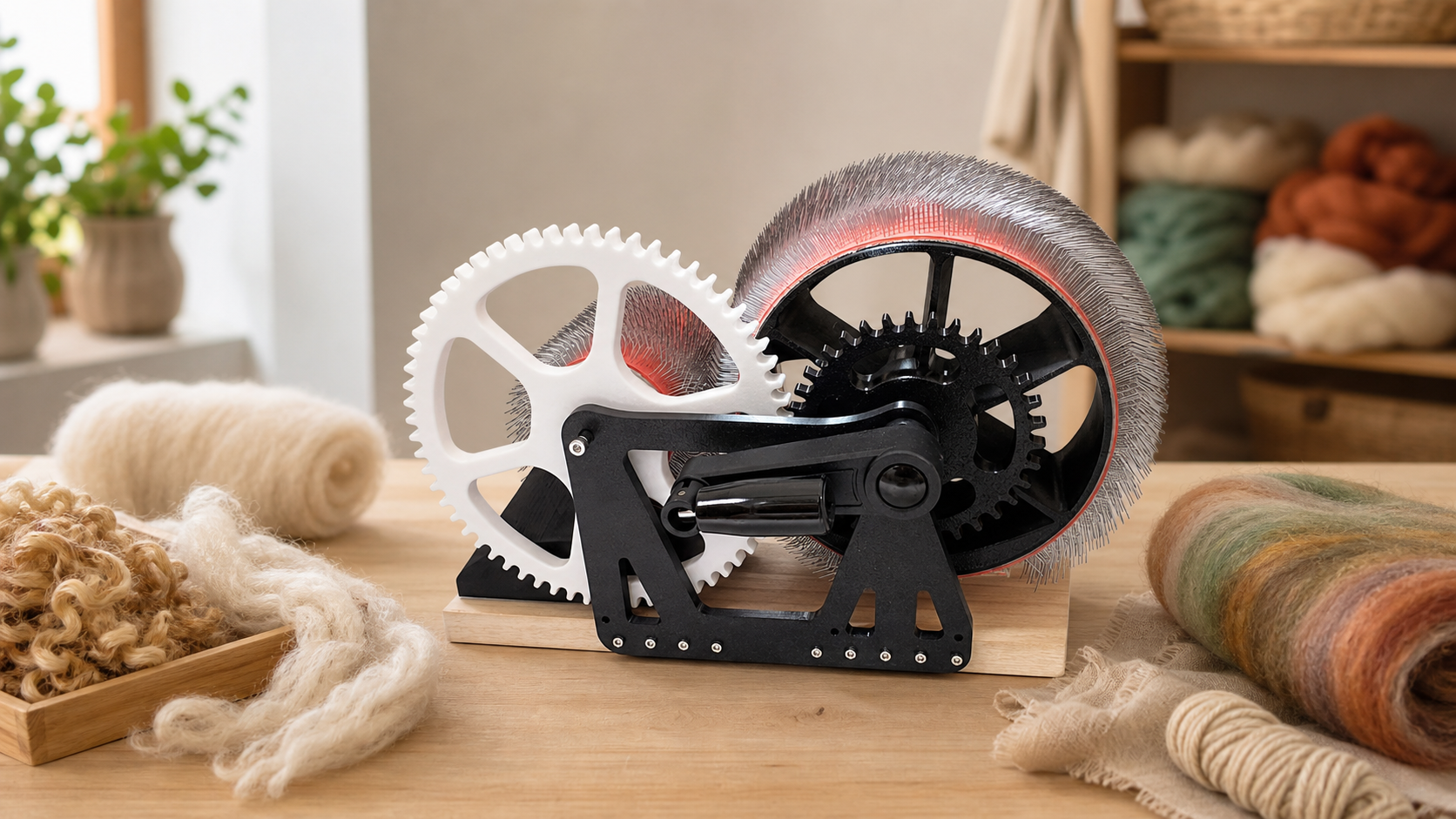
Quick answer: carding drum terms are easier once you separate the fiber path. The main drum holds and builds the batt, the smaller feed drum is often called the licker-in, the carding cloth carries the teeth that open fiber, and a doffer or doffing tool helps lift the finished batt. Knowing these words makes product pages, care guides, and buying questions much clearer.
Fiber tools can sound more complicated than they are because old textile terms appear beside modern product language. A buyer might see carding drum, carder drum, licker-in, doffer, carding cloth, TPI, feed tray, and batt removal in the same search session. Those words can feel like a parts manual before you have even touched the tool.
This glossary explains the terms in plain English for small drum carder shoppers and owners. For a deeper look at cloth and tooth language, read the drum carder cloth and TPI guide. For current product details, use the DrumCarder Studio Fiber Carder page.
Carding Drum Or Carder Drum
Carding drum and carder drum are broad search terms. People use them to mean the round drum on a drum carder, the tool as a whole, or sometimes a replacement part. In ordinary shopping language, the phrase usually points to the visible rotating drum that gathers fiber into a batt.
When comparing pages, check the context. If a page says carding drum as a part, it may be talking about a component. If it says drum carder, it is usually talking about the complete fiber-prep tool. This distinction helps you avoid confusing an educational article, a parts discussion, and a product page.
Main Drum
The main drum is the larger drum that builds the batt. As fiber moves through the feed area, the main drum catches it and carries it around on the carding cloth. Layer by layer, the fiber spreads across the drum until you remove it as a batt.
The main drum is where you can often see whether the carding session is going well. Even coverage suggests controlled feeding. Heavy ridges suggest overfeeding or uneven placement. Thin bare areas may mean the batt is not yet built out across the width. These visual cues matter more than memorizing terminology.
Licker-In Or Feed Drum
The licker-in is the smaller drum or feed drum that helps take fiber into the carder and transfer it toward the main drum. Some makers and product pages may use different wording, but the idea is the same: this is part of the entry path where loose fiber first begins to organize.
Because the licker-in area receives the fiber, feeding habits matter. Thick clumps, damp fiber, or tangled locks can create problems before the fiber ever reaches the main drum. A light, open feed gives this area a better chance to do its job. If you are learning the tool, watch this area carefully and reduce the amount of fiber whenever the feed looks crowded.
Carding Cloth
Carding cloth is the surface with many small teeth or wires that catch and open fiber. It appears on the drums and is one of the reasons terms like TPI appear in carder discussions. TPI means teeth per inch, but buyers should not assume a specific number unless the product page clearly states it.
For practical use, think of carding cloth as the working surface. It should be kept clean, treated with care, and matched to the kind of fiber preparation the tool is intended to support. If you are comparing carders, read only the details a product page actually provides and ask support about anything important that is not listed.
Doffer And Batt Removal
Doffing means removing the carded fiber from the drum. A doffer, doffing pin, or doffing tool helps lift the batt so it can come away from the carding cloth. The exact tool wording can vary, but the action is simple: separate the finished batt without damaging the fiber or the cloth.
Good doffing is slow and controlled. If you pull too hard, the batt may tear. If you crush the batt afterward, you may lose loft. When reading product or care information, notice whether the page explains how the batt is removed and how the carder should be cleaned after use.
Feed Tray, Handle, And Frame
The feed tray is the area where fiber is presented to the carder. The handle or drive mechanism turns the drums. The frame keeps the tool stable on the bench. These terms are simpler, but they still matter because they affect daily use.
Before buying, imagine the tool on your actual work surface. You need room to feed fiber, turn the handle or operate the tool as designed, remove the batt, and clean around the drums. A carder that looks compact in a photo still needs a comfortable working zone.
How Terms Help You Ask Better Questions
Terminology is useful because it makes support questions clearer. Instead of saying “the front part,” you can ask about the feed area or licker-in. Instead of saying “the wire surface,” you can ask about carding cloth. Instead of saying “taking the fiber off,” you can ask about doffing and batt removal.
Use the terms to compare pages carefully, but avoid filling in missing specifications from assumptions. If a current detail matters to your purchase or care routine, ask through the contact page. Clear questions usually get clearer answers.
Compare Drum Carder Terms On The Product Page
Review the DrumCarder Studio Fiber Carder and use these terms to understand the fiber path, batt removal, and support questions.
FAQ
Is the carding drum the same as the whole drum carder?
Not exactly. People sometimes use the phrase loosely, but the carding drum usually means the drum itself, while drum carder means the complete fiber-prep tool.
What does the main drum do?
The main drum catches fiber and builds it into a batt. Watching its surface helps you see whether the fiber is being fed evenly or too heavily.
What is a licker-in on a drum carder?
The licker-in is the smaller feed drum or entry drum that helps take fiber into the carder and transfer it toward the main drum.
What does doffing mean?
Doffing means removing the carded batt from the drum. A doffer or doffing tool helps lift the batt from the carding cloth.