
Blog
How to Prepare Washed Fleece Before Drum Carding
Jul
Quick answer: prepare washed fleece before drum carding by making sure it is fully dry, sorted, opened, and free from the worst second cuts or debris. A drum carder can organize fiber into batts, but it should not be asked to fix damp locks, matted tips, heavy vegetable matter, or dense clumps that should have been handled first.
Washed fleece can look ready before it actually is. The grease may be gone, but locks can still be tight, tips can still cling, and short cuts can hide inside the pile. If those problems go straight to the carder, the batt may come off lumpy, streaky, or hard to draft. Better preparation makes the carding session calmer and protects the quality of the finished fiber.
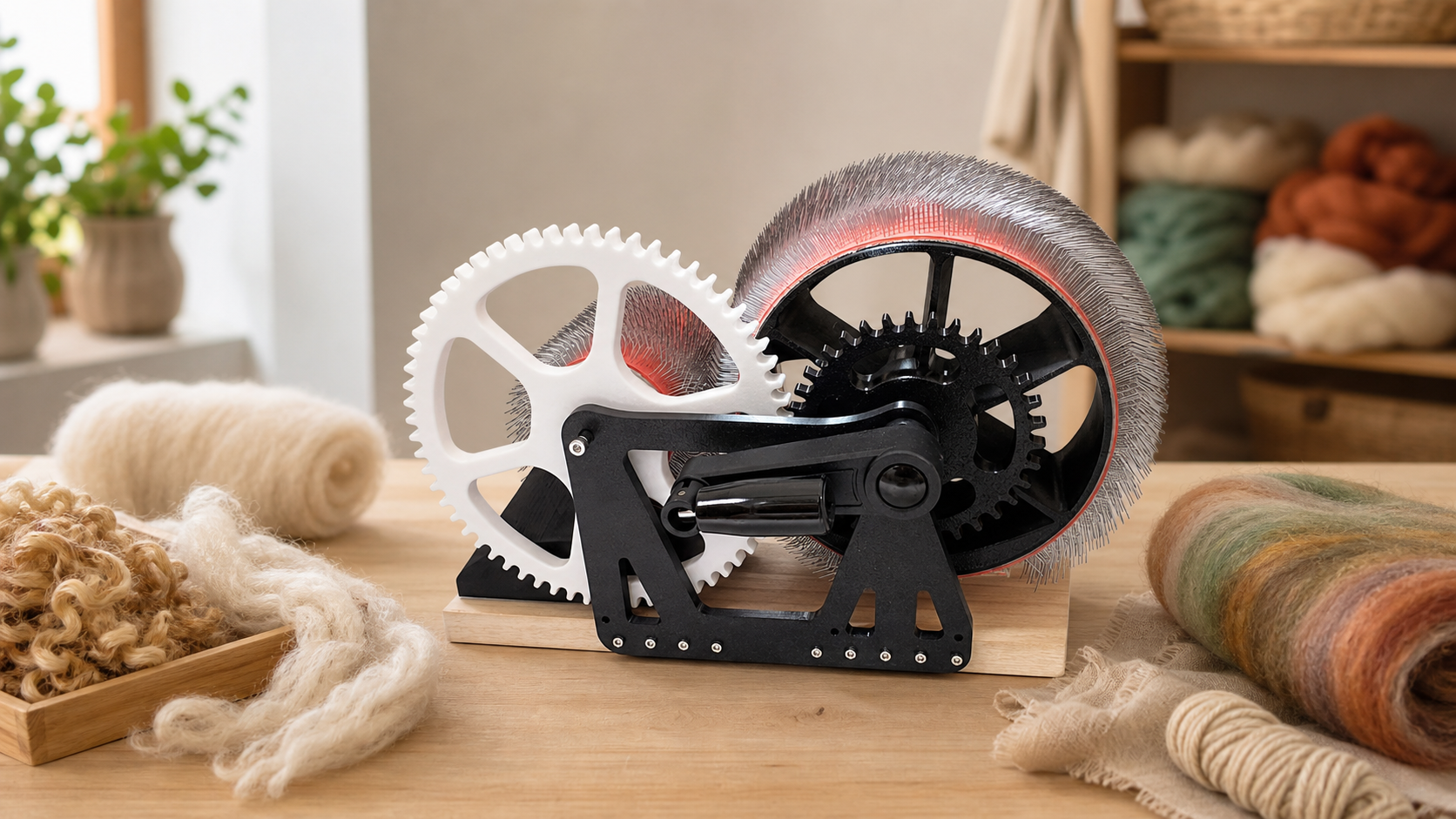
Use this guide before feeding washed wool into any drum carder. If you are planning a compact home setup, compare the workflow with the Studio Drum Carder and the support links on DrumCarder.
Confirm The Fleece Is Really Dry
Dryness matters more than many beginners expect. Damp fleece can pack into the cloth, grab unevenly, and make the next batt feel heavy or sticky. It can also make storage unpleasant if the fiber sits before carding. Before you begin, press into the densest locks and check the tips, not just the outside of the pile.
If the fleece feels cool, heavy, or slightly resistant, give it more drying time. Spread it in a thin layer with air around it. Do not rush this step because the carder will reveal the moisture later in the form of clumping and drag.
Sort Before You Open
Sorting saves time at the carder. Remove obvious second cuts, burrs, brittle tips, stained sections, and pieces that still need more washing. Keep the best locks for smoother batts and set aside questionable bits for sampling, felting cores, or discard. The goal is not perfection. The goal is to prevent the worst pieces from defining the whole batt.
Sort by feel as well as appearance. Some locks may look clean but feel tacky or matted. Others may be short but useful for felting. Put similar fiber together so the batt has a clearer job. Mixing every grade into one pile often creates a batt that is hard to use for anything specific.
Open Locks Gently
Tease the locks before they reach the feed area. Pull the tips apart, open the butt ends, and spread the fiber into light pieces. If the lock resists, slow down and decide whether it belongs in this batch. Forcing tight locks into a drum carder makes thick streaks and can make turning harder.
Hand opening also tells you how the fiber wants to behave. A fine fleece may need a delicate touch. A more rustic fleece may tolerate more handling. Alpaca and mixed fibers may need extra attention because density and slipperiness change the way the carder takes the fiber.
Make A Test Batt First
Before preparing a large amount, card a small test batt. Use the same feeding style you plan for the full session. Remove the batt, pull a strip, and draft or felt a small sample depending on your project. This test shows whether the fleece needs more opening, another pass, or a different use.
Sampling also protects special fleeces. A beautiful washed fleece can still surprise you with nepps, weak tips, or color variation. It is better to learn that from a small batt than after you have carded the whole bag.
Feed In Thin, Even Pieces
When the fleece is ready, feed thin pieces across the width instead of pushing dense chunks into one spot. The carder should take the fiber smoothly. If you feel the need to shove, the fleece needs more opening or smaller pieces. Light feeding helps the batt build evenly and makes removal cleaner.
Keep the first pass simple. Do not add many colors, locks, or decorative fibers until you know how the washed fleece behaves by itself. Once the base prep is reliable, you can decide whether to blend, layer, or keep the natural color as the main feature.
Use The Finished Batt Intentionally
After carding, choose the batt’s job. Smooth batts can go toward spinning. Airier batts may suit felting. More textured batts can become art yarn or weaving accents. If the washed fleece still has uneven areas, do not pretend it is a fine spinning preparation. Use it where its character helps instead of hurts.
Before ordering or asking product questions, review the contact page, shipping policy, and refund and returns policy. The right carder should fit both your fiber and the way you prefer to buy tools.
Turn Washed Fleece Into Better Batts
Prepare, sort, open, and test your fleece before using a drum carder for repeatable home fiber prep.
View the product: https://drumcarder.com/product/studio-drum-carder/
FAQ
Can washed fleece go straight into a drum carder?
Only if it is dry, clean, and opened enough to feed lightly. Many washed fleeces still need sorting and teasing before carding.
Why does washed fleece make lumpy batts?
Lumps usually come from damp fiber, tight locks, second cuts, matted tips, or feeding too much fiber at once. Prepare smaller airy pieces first.
Should I remove second cuts before carding?
Yes. Second cuts can create nepps and short fuzzy bits in the batt. Remove as many as practical before the fiber reaches the carder.
How do I know if fleece is dry enough?
Check inside dense locks, not only the outer surface. The fiber should feel dry, light, and open rather than cool, heavy, or tacky.
What should I do with lower-quality fleece sections?
Save them for felting cores, texture samples, or practice if they are usable. Do not mix weak sections into a smooth spinning batch unless you want that effect.