Blog
Drum Carder vs Fiber Picker for Opening Wool
Jul
Quick answer: a fiber picker opens washed wool before carding; a drum carder organizes prepared fiber into batts. Choose a picker when the main problem is dense locks that need opening. Choose a drum carder when the fiber is already clean enough to feed and you want controlled blending, batt making, color work, or repeatable small-batch prep.
These tools are often mentioned together because they both sit in the fiber preparation stage. They do not solve the same problem. A picker is about opening. A drum carder is about carding and blending. If you expect one tool to do the other tool’s job, the session can become frustrating and the finished fiber may suffer.
For many home studios, the smart decision starts with the fiber you actually have. Open a few locks, feel how dense they are, and ask whether your problem happens before the carder or at the batt-making stage. Then compare your needs with the Studio Drum Carder.
What A Fiber Picker Does Best
A picker is useful when washed fleece is still locked, compacted, or difficult to spread by hand. It opens fiber before the carding stage so the carder does not have to fight dense clumps. This matters when fleece has tight tips, compressed storage, or sections that need more air before any blending happens.
Opening is not the same as making a finished preparation. Picked fiber can look fluffy, but it usually still needs carding, combing, or another finishing step before spinning or felting. Think of the picker as a preparation helper, not a batt maker.
What A Drum Carder Does Best
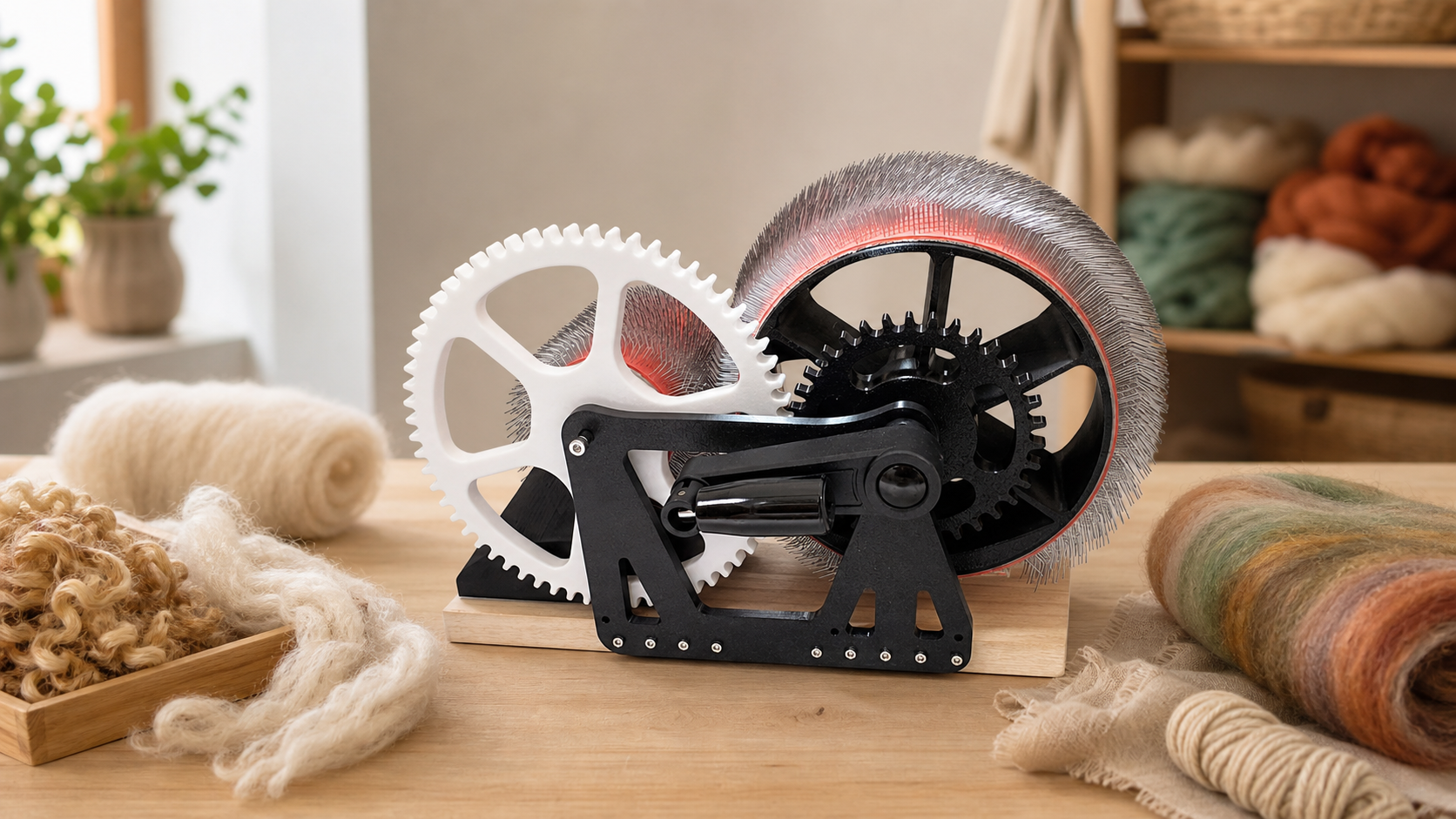
A drum carder takes opened fiber and turns it into a batt. It can blend colors, combine wool with alpaca, prepare felting layers, organize art batt textures, and create repeatable batches. It works best when the fiber entering the feed area is already clean, dry, and teased enough to move without forcing.
If you want to make spinning batts, gradient batts, felting batts, or textured blends, a drum carder is the more direct tool. It gives the maker control over layers, pass count, and batt removal in a way a picker does not.
Use Fiber Condition As The Decision Rule
Look at the wool before deciding. If the fleece is washed but still in dense locks that resist gentle hand opening, the first need may be picking or more careful teasing. If the fiber opens easily but your batts are uneven, streaky, or slow to repeat, the carding stage may be the real bottleneck.
A good question is: can I feed this fiber lightly without pushing? If the answer is no, do more opening first. If the answer is yes, a drum carder can help turn that opened fiber into something useful for spinning, felting, or selling.
When You May Need Both
Some fleece workflows use both tools. The picker opens washed locks. The drum carder then organizes the opened fiber into batts. This can be useful for larger fleece projects or studios that process similar fiber often. The benefit is not owning more equipment. The benefit is assigning each tool the job it does best.
For a smaller home studio, you may not need both immediately. If you mostly work from prepared roving, dyed top, or already teased wool, a picker may not be urgent. If you buy raw or washed fleece and struggle to open it, a carder alone may not solve the early-stage problem.
Buying Checks For A Drum Carder
If your goal is batt making, review the DrumCarder site and product page with specific questions. What fiber will you feed? How much space do you have? Do you want smooth spinning batts, textured art batts, or felting layers? Can you clean the tool between projects? These questions are more useful than asking whether a picker or carder is generally better.
Also include store-fit checks. Read the shipping policy and refund and returns policy, and use the contact page for product questions. The right tool should fit your fiber and your buying comfort.
A Practical Decision
Choose the tool by bottleneck. If your wool is too compact to enter any carder gracefully, focus on opening first. If your fiber is ready but your blends are inconsistent, choose a drum carder workflow. If you process fleece regularly from wash to finished prep, plan a sequence where each tool has a clear role.
The mistake is expecting a drum carder to act like a heavy opener or expecting a picker to make a finished batt. Better fiber prep comes from using the right tool at the right stage.
Choose The Tool For Your Real Bottleneck
If your fiber is ready for controlled batt making, review the compact drum carder workflow and product details.
View the product: https://drumcarder.com/product/studio-drum-carder/
FAQ
Is a fiber picker the same as a drum carder?
No. A picker opens compacted washed fiber. A drum carder organizes opened fiber into batts for spinning, felting, blending, or art fiber work.
Can I put unprepared fleece straight into a drum carder?
Only if it is clean, dry, and opened enough to feed lightly. Dense locks should be teased, picked, or otherwise opened before carding.
Which tool should a beginner buy first?
Buy for your bottleneck. Prepared fiber users often benefit more from a drum carder. Washed fleece users with dense locks may need opening help first.
Do I need both tools for home fiber prep?
Not always. Many home makers use only a drum carder with prepared fiber. Both tools make sense when you regularly process fleece from washed locks to finished batts.
Why are my batts still lumpy after carding?
The fiber may not have been opened enough before carding, or it may have been fed too heavily. Prepare smaller, airier pieces before the next pass.