
Blog
How to Prepare Fiber for Wheel Spinning Practice
Jul
Quick answer: prepare fiber for wheel spinning practice by making clean, consistent batts, splitting them into repeatable sections, and choosing blends that support the drafting skill you want to practice. A wheel can move faster than your hands can diagnose problems, so the fiber should be even, labeled, and easy to compare.
Wheel spinning practice rewards consistency. If one handful is airy and the next is compacted, your feet, hands, and twist all have to adapt at once. That makes improvement hard to read. A drum carder can help by creating related practice batts that behave more predictably.
Decide What The Session Is Teaching
Name the skill before carding. Long draw, short forward draw, thicker singles, finer singles, color control, or ply consistency all ask different things from the fiber. If the batt has no purpose, the practice may feel pleasant but unclear.
For drafting rhythm, choose a simple open batt. For color practice, use clear layers or stripes. For consistency work, make several similar sections from the same batt so each attempt starts with related fiber.
Start With Clean Open Fiber
Wheel spinning magnifies prep problems. A clump that seems small on the table can rush into the drafting zone and create a thick spot before you can react. Start with clean, dry, opened fiber. Tease compacted wool, check alpaca for dense spots, and remove obvious debris before carding.
Do not ask the carder to fix unsuitable fiber in one heavy pass. Better prep before carding usually means calmer spinning after carding.
Card For Evenness, Not Perfection
Useful wheel practice does not require perfectly uniform fiber. It requires enough evenness that your hands can learn rhythm. Feed small tufts across the width, avoid loading one side heavily, and watch for ridges before the drum fills.
If the batt looks uneven, fix the feeding pattern before making more. For basic quality checks, use the smoother wool batt guide as a companion.
Split Batts Into Matching Sections
After removal, split the batt into similar sections. This gives you several chances to practice the same skill under similar fiber conditions. Label sections if you are comparing wheel settings, draw style, or treadle rhythm.
For example, spin one section at a comfortable pace, one slightly slower, and one with a different drafting method. Because the fiber sections are related, the comparison is more meaningful.
Keep Blends Modest At First
Wheel practice is already complex. Start with one base fiber or a simple wool and alpaca blend. Add color only when it supports the lesson. Too much texture can distract from drafting, twist, and take-up, especially for newer wheel spinners.
When you are ready for color, use intentional layers. The art batt blending guide can help you create batts that spin with a purpose rather than random surprise.
Make A Short Practice Log
Record fiber, batt style, pass count, wheel setting if useful, drafting method, and result. Keep it short. “Two-pass wool batt, split into four, short forward draw felt smoother than long draw” is enough to guide the next session.
Write the note while yarn and fiber are still nearby. Memory tends to make practice yarn kinder than it was. A clear note helps separate prep quality from spinning technique.
Keep One Control Section
When testing a new batt or blend, save one small section as a control. Spin part of the fiber at the beginning of practice, then return to the control after your hands warm up. If the later sample spins better, the difference may be your rhythm rather than the fiber. That little comparison keeps practice honest.
A control section also helps when you change wheel settings. You can test one adjustment without wondering whether the next handful came from a denser part of the batt.
Store control sections in order if the practice spans several days. Label them with the same fiber note and the date. A week later, similar batts can look alike, but their spinning results may tell very different stories.
Prepare Enough For The Practice Block
If you have an hour at the wheel, prep enough related sections before you sit down. Stopping to card every few minutes breaks rhythm. Batch prep gives your hands time to settle into spinning.
Keep the prepared sections covered while you spin so household lint, dust, or stray color does not become part of the practice yarn.
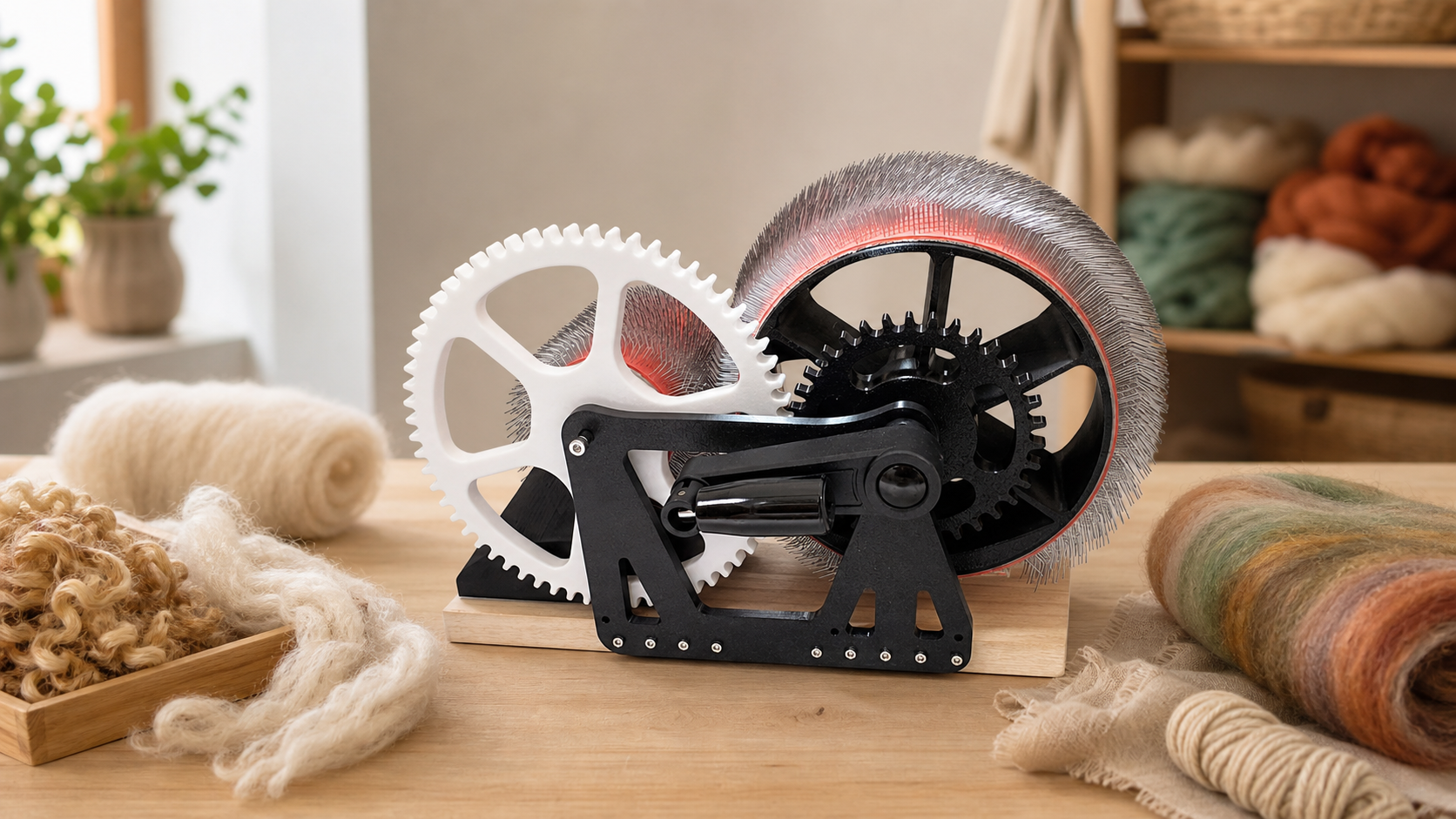
Review the DrumCarder Studio Fiber Carder if you want a focused prep setup for practice batts. Start at the homepage, use the contact page for current questions, and check the shipping policy plus refund and returns policy before planning around delivery.
End the practice block with one note about the fiber, not just the yarn. If the batt drafted easily, record why. If it fought the wheel, write down whether the issue was density, color placement, staple length, or your prep routine.
Prepare Wheel Practice Batts More Consistently
Use DrumCarder to create labeled batts and repeatable fiber sections for focused wheel spinning practice.
FAQ
What fiber prep is best for wheel spinning practice?
The best prep is clean, open, and consistent enough to support the drafting skill you want to practice. Carded batts can work well when split into sections.
Should I blend colors for wheel practice?
Use simple color blends at first. Complex texture and color can distract from drafting rhythm, twist control, and take-up.
How many batts should I prepare?
Prepare enough for the practice block you planned. Several related small sections are often better than one large batt with no structure.
Can better prep fix uneven spinning?
Better prep helps, but it does not replace practice. Consistent fiber makes it easier to see whether uneven yarn comes from fiber, drafting, twist, or take-up.
Why split a batt into sections?
Sections let you repeat the same exercise under similar fiber conditions, which makes wheel setting and drafting comparisons more useful.