
Blog
How to Choose Fiber Prep Tools for a New Spinner
Jul
Quick answer: choose fiber prep tools for a new spinner by starting with the fiber they want to spin, the prep form they enjoy, their workspace, and how much repeatability they need. Hand cards, combs, blending boards, and drum carders all have a place. A drum carder becomes useful when the spinner wants batts, blends, samples, and faster repeatable prep.
New spinners are often told to buy too much. That can turn a joyful craft into a confusing equipment list. A better first setup supports the next month of spinning, then grows when the spinner can name a real problem the next tool will solve.
Start With The Fiber Form
Ask what fiber the new spinner already has. Commercial top, roving, rolags, washed locks, alpaca, and batts behave differently. If the spinner mainly buys ready-to-spin top, they may not need much preparation at first. If they start with washed fleece or loose wool, prep tools matter sooner.
Fiber form should guide the tool. Buying a drum carder before knowing whether the spinner likes batts may be premature. Buying tiny hand tools for someone who wants repeatable art batts may be too slow.
Understand What Each Tool Does Best
Hand cards are small, affordable, and good for learning how fiber opens. Combs align longer fibers and remove some shorter bits, but they need care and space. Blending boards are useful for color placement and rolags. Drum carders make batts and can help blend larger or repeated samples more efficiently.
No tool wins every job. The best first tool supports the spinner’s next real practice sessions, not every imagined future project.
Choose For Patience And Practice Style
Some new spinners enjoy slow preparation. They like making tiny rolags and feeling the fiber open in their hands. Others want enough prepared fiber for a full wheel session without spending the whole afternoon getting ready. Neither style is wrong.
If the spinner wants longer practice blocks with prepared batts, a drum carder may be appealing. If they want small experiments, hand cards or a blending board may feel friendlier at first.
Think About Workspace And Storage
A beginner may spin in a living room, guild room, spare bedroom, or shared table. Tools that are easy to set up and store often get used more than tools that feel awkward to move. Before buying, imagine the whole loop: fiber comes out, tool is used, finished prep is labeled, loose fiber is cleaned, and everything goes away.
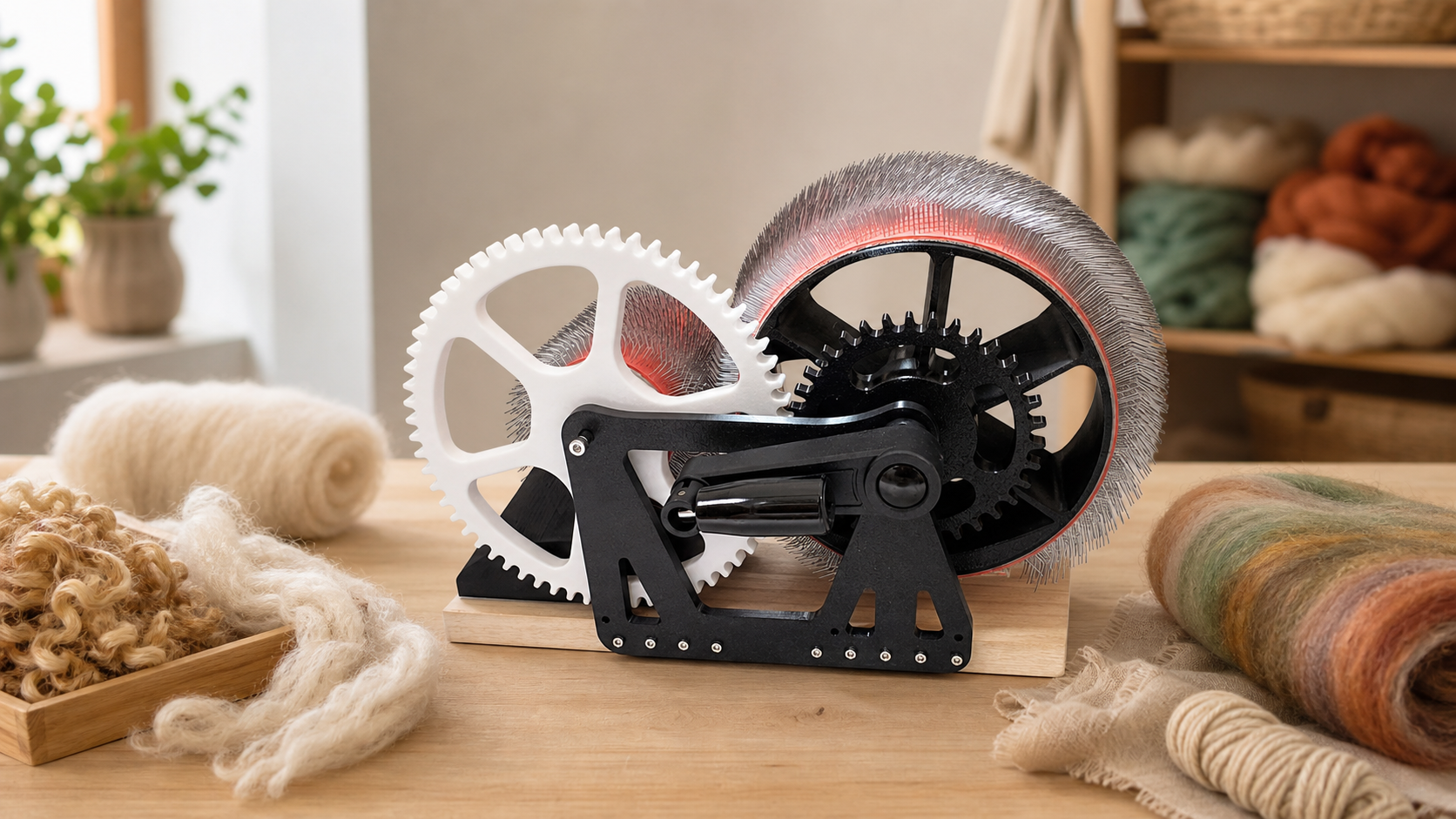
Start at the DrumCarder homepage and review the DrumCarder Studio Fiber Carder if batts are part of the plan. Ask through the contact page when a detail affects space or setup.
Use A Drum Carder When Batts Are The Goal
A drum carder makes sense when the spinner wants carded batts for practice, color blending, wool and alpaca samples, breed study, or repeated prep. It can turn opened fiber into a more organized batt that supports planned practice.
It does not replace learning fiber behavior. The spinner still needs clean dry fiber, light feeding, and patience. For a basic quality reminder, read how to card wool into smoother batts.
Avoid Buying From Anxiety
Beginners sometimes buy tools because they worry they are doing the craft wrong. Start with the tool that solves the current problem. If the problem is opening small amounts of wool, hand cards may be enough. If the problem is needing consistent batts for regular practice, a drum carder may fit better.
Before a larger purchase, check timing and policies. The shipping policy and refund and returns policy belong in the decision alongside fiber fit.
Try A Borrowed Or Shared Tool When Possible
If the new spinner has access to a guild, class, or friend with fiber tools, a short trial can clarify the choice. Ten minutes with hand cards, a blending board, or a drum carder teaches more than weeks of guessing from pictures. Notice which prep form the spinner actually wants to return to. Comfort, cleanup, and repeatability are part of the decision.
After the trial, ask what felt easy and what felt annoying. A beginner who dislikes cleanup may need a smaller first setup. A beginner who loves making several related batts may be ready for a more focused carding station.
Buy For Practice, Then Grow
The first setup should help the new spinner practice this month. It does not need to solve every future project. Once the spinner understands what good prep feels like, future tool choices become clearer and less expensive.
Choose A First Fiber Prep Setup With Care
Use DrumCarder when a new spinner wants repeatable batts, small fiber blends, and a focused path from loose fiber to practice-ready prep.
FAQ
Does a new spinner need a drum carder?
Not always. A drum carder is useful when the spinner wants batts or repeatable blending. Ready-to-spin fiber may not need it immediately.
What is the simplest first fiber prep tool?
Hand cards are often a simple starting point for small amounts of wool, but the right choice depends on fiber form and practice goals.
When should a beginner consider a drum carder?
Consider one when hand prep feels too slow, the spinner wants consistent batts, or repeated blends are part of practice, teaching, or selling.
Can one tool prepare every fiber perfectly?
No. Different fibers and projects need different preparation. Choose the tool that fits the spinner’s most common work first.
Should workspace affect the tool choice?
Yes. A tool that fits the table, storage, cleanup routine, and making schedule is more likely to be used regularly.