
Blog
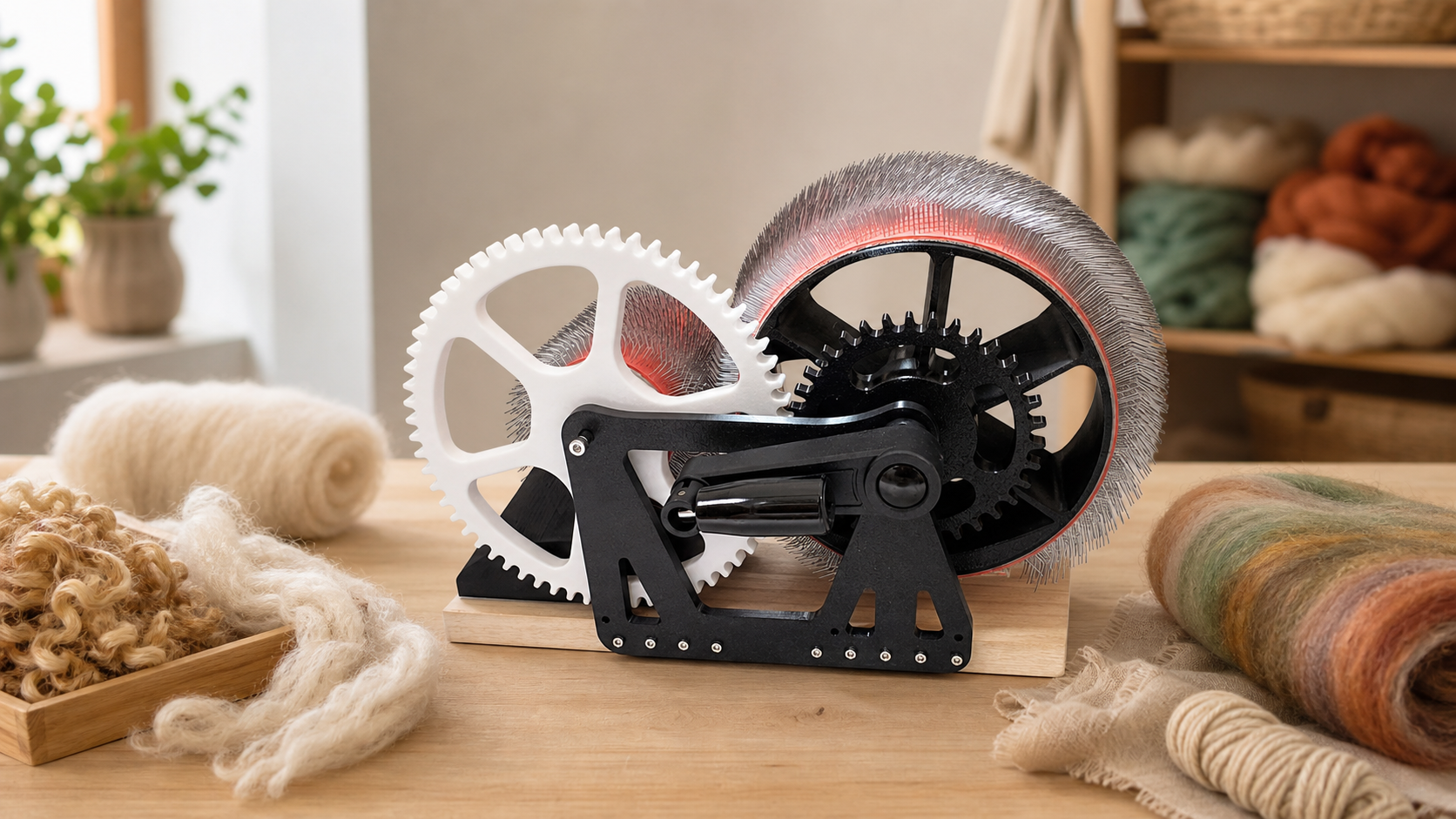
How to Organize a Home Carding Station
Jul
Quick answer: organize a home carding station by giving the drum carder a stable surface, separating fiber by stage, keeping labels and tools within reach, controlling loose fiber, and making the station easy to close between sessions. A good home setup is not large; it is easy to reset.
Home carding usually happens around real household life. The same table may hold fleece in the morning, dinner later, and a school project by evening. Fiber expands into any open corner, so a home carding station needs boundaries. Without them, clean wool, scraps, finished batts, and tools all begin to share the same surface.
The station should make carding easier to begin and easier to stop. That means the carder sits securely, the current fiber is obvious, and the finished batt has somewhere clean to go.
Choose A Stable Work Surface
Start with the table, counter, or bench. It should stay steady while you feed fiber and remove batts. Leave space in front of the carder for hand movement and space to one side for finished fiber. Avoid setting the carder at the edge of a crowded table where your hands hit jars, baskets, or a wall.
Height matters too. If the surface makes you hunch your shoulders, you will rush the session. If it is too high, feeding fiber can feel awkward. Test the motion with a small amount of practice fiber before choosing a permanent home.
Separate Fiber By Stage
Use separate containers for unpicked fiber, opened fiber, the current blend, finished batts, useful scraps, and waste. Clear boxes, trays, paper bags, and baskets can all work. The label matters more than the container. If you cannot identify a pile quickly, it will eventually become clutter.
Keep only the current blend beside the carder. Store everything else on a shelf, in closed bins, or away from the active surface. This protects the blend and makes it easier to clean between color families.
Keep Labels And Notes At The Station
Labels should live beside the carder, not across the room. Keep a pen, cards, small bags or bands, and a simple notebook in one tray. As soon as a batt comes off the carder, write fiber type, color notes, pass count, date, and intended use.
Notes are especially helpful at home because projects may be interrupted. A phone call, a meal, or a child needing the table can break the flow. A label lets you return later without guessing what you made.
Control Loose Fiber Early
Loose fiber travels. It lands on sleeves, chairs, floors, pets, and other projects. Keep a scrap bowl near the carder for usable bits and a separate waste container for debris. Empty both at the end of the session. Otherwise every future blend inherits yesterday’s leftovers.
If you switch from dark wool to pale wool, clean the station before the pale fiber comes out. If you switch from textured art batts to fine spinning prep, reset the surface and tools first. The art batt blending guide shows how quickly color and texture can multiply in one session.
Protect Finished Batts
Finished batts need a clean landing area and gentle storage. Do not pile them under tools or leave them hanging around the carder. Roll or stack them loosely, label them, and move them to a safe bin or shelf. The goal is to keep loft, color order, and fiber identity intact.
If the batt is for spinning, store it where it will not be crushed. If it is for felting, note the intended project. If it is a color sample, keep it with the recipe notes. A finished batt should not become another mystery item.
Plan For Shared Rooms
If the carding station shares space with meals, homework, dye work, sewing, or general storage, closure is part of the design. Use lidded bins, a dust cover, and a tray that can move as one unit. Store sharp tools and delicate fiber out of reach. A station that can close safely is more likely to survive normal home life.
Measure your setup before buying or rearranging. If you are still comparing options, the guide on choosing a drum carder for wool and alpaca can help you think through fiber type, workspace, and use.
Reset Before You Leave
End every session by labeling finished fiber, closing containers, clearing loose fiber, and returning tools to the tray. This is not about perfection. It means the next session starts with a ready station instead of a cleanup job.
Review the DrumCarder Studio Fiber Carder from the DrumCarder homepage when planning your station. For current product or setup questions, use the contact page.
Build A Home Carding Station That Resets Fast
Use DrumCarder as the center of a tidy home fiber station for wool, alpaca, samples, and small-batch batts.
FAQ
How much space does a home carding station need?
It needs room for the carder, feeding motion, batt removal, labels, fiber containers, and cleanup. The working space matters more than the footprint alone.
Can a carding station share a craft table?
Yes, if the table is stable and can be cleared. Use trays and lidded containers so the station can open and close quickly.
What should stay next to the carder?
Keep current fiber, labels, a pen, a note card, a scrap bowl, a waste container, and approved care tools within reach.
How do I stop fiber from spreading through the room?
Keep only one blend open, use containers for each stage, and clear loose fiber before leaving the station.
Should finished batts be stored flat or rolled?
Either can work if they are loose and labeled. Avoid crushing them under tools, bins, or other household items.