
Blog
How to Mix Natural Colors on a Drum Carder
Jul
Quick answer: to mix natural colors on drum carder equipment, treat the carder as a sampling tool first and a production tool second. Natural whites, creams, grays, browns, and blacks can create beautiful heathers, gradients, and soft neutrals, but they can also turn dull if you add too many values or run too many passes. Start with small measured samples, build layers slowly, and stop while the color still has life.
Natural color blending feels simple because the palette comes from the fleece itself. In practice, it requires just as much control as dyed color. A warm brown, cool gray, oatmeal, and white may look harmonious in separate piles, yet become flat when mixed without a plan. The drum carder helps you test those relationships before committing your best fiber.
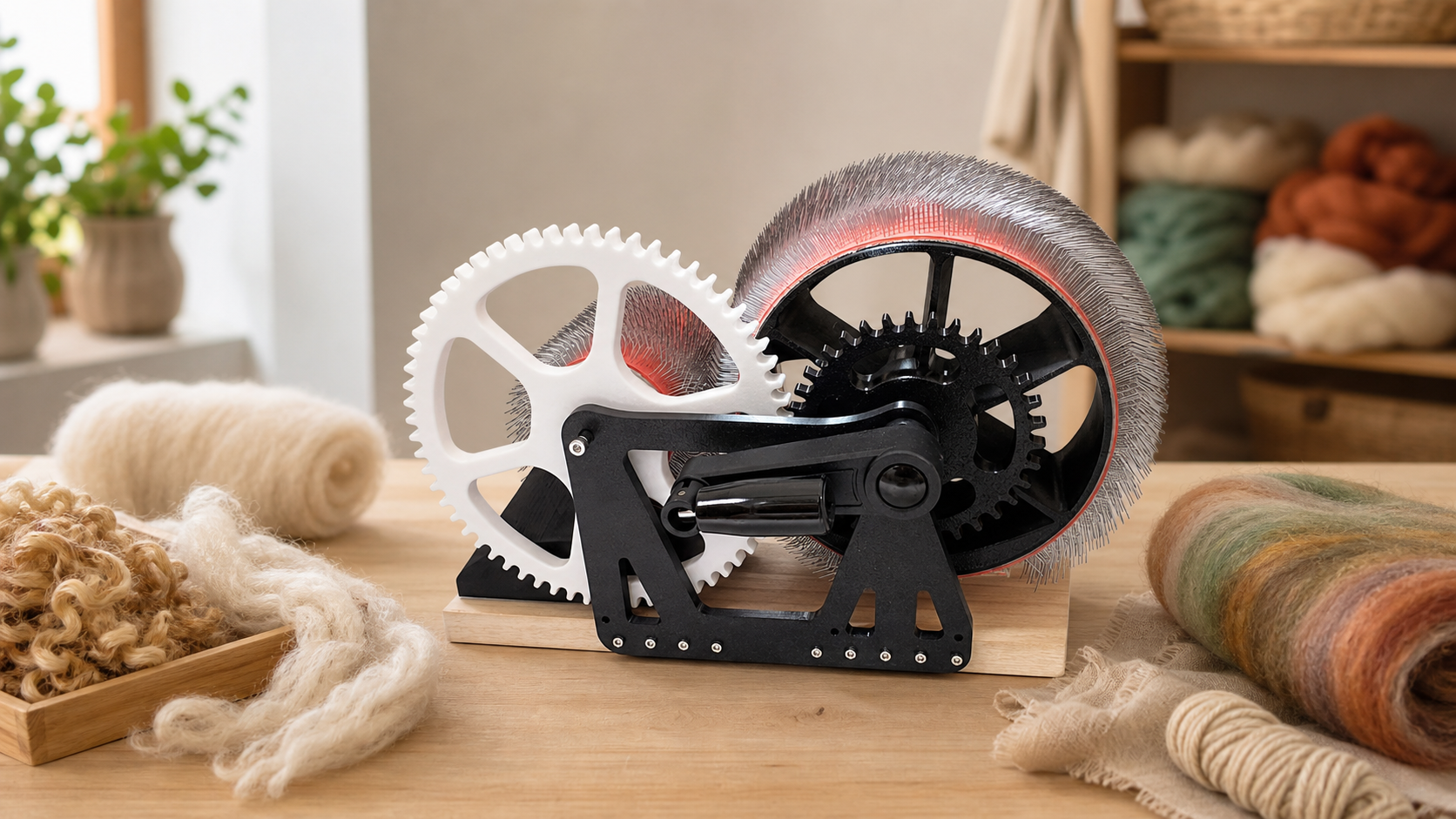
This workflow is written for small studio carding. You can see the compact product page at the DrumCarder Studio Fiber Carder. If you are planning a full carding area, the DrumCarder home page is the simplest starting point for site navigation.
Start With A Color Goal
Natural color blends work best when you name the goal before you feed the first layer. Do you want a pale oatmeal batt, a smoky gray, a tweed-like brown, a warm sheep-shade gradient, or a high-contrast art batt? Each goal uses a different amount of contrast.
If you only want a gentle heather, keep the colors close in value. White plus light gray plus cream will remain calm. If you want drama, use a small amount of dark brown or black as an accent rather than equal parts. Equal parts of strong contrast often create a middle color that is less interesting than either fiber alone.
Measure Small Samples First
Use small repeatable amounts. You do not need laboratory precision, but you do need enough consistency to repeat a blend you like. Try simple ratios such as three parts main color, one part secondary color, and a pinch of accent. Card a sample batt, label it, and compare it against the loose fiber.
Natural colors can change dramatically after carding because light reflects differently from mixed fibers. A batt may look warmer, cooler, lighter, or flatter than the original piles. Sampling prevents disappointment and helps you decide whether to add brightness, deepen the value, or preserve more contrast.
Layer Colors Instead Of Dumping Them Together
Layering gives better control than feeding a mixed handful. Place a thin base color first, then add smaller streaks of the second color, then repeat. This creates a blend that is integrated but not lifeless. If you want a marled or tweed effect, keep the layers more distinct and use fewer passes.
For gradients, make separate batts instead of asking one batt to do everything. For example, prepare five samples: cream, cream with light gray, equal light gray and medium gray, medium gray with brown, and brown with a small dark accent. You can then spin, felt, or lay them in order.
Control Pass Count For Natural Heathers
The pass count determines how much the eye blends the colors. One pass can leave visible streaks and lively transitions. Two passes usually create a softer heather. More passes may be useful for a uniform neutral, but they can also produce a dull middle shade. Stop and inspect after each pass under natural light if possible.
When a blend looks almost right, resist the urge to chase perfect evenness. Natural color is appealing because it has depth. Tiny shifts in tone can make yarn or felt look alive. Over-blending removes that depth and can make the final material look manufactured rather than grown.
FAQ
What natural colors blend well together?
Start with related values: cream with oatmeal, light gray with charcoal, or warm brown with tan. Add high contrast only in small amounts until you know how strongly it affects the batt.
How do I avoid muddy natural color blends?
Limit the palette, measure the dark fiber carefully, and reduce the number of passes. Muddy blends often come from mixing too many values until they collapse into a single middle tone.
Should I wash natural colors separately?
If you are working from fleece, keeping colors separate through washing and drying can make later blending easier. Once colors are mixed, it is hard to adjust the ratio. Clean, dry, open fiber also cards more predictably.
Can I mix natural colors with dyed wool?
Yes. Natural shades can quiet a bright dyed color or add depth to a simple palette. Test small amounts first, because dyed accents can dominate gentle natural fibers.
How do I repeat a natural color blend later?
Keep notes on fiber type, color ratio, pass count, and order of feeding. Save a small sample batt or yarn card if the blend is important. Your future self will not remember the exact pinch of dark wool without help.
A Simple Five-Sample Natural Palette
Make five batts before preparing a full project. Sample one should be the lightest natural shade alone. Sample two can add a small amount of gray. Sample three can balance the two main colors. Sample four can introduce brown or darker gray. Sample five can include the strongest accent. Lay the samples in a row and choose the one that fits the project, not the one that looked most dramatic as loose fiber.
When you scale up, match the chosen ratio and feeding order. If the full batt starts to look too flat, stop and compare it with the sample. A compact carder is especially useful here because you can test quickly without turning every decision into a large batch. For product or order questions, use the contact page.
Sample Natural Color Blends With Confidence
Use the DrumCarder Studio Fiber Carder to test natural shades, build heathers, and prepare repeatable small studio batts.