
Blog
How to Blend Naturally Dyed Wool After Dyeing
Jul
Quick answer: blend naturally dyed wool after dyeing only after the fiber is fully rinsed, dry, opened, and sorted by shade. Naturally dyed wool can hold subtle variation that looks beautiful in a batt, but it can also compact, streak, or dull if it is carded while damp or over-mixed. Sample first, use thin layers, and stop before the dye character disappears.
Natural dyeing often creates a range rather than one perfectly even color. That range is part of the appeal. A pot of onion skin, madder, walnut, indigo, or plant-based dye work may leave you with lighter tips, deeper locks, and small shifts across the batch. A drum carder can turn that variation into a usable batt, but the goal is not always to erase the variation. Often the goal is to organize it.
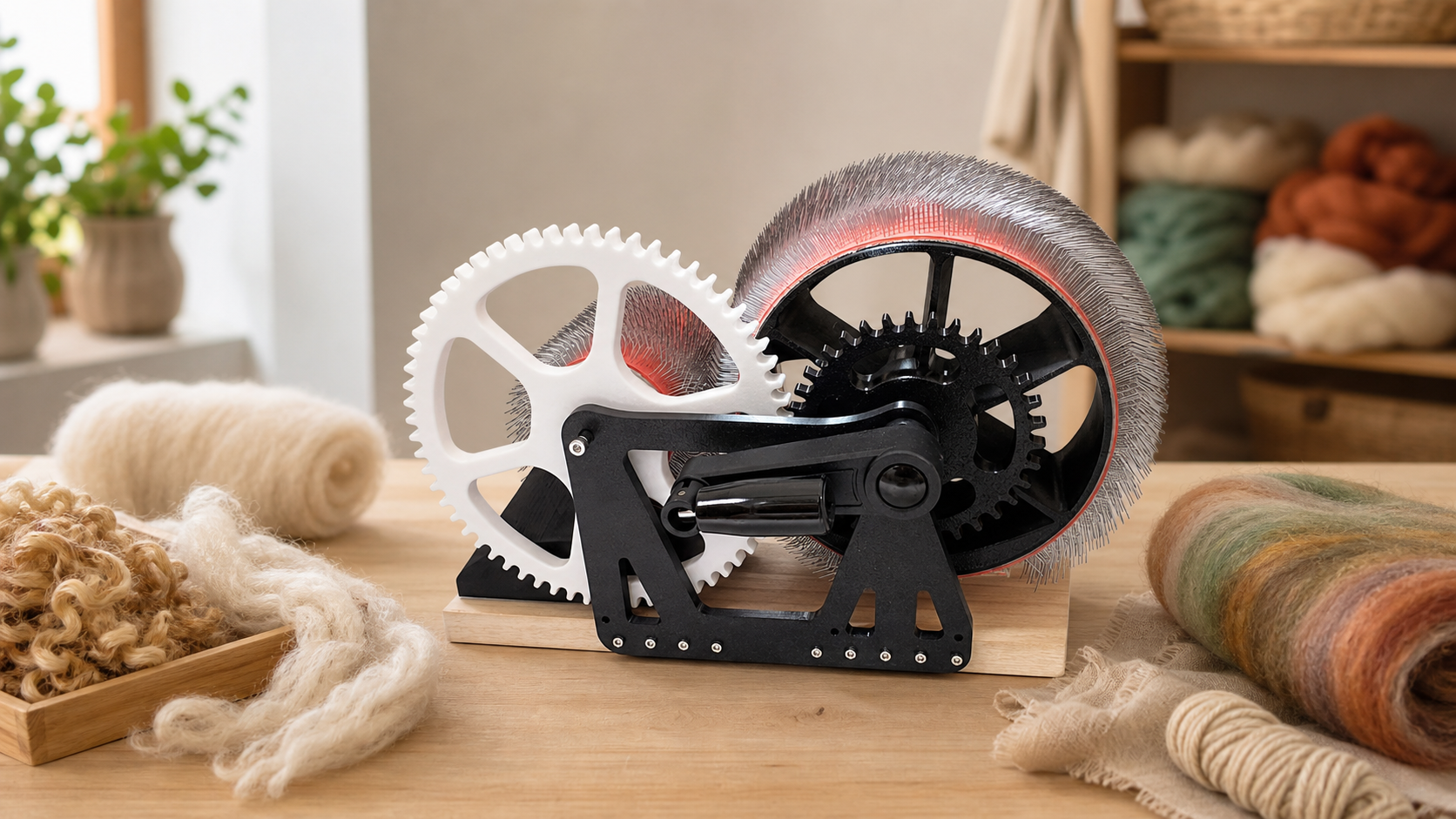
This guide is written for careful home and studio fiber preparation. You can review the DrumCarder Studio Fiber Carder for the product referenced here. For store navigation, policies, and contact options, start at DrumCarder.com.
Let The Fiber Dry Completely
The most important step happens before carding. Naturally dyed wool should be fully dry before it reaches the carder. Damp fiber can compact, stretch, or felt under pressure. Even a small amount of hidden moisture in dense locks can make the batt feel heavy and reluctant to open.
After drying, let the fiber rest and then test it with your hands. It should separate easily. If it feels tacky, gummy, or stiff from dye residue, do not push forward. Rinse, dry, or sort again as needed. The carder is for preparation, not for finishing a dye process that still needs attention.
Sort By Shade Before Blending
Spread the dyed wool in good light and sort it into shade families. Put pale sections together, medium sections together, and deep sections together. Also separate any locks that felted during dyeing. Sorting gives you choices. You can make a uniform batt, a gradient, a heather, or a deliberate streaked batt.
If you mix everything at once, you lose those choices. A naturally dyed batch that contains five beautiful tones can become one flat average color if it is fed without thought. Sorting first lets you decide what the batt should express.
Open The Dyed Fiber Gently
Dyeing can change how fiber handles. Some wool remains lofty. Some becomes slightly compacted. Some locks hold together at the tips. Open the fiber slowly by hand before feeding. Pull small sections lengthwise, shake them lightly, and remove tight bits that would create knots.
Thin feeding is especially useful after dyeing. Place airy layers across the intake and let the carder take them gradually. If you want a blended heather, alternate pale and deep layers. If you want visible streaks, feed color bands more separately and use fewer passes.
Choose A Blend Style
A uniform batt requires more integration, but it may also hide the best parts of natural dye variation. A heather keeps small shifts visible while still preparing the fiber for spinning or felting. A gradient preserves shade order and is useful for yarn, wet felting, and decorative batts. A streaked batt keeps bold color movement for art yarn or surface design.
Choose the style before you begin. Then let that style decide your pass count. A gradient may need only one pass per shade group. A soft heather may need two. A uniform color may need more, but check after every pass so you do not lose the quiet depth that natural dyeing created.
Also think about the final viewing distance. A yarn held in the hand can show tiny shade changes, while a wall hanging or felted panel may need stronger contrast to read clearly. Carding decisions should serve the finished object, not just the batt on the table.
FAQ
Can I card wool right after dyeing?
No. Wait until it is rinsed, dry, and easy to open. Carding damp wool can encourage felting and can make the batt dense. Drying time is part of the preparation, not an optional pause.
How do I keep natural dye variation visible?
Sort shades before carding, feed colors in layers, and use fewer passes. Remove the batt while you can still see tone changes. If the batt looks almost too varied on the carder, it may look just right once spun or felted.
What if the dyed wool felted slightly?
Remove the tightest sections before carding. Lightly compacted fiber may still be usable after careful opening, but hard felted bits will not become smooth batt material. Test a small amount before using the whole batch.
Can I blend naturally dyed wool with undyed wool?
Yes. Undyed wool can soften a strong color, stretch a limited dyed batch, or create a heathered shade. Measure your sample so you can repeat the result if it works.
Will carding damage natural dye color?
Carding should not remove properly set color, but over-blending can make color look dull by mixing every variation into one average shade. The visual change is usually about blending, not color loss.
A Safe First Blend After Dyeing
Make a sample card with four small batts. The first uses pale fiber only. The second uses medium fiber only. The third alternates pale and medium layers. The fourth adds a small amount of the deepest shade. Compare them after one pass and again after a second pass if needed. This shows how much mixing the dyed wool can take before the shade becomes too even.
Once you choose a sample, scale up slowly. Use the same shade order, feed thickness, and pass count. Keep the full batch dry and open while you work. For buying questions, delivery details, or return information, review the shipping policy and refund and returns policy.
Blend Dyed Wool In Small Controlled Batches
Use the DrumCarder Studio Fiber Carder to sample naturally dyed wool, preserve shade variation, and prepare repeatable batts.