
Blog
How to Keep Fiber Blend Notes That Actually Help
Jul
Quick answer: fiber blend notes actually help when they record the goal, base fiber, add-ins, layer order, pass count, and final result in words you will understand later. The best system is short enough to use with fiber on the table and specific enough to repeat a batt a month from now.
Most fiber artists do not need a complicated record system. They need notes that survive real making: dyed locks on the bench, a finished batt that looks better than expected, a phone call, and a half-labeled pile of samples. If the notes are too fussy, you will quit. If they are too vague, they will not help.
Start With The Question
Every useful note answers a question. Are you trying to repeat a colorway? Compare wool and alpaca ratios? Teach a class blend? Remember why one batt drafted more smoothly? The question tells you what details matter.
A practical note should answer three things: what went in, how it went in, and what happened. If it cannot answer those, it is decoration. Pretty decoration, maybe, but still not a studio tool.
Record The Base Fiber First
The base fiber controls the batt’s feel. Write it down before the exciting accents. Note wool breed when you know it, alpaca condition when it matters, and whether the base was already open or needed teasing. Clean, airy fiber behaves differently from compacted fiber.
Do not pretend a blend is more exact than it is. “Mostly cream wool base with a small amount of grey alpaca” is honest and useful. False precision creates confidence without repeatability.
Use Layer Notes, Not Just Ingredient Lists
An ingredient list says what entered the batt. A layer note explains how the batt was made. Blue wool, grey alpaca, silk, and locks can produce very different batts depending on which material goes first and which stays near the surface.
Use a simple order: base layer, color streaks, texture pockets, surface accent, final pass. A note like “charcoal wool base, teal stripe on left, locks near front edge, silk last” tells your future self what to do with the next batch.
Track Pass Count And Result
Pass count is one of the easiest variables to control. One pass keeps contrast. Two passes soften transitions. More passes can smooth a blend, but they can also hide texture and flatten color. Record the count even when it feels obvious.
Then add one result line. Write what you would change: more base, less shine, locks too hidden, color too muddy, drafted well, better for felting than spinning. Honest notes prevent repeated frustration.
Use Photos As Part Of The Record
Photos catch spacing, color, and texture that words miss. Take one photo of ingredients before carding, one of the loaded drum if it helps, and one of the finished batt. Use the same background when possible so later comparisons are fair.
If you use a drum carder regularly, link the photos to the written note the same day. The guide to art batt blending and color layers can help you decide which visual details to capture.
Build A Tiny Template
Your template can be small: date, goal, base, add-ins, layer order, passes, result, next change. Put it in a notebook, index-card box, or digital note system. The best storage method is the one you will actually open while the fiber is still on the table.
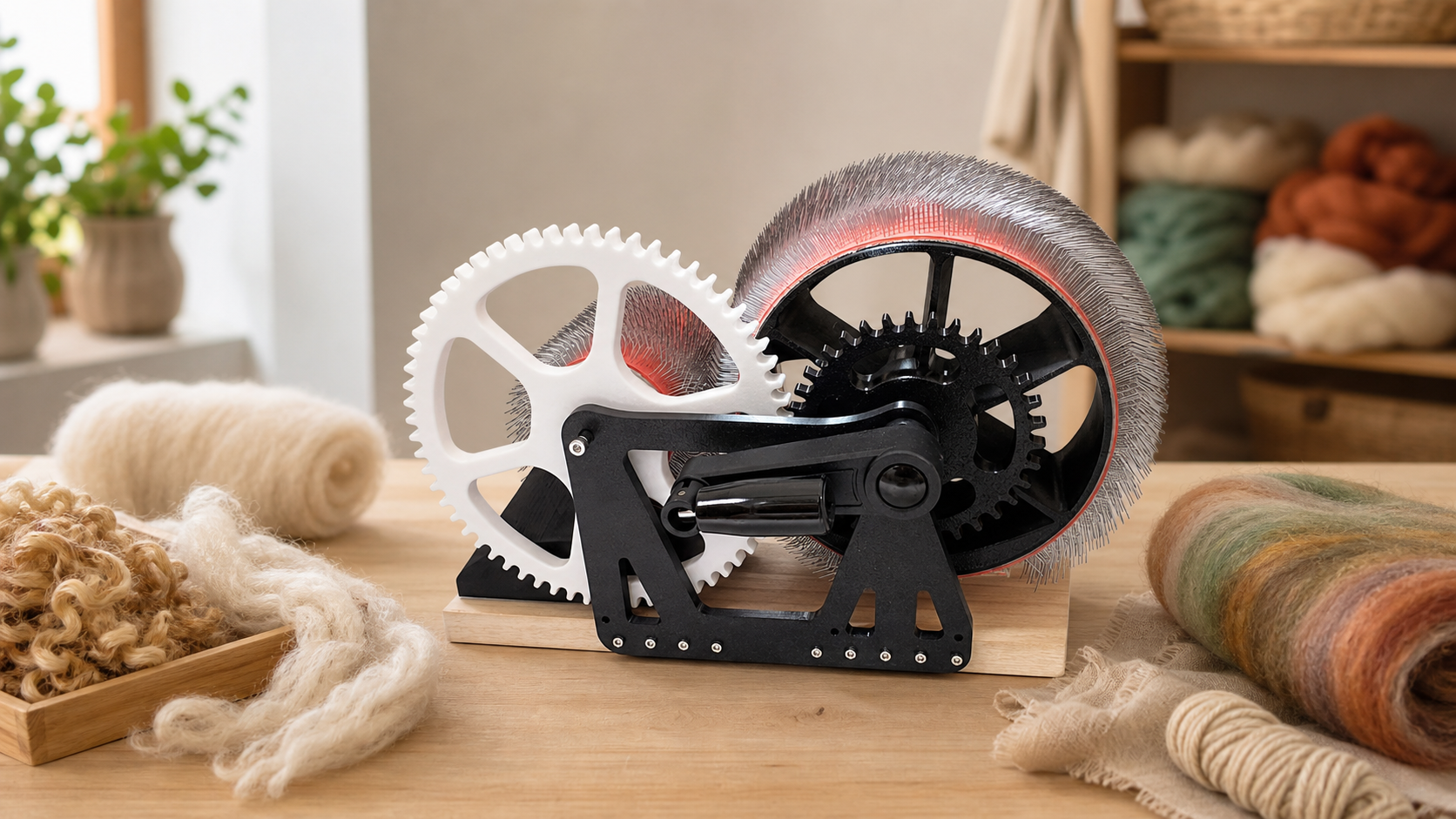
For tool details, use current product information instead of memory. Start at the DrumCarder homepage, review the DrumCarder Studio Fiber Carder, and ask through the contact page when a detail affects your setup.
Use Numbers Only Where They Help
Numbers are useful when they make a blend repeatable, but they should not make the note impossible to keep. Weigh fiber when you are making sale batches, teaching a paid class, or comparing two ratios. For a casual home experiment, a photo and a clear phrase such as “thin stripe of teal across the second layer” may be enough. The point is repeatable memory, not paperwork.
When in doubt, write the note you would understand on a tired day. Fiber records should reduce decision fatigue. If a field never changes your next batt, remove it. If one missing detail keeps causing confusion, add that detail to the template.
Keep Buying Notes Separate From Blend Notes
Blend notes should describe your process. Buying notes should capture order timing, policy checks, and support questions. If a tool purchase or replacement item matters to your studio schedule, check the shipping policy and refund and returns policy separately so the recipe card stays clean.
Make Blend Testing Easier To Repeat
Use DrumCarder for sample batts, color trials, wool and alpaca blends, and studio notes that turn good results into repeatable recipes.
FAQ
What is the most important fiber blend note?
Layer order is often the most useful note because it controls how color and texture appear in the finished batt.
Do I need exact weights for every blend?
No. Exact weights help for selling or teaching, but clear ratios, photos, layer order, and pass count can be enough for personal studio work.
Should I write down mistakes?
Yes. Notes about muddy color, hidden texture, overworked fiber, or poor drafting are some of the most valuable records you can keep.
How should I store blend photos?
Keep them with the matching written note, either in a digital album, notebook printout, or numbered card system. Color memory fades quickly.
When should I write the result line?
Write it while the batt is still in front of you, or right after spinning or felting a test. Waiting too long makes the note less honest.