
Blog
How to Add Sparkle and Nepps to Art Batts
Jul
Quick answer: add sparkle and nepps to art batts in small, intentional layers. Build a wool base first, sprinkle nepps lightly, place sparkle where it will show, and stop before the accents either disappear or overload the batt. The goal is controlled texture, not a batt that sheds every special ingredient.
Sparkle and nepps can make an art batt feel lively, festive, rustic, or painterly. They can also create problems. Too much sparkle may spread everywhere and cheapen the color. Too many nepps may fall out, refuse to draft, or make the batt feel gritty. A drum carder can help distribute accents, but it cannot decide how much is tasteful or useful.
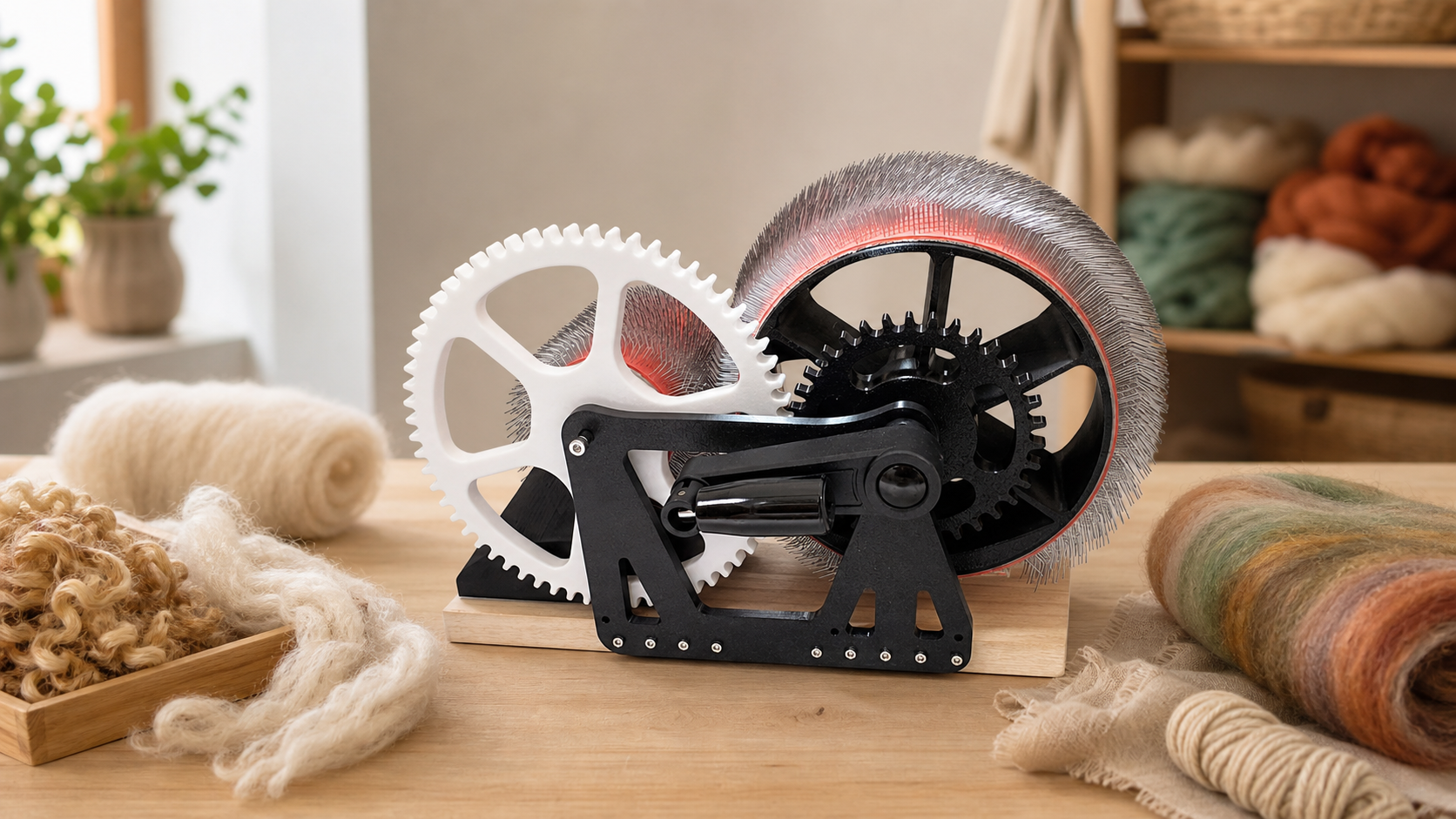
This workflow is for fiber artists making batts for chunky yarn, felting, weaving, or decorative spinning. If you are setting up a repeatable art batt station, compare the process with the Studio Drum Carder.
Give Accents A Wool Base
Sparkle and nepps need something to sit in. Start with open wool that can hold the batt together. The base should match the project: smoother for spinning, airier for felting, stronger for chunky art yarn. Once the base layer exists, accents have a better chance of staying where you place them.
If you begin with accents, they may drop through, clump, or spread unevenly. A wool foundation also gives the finished batt a more useful hand. It can draft, tear, or felt instead of acting like a loose pile of decorations.
Use Sparkle As Light, Not Bulk
Sparkle works best as a highlight. Open it into tiny wisps and spread it thinly. If you want an allover shimmer, use several very light placements rather than one heavy feed. If you want visible flashes, place sparkle in small zones near the surface.
Color matters. Silver can cool a batt. Gold can warm it. Iridescent sparkle can pick up nearby colors. Use sparkle to support the palette rather than treating it as a separate trick. Too much can distract from good fiber and color work.
Add Nepps With Patience
Nepps are small textured bits, and they do not behave like smooth wool. Sprinkle them lightly and let some stay visible. If you try to force deep even blending, you may either lose their texture or create clumps. A small number of well-placed nepps can be more effective than a heavy handful.
For spinning, test whether the nepps draft with the batt or pop out. For felting, test whether they attach enough for the intended surface. For weaving, consider whether they will sit in the cloth or become loose texture. Nepps are beautiful when the project supports them.
Layer Accents Near The End
Add most sparkle and nepps after the wool and main color are already on the drum. This keeps them from disappearing. A light final pass can connect the accents without burying them. If you want bold surface texture, add a very thin wool veil over the accents instead of sending the whole batt through again.
Stop and inspect before removal. If the batt already has enough interest, do not add more because the table still has extra materials on it. Art batts often improve when one accent is allowed to lead and the others stay quiet.
Match The Accent Level To The Use
Chunky art yarn can handle more visible texture than fine spinning. Needle felting may need smaller amounts so the needle can still shape the wool. Wet felting may need enough wool contact to trap the accents. Weaving may use sparkle and nepps as surface interest rather than structural fiber.
Make a small sample before a full batt. Pull a strip, draft it, felt it, or weave it depending on the final project. If accents shed, reduce them or surround them with more wool. If they vanish, add them later or closer to the surface.
Keep The Recipe Repeatable
Art batts can still be repeatable. Write down the base fiber, main colors, accent types, placement order, and pass count. Note whether the batt was meant for spinning, felting, or weaving. This helps you recreate a successful sparkle level without making every future batt louder.
Use the DrumCarder site and contact page when evaluating whether a carder fits your art batt workflow. Also review the shipping policy and refund and returns policy so ordering details are clear.
Create Art Batts With Controlled Sparkle And Texture
Use a focused drum carding workflow to place sparkle and nepps where they enhance the batt instead of overwhelming it.
View the product: https://drumcarder.com/product/studio-drum-carder/
FAQ
How much sparkle should I add to an art batt?
Start with a very small amount. Sparkle spreads visually, so several light placements usually work better than one heavy clump.
Why do nepps fall out of my batt?
They may not have enough wool around them, or the project may not hold that texture well. Add them lightly and test a strip before making the full batt.
Should sparkle go through multiple carding passes?
Usually not if you want it visible. Add sparkle late and use only enough carding to connect it to the batt.
Can I use sparkle and nepps together?
Yes, but choose one as the main accent. If both are heavy, the batt can look busy and may be harder to spin, felt, or weave.
What base fiber works best for accent batts?
Open wool is a practical base because it grips and supports accents. Choose the wool style based on whether the batt is for yarn, felt, or woven texture.