
Blog
Drum Carder Parts and Replacement Cloth Questions
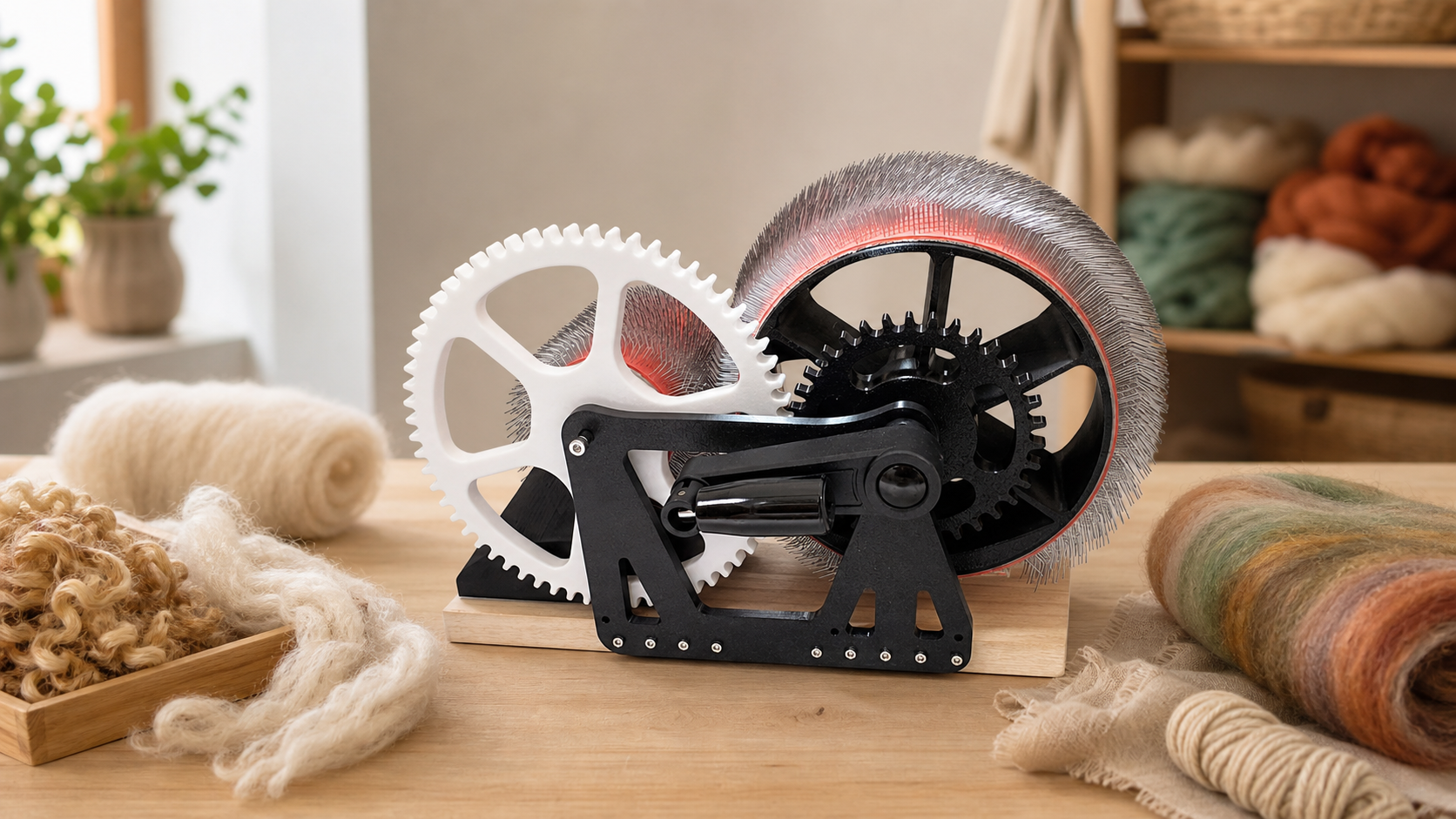
Jul
Quick answer: drum carder parts questions usually fall into four areas: carding cloth, drums and moving surfaces, handles or drive parts, and support for cleaning or replacement. Ask the seller for current part availability and compatibility before assuming any replacement cloth, accessory, or repair option is stocked.
Parts questions are practical. A buyer wants to know what can wear. An owner wants to know whether a problem is normal maintenance or a support issue. Someone comparing used and new equipment wants to understand the risk of hidden wear. The right answer starts with careful questions, not promises.
This guide keeps parts and replacement cloth separate from a buying pitch. For routine care, read How to Clean a Drum Carder. For current product details, use the DrumCarder Studio Fiber Carder page, and for specific support questions use DrumCarder contact.
Start With The Symptom
Before asking for a part, describe the symptom. Is fiber no longer feeding evenly? Is a batt tearing during removal? Is the handle motion different from before? Is cloth holding too much fiber after cleaning? A clear symptom helps separate technique, cleaning, fiber choice, and actual part concerns.
Many issues that seem like parts problems begin with overfeeding, damp fiber, compacted wool, heavy alpaca layers, or leftover fiber. Check the simple causes first. If the problem remains after a careful cleaning and a lighter test batt, it becomes a better support question.
Understand Carding Cloth Questions
Carding cloth is one of the most common areas people ask about because it is the working surface. Owners may ask about wear, tooth density, cleaning, or replacement cloth. Buyers may ask because they want to know how the tool handles wool, alpaca, or art batt materials.
Do not assume replacement cloth is universal. Cloth dimensions, attachment methods, tooth type, and compatibility can vary by carder. If replacement is being considered, ask the seller what is currently supported for the exact model. The cloth and TPI guide explains the basic terms.
Ask About Moving And Handling Parts
Parts questions are not limited to cloth. Users may ask about drums, handles, belts, knobs, clamps, or other moving and handling areas depending on the carder design. The important point is to avoid guessing. A part that looks simple may still need the correct fit.
When contacting support, include the product name, purchase context if available, photos of the area, and a plain description of what changed. Avoid diagnosing the repair yourself unless you are certain. A support team can respond more usefully when the question is specific and visual.
Replacement Cloth Is A Compatibility Question
Carding cloth replacement is not just a matter of buying a sheet with a familiar TPI number. It may involve size, backing, attachment, tooth direction, and whether replacement is recommended for the product. That is why current seller guidance matters.
If you are evaluating a used drum carder, ask whether the cloth is clean, intact, evenly attached, and free of obvious damage. Also ask whether replacement parts are available for that exact tool. If the answer is unclear, factor that uncertainty into the decision rather than assuming an easy repair.
Know What Normal Maintenance Can Solve
Some concerns improve with routine maintenance. Loose fiber can be removed. Color carryover can be reduced with better cleanup. Lumpy batts may improve when the fiber is opened more and fed lightly. A batt that sticks may point to overfilling rather than a failed part.
Maintenance is not a cure for every problem, but it is the first honest check. Clean the carder, make a small test batt with simple wool, and compare the result. If the issue continues with a controlled test, you have clearer details for a parts or support question.
What To Ask Before Buying
If parts availability matters to your purchase, ask before checkout. Good questions include: What care routine is recommended? Where should support questions go? Are replacement cloth or other parts available for the current model? What information should an owner provide when asking for help?
Avoid asking for promises that are not stated in current product or support information. Instead, ask for current policy and current availability. Product pages, support pages, and direct contact are more reliable than assumptions from old discussions. This is especially important when comparing a new purchase with a used carder from an unknown source.
Keep A Simple Maintenance Record
A small record helps if a question becomes a support issue. Note when the carder was cleaned, what fibers were used, what changed, and whether the same issue appears with simple wool. Photos can also help, especially for cloth questions or unusual buildup.
This record does not need to be formal. A few notes in your studio journal can show whether the issue is tied to one fiber, one technique, or repeated use. That makes the conversation with support clearer and keeps you from replacing parts when a routine change would solve the problem.
For a shared studio, the record is even more useful. One person may notice heavier feeding, another may clean after alpaca, and another may be the first to see a repeated snag. A short note keeps those observations connected, so a support question is based on a pattern rather than a single confusing session.
Ask Better Drum Carder Support Questions
Review the DrumCarder Studio Fiber Carder and contact DrumCarder directly for current parts, cloth, and product-specific support questions.
FAQ
Can I assume replacement cloth is available?
No. Replacement cloth depends on the exact product and current support options. Ask the seller before assuming availability.
How do I know if carding cloth needs replacement?
Start with symptoms, cleaning, and a simple test batt. If the problem remains, contact support with photos and details.
Are drum carder parts universal?
Usually not. Fit and compatibility can vary, so confirm with the seller before buying or installing any part.
What should I send when asking about parts?
Send the product name, the symptom, clear photos, what fiber you were using, and what cleaning or test steps you already tried.