
Blog
How to Recard a Batt Without Overworking It
Jul
Quick answer: recard a batt without overworking it by deciding what needs to change, opening the batt gently, feeding it back in thin sections, and stopping as soon as the correction is good enough. A second pass can improve blending or evenness. Too many passes can flatten loft, muddy colors, compact texture, and make the batt less pleasant to draft.
Recarding is useful when a batt is uneven, lightly streaky, or not blended enough for the project. It is less useful when the fiber is already compacted, matted, dirty, or overblended. The question is not “Can I run it through again?” You often can. The better question is “What exactly am I trying to fix, and what might I lose if I keep going?”
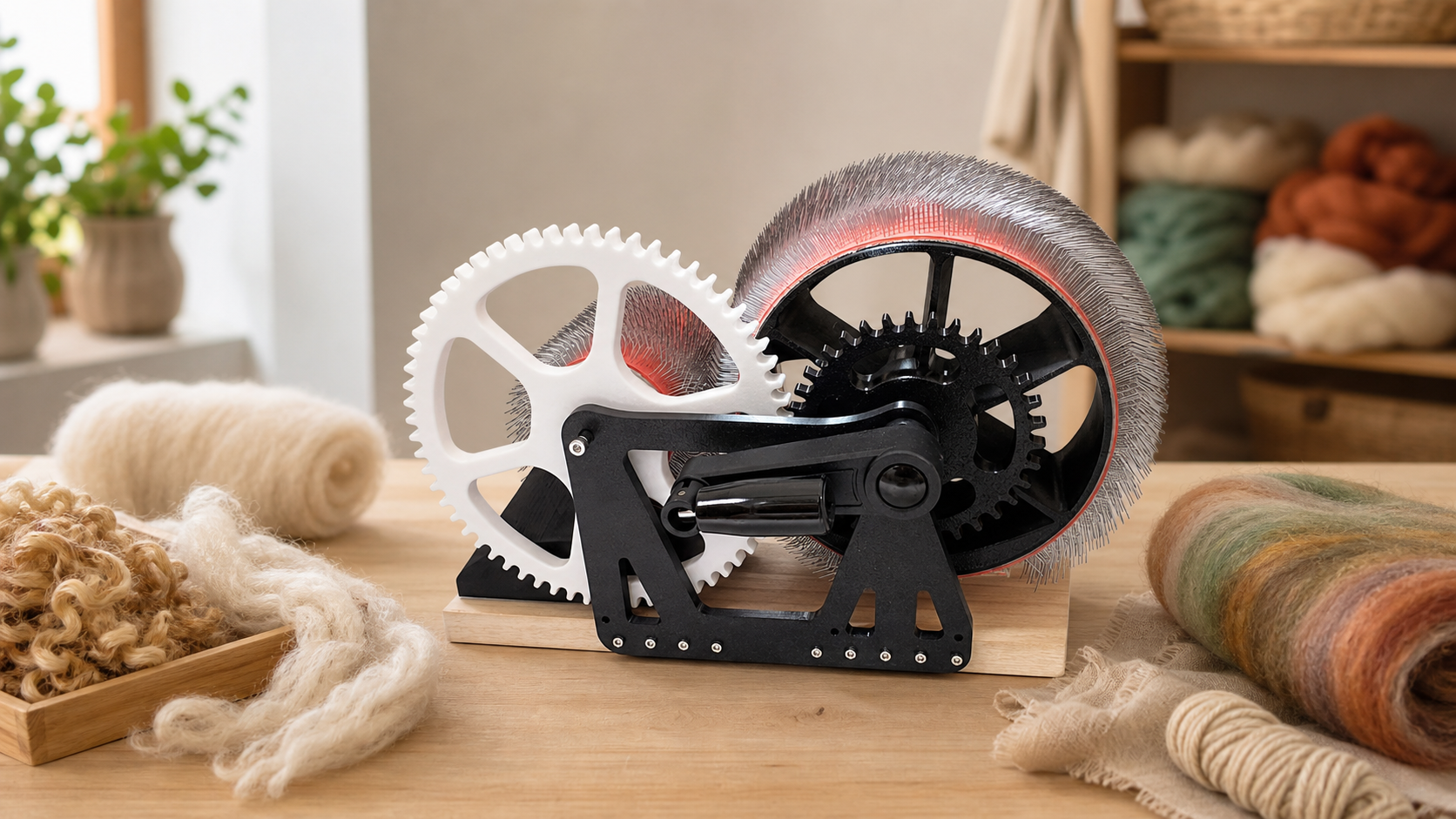
For small-batch product context, see the Studio Drum Carder. If you are comparing carding workflows before buying, the DrumCarder home page gives the main path back to the product and support pages.
Decide Why You Want Another Pass
Before recarding, name the problem. Is the batt thick at the edges? Are colors too separate? Are locks sitting on the surface instead of lightly integrated? Is the center too thin? A clear reason helps you choose a gentle correction. Without a reason, another pass becomes a habit, and that is how overworking starts.
If the batt is already pleasant and drafts well, leave it alone. Many good batts are not perfectly uniform. Handspinners and felters often need usable structure more than machine-like sameness.
Open The Batt Before Feeding It Again
Do not feed a rolled or compacted batt back into the carder as one dense strip. Open it first. Pull it into lighter sections, keeping the fiber direction as calm as you can. If you are trying to correct thick edges, separate those areas and redistribute them through the center.
This step reduces strain and gives the carder a fair chance to improve the batt. It also helps you spot problems that another pass will not fix, such as vegetable matter, felted spots, or sticky clumps.
Feed Thin Sections And Watch The Result
Recarded fiber can compact more easily than fresh fiber because it has already been handled. Feed smaller sections than you used the first time. Turn the handle steadily and watch whether the fiber transfers smoothly. If it starts to rope, wrap, or feel heavy, stop and inspect.
A second pass should feel like a correction, not a battle. If the handle gets harder or fiber collects around the licker-in, use the troubleshooting guide on why fiber wraps around the licker-in before continuing.
Preserve Color And Texture
Color can lose life when recarded too much. A batt with separate blue, gray, and cream areas may become a flat gray if it is blended repeatedly. Texture can disappear the same way. Locks, sparkle, nepps, and silk accents may sink into the batt or become tangled if they are overhandled.
If the goal is an art batt, recard only the base if possible, then add accents later. If the goal is a smoother spinning batt, one extra pass may be enough. Stop while the batt still has the character you wanted.
Fix Uneven Batts With Redistribution
If the batt has thick edges and a thin center, recarding can help when paired with redistribution. Open the heavy edges, spread that fiber across the middle, and feed in light layers. Simply running the whole batt through again may repeat the same shape if your feeding pattern stays unchanged.
For more detail, use the guide on why batts have thick edges and thin centers. The fix often begins with hand placement and light layers, not more passes.
Know When To Stop
Stop when the batt meets the project need. For spinning, test a small strip. If it drafts well, the batt is ready. For felting, check whether the fiber opens into a usable layout. For storage, make sure the batt is not so dense that it will become harder to use later.
A helpful stopping test is to compare the batt with its intended use, not with an imagined perfect sheet. If the yarn is meant to show subtle streaks, leave some streaks. If the felt layout needs a soft base, keep the fiber open. If the batt is for a future project, preserve loft so it remains easy to split later. Recarding should serve the next step, not erase every sign that human hands made the batt.
If the batt gets worse after recarding, stop trying to perfect it. Use it for a sample, textured yarn, stuffing, or another forgiving project. Then adjust the next batt from the beginning.
Connect Technique To The Buying Decision
If you often need to recard because batches are too large or hard to control, consider whether your carding setup matches your studio routine. A compact workflow can make it easier to test small amounts and stop at the right time. Review shipping, returns, and contact before purchase decisions.
Use A Carder That Supports Small Corrections
Gentle recarding works best when the batch size, feed rhythm, and workspace stay manageable.
FAQ
How many times can I recard a batt?
There is no universal number. Many batts only need one extra pass. Stop when the batt drafts, blends, or lays out well enough for the project.
Can recarding ruin color blends?
Yes. Repeated passes can muddy colors and remove contrast. Preserve color by recarding only when needed and stopping early.
Should I recard a batt with vegetable matter?
Usually remove plant matter first. Recarding can spread debris and make it harder to pick out later.
Why did my batt become dense after recarding?
It may have been fed too heavily, handled too much, or already compacted. Open the batt into thinner sections and reduce passes next time.
Can I add accents during a recard?
You can, but use restraint. Accents may disappear or tangle if sent through too many times. Often it is better to correct the base first.