
Blog
How to Handle Vegetable Matter Before Carding
Jul
Quick answer: handle vegetable matter before carding by removing large pieces by hand, opening locks gently, choosing only cardable fiber, and accepting that some debris is not worth fighting. A drum carder can help prepare suitable wool, but it should not be used as a machine for grinding burrs, seed heads, or brittle plant pieces through the fiber.
Vegetable matter is one of the most common reasons a promising fleece becomes frustrating. Tiny bits can hide in curls. Larger pieces can catch at the carder. Dry plant stems can break into smaller pieces if handled roughly. The right approach is not more force. It is better sorting before carding, lighter batches, and honest decisions about what fiber deserves your time.
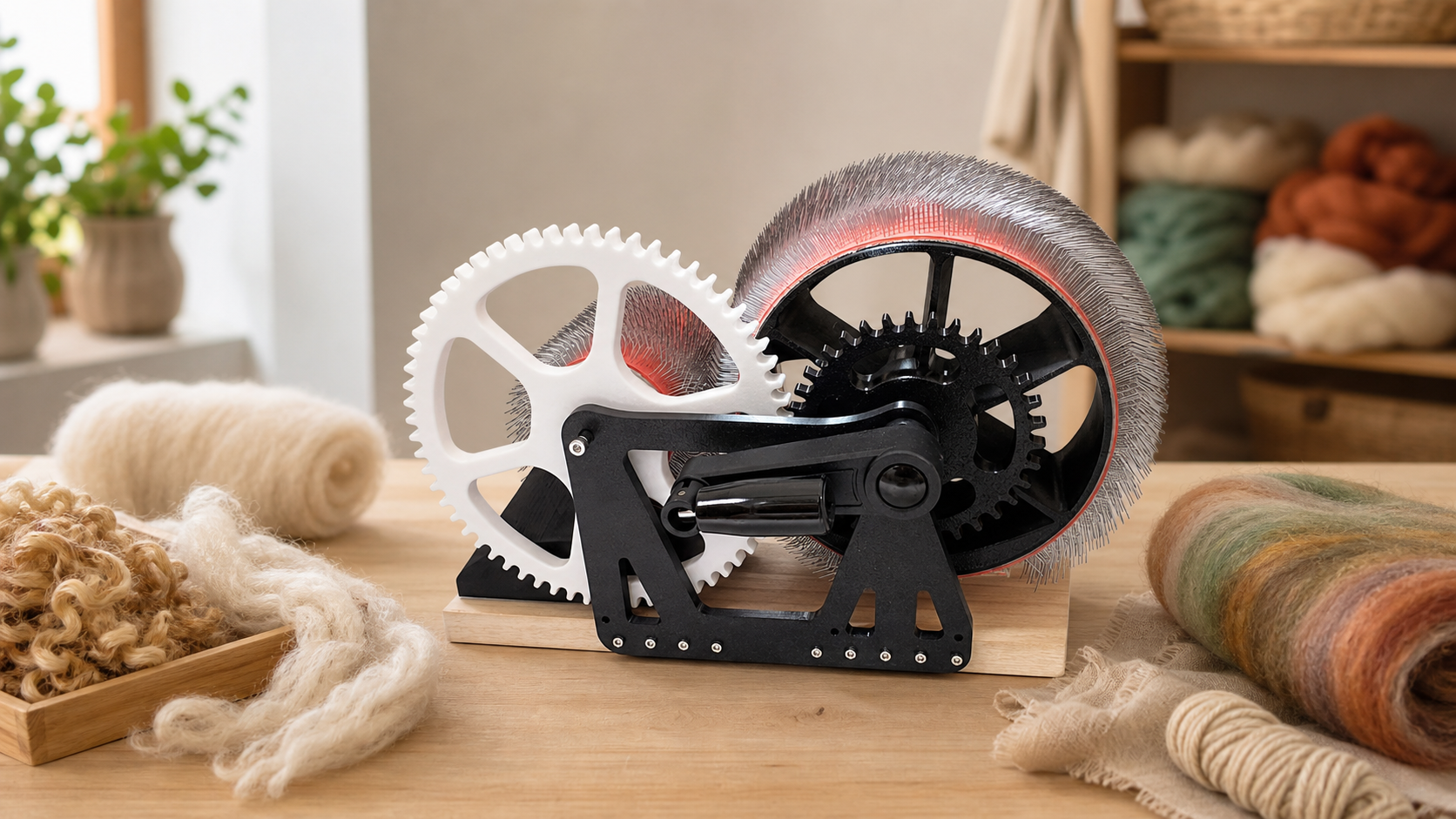
If you are planning a carding workflow for your studio, review the Studio Drum Carder as the product option and use DrumCarder for the main site context. Your fiber prep habits should match the tool you choose.
Sort Before You Tease
Start with a flat surface, good light, and small amounts of fiber. Spread the locks so you can see them. Pull out large pieces of hay, burrs, seed heads, and brittle stems before you open the fiber. If you tease first, plant pieces may break and spread deeper into the lock.
Make three groups: ready to open, needs hand cleaning, and not worth carding. This last group matters. Saving every bit of fiber can waste time, damage the quality of the batt, and leave you with a frustrating spinning or felting experience.
Remove Large Pieces By Hand
Large debris should not go into the carder. It can catch, break, or ride into the batt where it becomes harder to remove. Use your fingers to lift obvious pieces away from the lock. Work slowly enough that you remove the plant matter without rubbing the wool into a tighter mass.
If a burr is tangled deeply, decide whether the lock is worth saving. Sometimes the best choice is to remove the affected section. That feels wasteful in the moment, but it protects the rest of the batch and the carding session.
Open Locks Gently After Sorting
Once the largest plant pieces are gone, open the locks lightly. Teasing helps smaller debris fall out and gives the carder a better fiber layer. Do not rub the locks together. Rubbing can break debris into smaller pieces and can also encourage compaction in delicate wool.
Watch the tips and cut ends. If they are full of short broken plant fragments, the fiber may remain speckled even after carding. Decide whether that rustic texture is acceptable for the project before you continue.
Use The Carder For Suitable Fiber Only
A drum carder is for opening and blending fiber that is ready for carding. It is not a substitute for skirting, sorting, washing, and hand picking. Feeding dirty or plant-heavy fiber can create uneven batts, wrapped fiber, hard handle feel, and extra cleaning.
Start with a very small test. If the carder pulls clean fiber into a batt and leaves only minor specks, you can continue. If debris is catching, breaking, or showing everywhere, stop. The next step is more hand prep or a different use for that fiber.
Keep Cleaning Between Debris-Heavy Samples
Vegetable matter can hide in leftover wisps. If you card a questionable sample, clean the carder before moving to better fiber. Check the edges, feed area, and visible teeth. You do not want tiny plant pieces from one test traveling into the next batt.
For a careful reset routine, use the guide on how often to clean a drum carder. Cleaning is especially important when you move from barny fleece tests to pale prepared wool.
Choose Projects That Match The Fiber
Not every fiber needs to become a smooth spinning batt. A slightly rustic batt may suit textured yarn, needle felting experiments, stuffing, or a learning sample. Clean, soft, low-debris fiber is better for projects where comfort and drafting matter. Match the fiber to the outcome instead of forcing poor material into a refined project.
For fiber you really want to save, make one small trial batt before preparing the rest. Keep the trial separate from your clean fiber. Draft or pull it apart and see whether the plant pieces fall out, stay trapped, or scratch your hands. That small test can prevent you from spreading debris through a full batch. It also gives you a more honest answer than staring at a pile of locks and hoping the carder will make the problem disappear.
If you are buying fiber, ask about skirting, washing, and debris level before you buy. If you are buying a carder, ask how your normal fiber prep routine fits the product. Use contact for product questions, and review shipping and returns before purchase decisions.
Prep Cleaner Batts With A Focused Setup
Better sorting and lighter carding make a real difference when vegetable matter is part of the fiber story.
FAQ
Can a drum carder remove vegetable matter?
It may loosen some small bits, but it is not designed to clean dirty fleece. Large debris should be removed before carding.
Should I card wool that has burrs in it?
Remove burrs first. If they are deeply tangled, trim or discard that section rather than forcing it through the carder.
Why does debris look worse after carding?
Carding spreads fiber out, so hidden plant pieces become more visible. Rough handling can also break debris into smaller fragments.
How clean does wool need to be before carding?
It should be clean enough that plant matter, grease, and mats will not dominate the batt or make the carder harder to use.
What should I do with fiber that is too full of debris?
Use it for a less demanding project, remove the worst sections, or set it aside. Not every lock is worth putting through the carder.