
Blog
How to Avoid Felting Fiber During Prep
Jul
Quick answer: avoid felting fiber during prep by keeping the fiber clean, dry, cool, and gently handled before it reaches the drum carder. Heat, moisture, soap residue, friction, and repeated rough handling can make wool fibers grab each other. Use light teasing, small batches, fewer passes, and calm batt removal instead of trying to force matted fiber into a smooth result.
Accidental felting usually starts before the fiber reaches the carder. Washed fleece may have been agitated too much. Damp fiber may have been packed away. Locks may have been rubbed instead of opened. By the time the carder sees the fiber, it can already be partly compacted. A drum carder can open and blend suitable fiber, but it should not be treated as a cure for felted clumps.
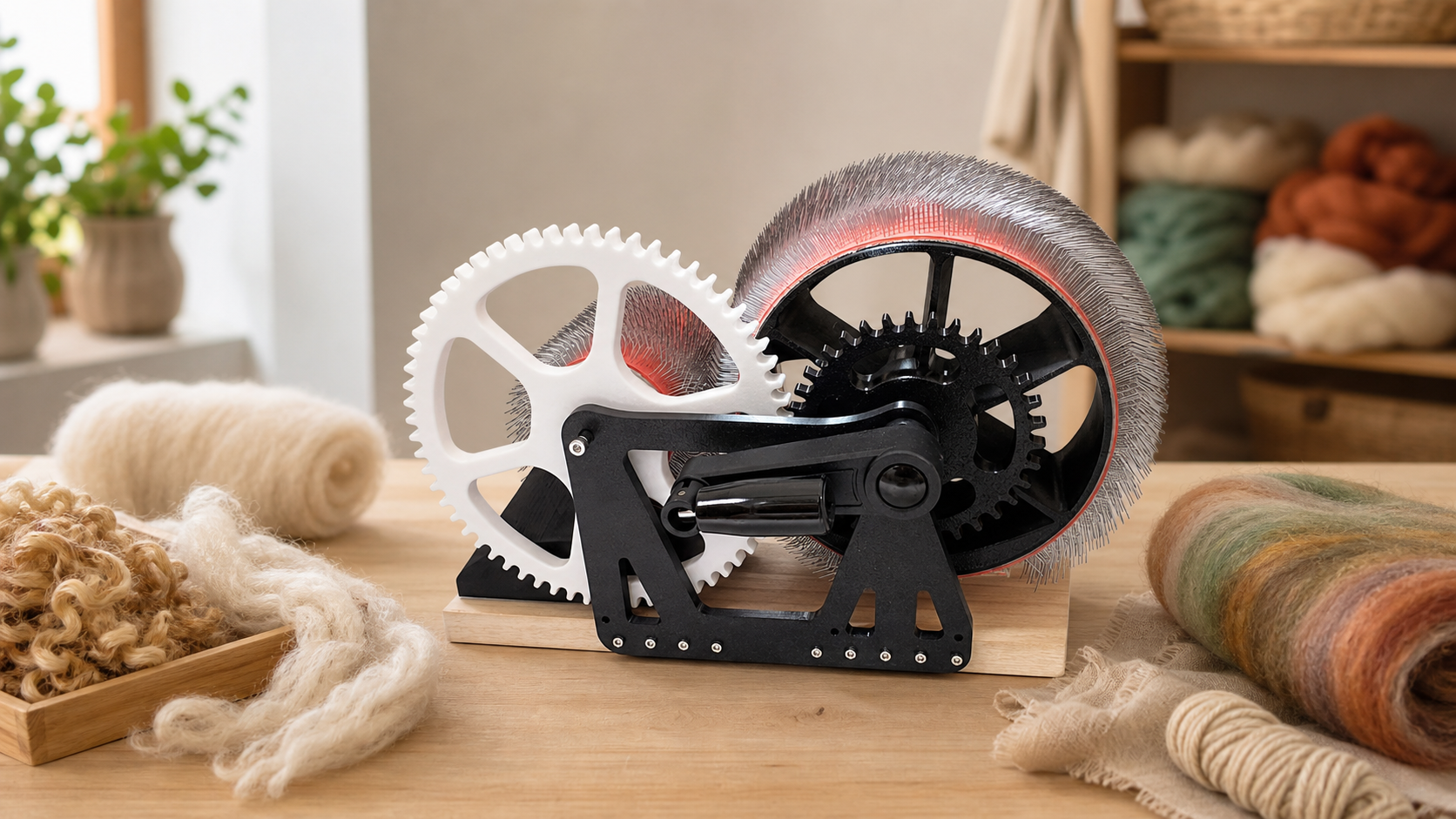
If you are building a small-studio prep routine, connect the fiber care to the tool choice. The Studio Drum Carder is the product page to review, and the DrumCarder home page gives the broader site context.
Understand What Causes Felting
Wool felts when scales on the fiber surface interlock under the wrong combination of moisture, heat, movement, and pressure. You do not need all factors at full strength for trouble to start. A little dampness plus repeated rubbing can be enough to make locks tighten. A warm wash with too much agitation can turn useful fleece into stubborn clumps.
During prep, the safer habit is to reduce friction. Open fiber with your fingers, do not scrub it. Move it in small amounts. Let dry fiber stay dry. If you wash fleece, let it dry fully before storage or carding. Damp storage is a quiet path to compacted fiber.
Do Not Card Fiber That Is Still Damp
Damp fiber is risky because it can compact on the carder and resist smooth transfer. It may also leave residue or make cleaning harder. If the fiber feels cool, clammy, or heavy, wait. Spread it in a clean place with airflow and let it dry fully before you test it.
If you are not sure, test a tiny amount by hand. It should open freely, not smear into a dense strip. The carder should receive light, airy fiber, not a damp wad that asks the teeth to pull it apart by force.
Tease Locks Instead Of Rubbing Them
Opening locks is different from rubbing them. Teasing separates the fibers enough for the carder to take them in a thin layer. Rubbing creates friction and can make the lock tighter. If a lock resists, stop and inspect it. It may have weak tips, a matted base, or debris that should be removed before carding.
Work from the tips and sides with a light touch. You are preparing the lock for the carder, not finishing the whole job by hand. A little patience here prevents many problems later: wrapping, dense batts, hard handle feel, and accidental felt.
Feed Small Amounts To Reduce Friction
Overfeeding increases pressure and friction. When too much fiber enters at once, fibers rub against each other and the carder has to work harder. That is not the environment you want if the fiber is already prone to compacting.
Use smaller layers than you think you need. Let the carder take the fiber. Watch how it transfers before adding more. If the first pass feels dense, remove the batt and inspect rather than sending it through repeatedly. The guide on recarding a batt without overworking it can help when a second pass is tempting.
Limit Passes And Check The Batt
More passes do not always improve fiber. They can remove texture, blur color, and increase handling. If a batt is already cohesive, ask whether another pass is actually needed. For spinning, a batt can be open and useful without looking perfectly uniform. For felting layouts, you may want openness more than heavy blending.
After each pass, touch the batt gently. Does it draft? Does it pull apart in soft strips? Or does it feel tight and board-like? A firm, compact batt is a warning to stop and rethink the fiber, not an invitation to keep forcing it.
Store Prepared Fiber Correctly
Fiber can felt after prep if it is stored poorly. Do not pack warm or damp fiber into a sealed bag. Avoid crushing batts under heavy tools or stacking them where they will be pressed for a long time. Let finished batts rest with enough room to keep their shape.
For after-carding handling, read how to roll and store batts after carding. Good storage protects the careful prep work you just did.
Use Purchase Policies And Support Before Guessing
If you are buying a carder because your current prep routine is frustrating, include support and policies in the decision. Check shipping details, returns details, and use contact for product-specific fiber questions. Be specific about the kind of wool, whether it is washed, and what goes wrong.
Prep Fiber With A Calm Small-Batch Routine
A manageable carding setup helps you feed lightly, inspect often, and stop before a batt becomes compacted.
FAQ
Can a drum carder fix felted fiber?
Usually no. It may open slightly compacted fiber, but truly felted clumps should be removed or used for another purpose. Forcing them can stress the tool and worsen the batt.
Is damp wool safe to card?
It is better to wait until wool is fully dry. Damp fiber can compact, transfer poorly, and increase the chance of accidental felting during handling.
How many passes prevent felting?
There is no fixed number. Start with one light pass and inspect. Add another only when the fiber needs it and still feels open.
Does alpaca felt the same way as wool?
Alpaca behaves differently, but it can still compact during poor handling. Use light feeding, modest blends, and careful storage to avoid dense batts.
What should I do with partly felted locks?
Set them aside, remove unusable areas, or reserve them for a project where texture is acceptable. Do not feed stubborn mats into the carder as a test of force.