
Blog
How to Build a Repeatable Art Batt Collection
Jul
Quick answer: build a repeatable art batt collection by choosing one clear theme, keeping a stable base fiber, limiting accent materials, recording layer order, and photographing the finished batt beside its notes. Repeatability does not make art batts boring. It makes your best color and texture decisions easier to remake, teach, or sell.
Art batts invite play: locks, shine, bold color, soft clouds, and deliberate streaks. The problem comes later, when a buyer asks for the same colorway, a workshop student wants the recipe, or you love one batt and cannot remember which layer went in first. A repeatable collection gives that creative work a handle.
Choose A Theme That Gives Boundaries
A collection theme should be narrow enough to guide decisions. “Autumn” can become anything. “Four woodland batts with a dark wool base and one bright accent each” is much easier to repeat. Good themes can come from color, season, breed, texture, or intended use.
Use matters. Batts for textured spinning need visible interest that still drafts. Batts for felting may need more even fiber distribution. Batts for a craft table need color families that can be understood quickly. Decide the purpose before the fiber pile becomes too tempting.
Build Around One Base Formula
The base fiber is the quiet structure of the batt. Keep it consistent across a collection if you want the batts to feel related. A simple formula can be base fiber, secondary color, texture accent, shine accent, and final surface detail. You can still vary the palette while keeping the handling familiar.
Write the formula in plain studio language. “Cream wool base, berry wool stripe, locks near one edge, silk last” is more useful than a dramatic color description that does not tell you how the batt was built.
Use Light Passes To Preserve Design
Heavy feeding hides decisions. Feed thin layers across the width and watch how the surface builds. One pass may keep color bold and texture visible. Two passes may soften the transitions. Too many passes can turn a lively art batt into an indistinct blend.
For a repeatable collection, decide the pass count style for the whole group. If one batt is heavily blended and the others are layered, the set may feel accidental. If you need more color guidance, use the art batt blending guide as a planning companion.
Make A Small Reference Batt
Before a full collection, make one small reference batt. Test whether the accent disappears, the locks are too long, or the base fiber needs more support. Keep the reference batt with its notes. It becomes the standard for the next batts in the collection.
Do not treat the reference as wasted fiber. It is insurance. It protects the rest of the batch from a color that muddies, a texture that snags, or a shine fiber that needs to sit closer to the surface.
Record Layer Order And Photos Together
Ingredient lists are not enough. You need layer order, feeding style, pass count, and result. Take one photo of the fiber before carding, one of the loaded drum if practical, and one of the finished batt. Use a neutral background so color comparison stays useful.
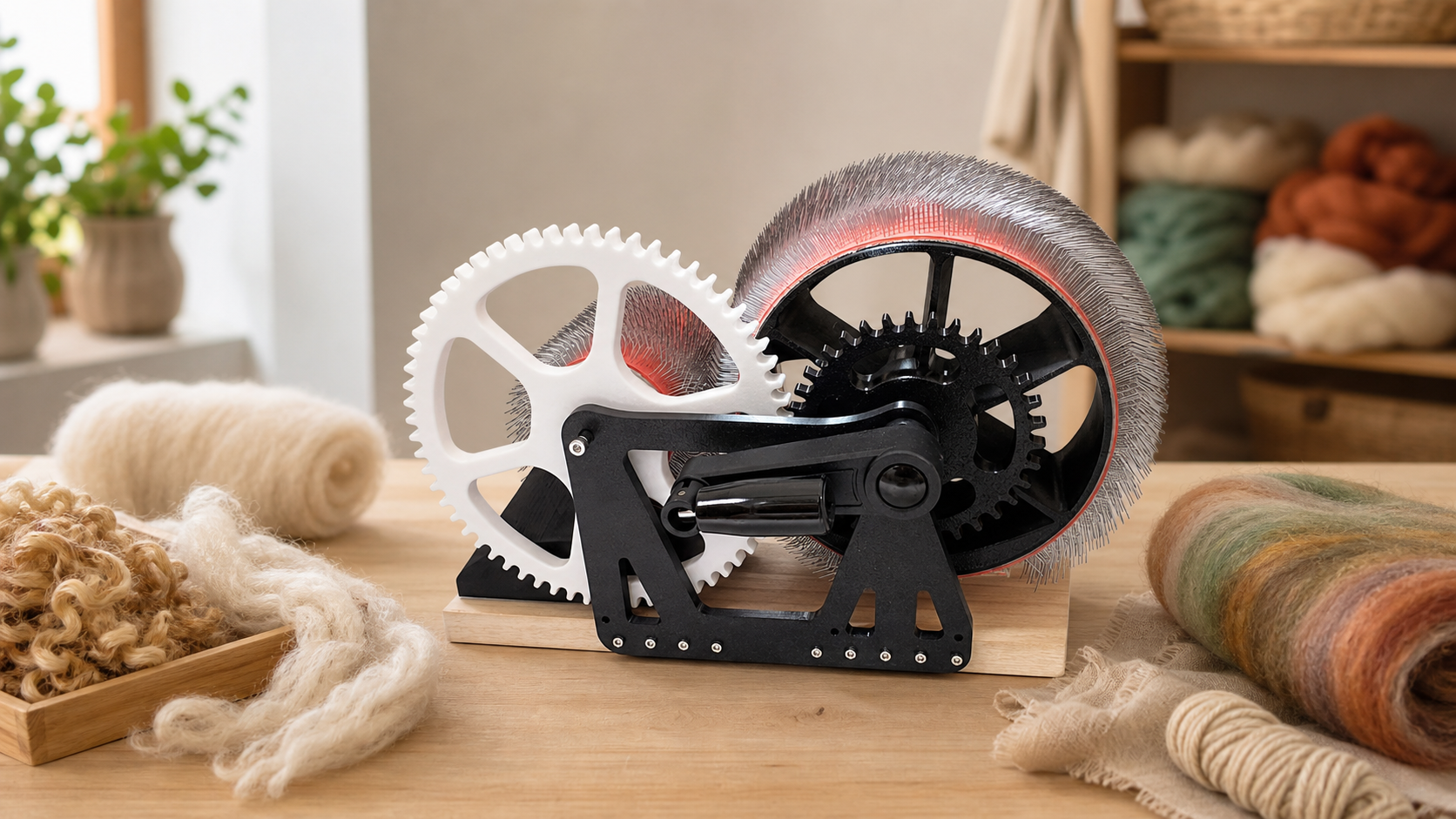
This is where a focused drum carding setup helps. Review the DrumCarder Studio Fiber Carder if you want a repeatable station for wool, alpaca, art batts, and small fiber shop work. The homepage gives the broader site path.
Compare The Collection Before Storage
Lay the finished batts side by side before you pack them. Check thickness, color balance, visible texture, and family resemblance. If one batt looks like it belongs to a different project, decide whether to adjust it or let it start a separate collection.
Then store the batts loosely with labels. If the collection is for sale, keep the product notes and policy links close. Check the shipping policy and refund and returns policy before buying tools or materials for a deadline-driven batch. Use the contact page for current questions.
Name The Collection After It Proves Itself
Wait to name the set until the batts are finished and compared. Early names can push you toward colors or textures that no longer fit the fiber. After the collection is on the table, choose names that help buyers or students understand the family: woodland shadows, lake edge, berry smoke, or natural neutrals. Keep the naming practical enough that you can match the right recipe card later.
For shop work, keep the naming system simple enough to scale. A collection name, a colorway name, and a batch number are usually plenty. Overly clever names can make inventory harder to manage when the same base formula returns later with a small color change.
Build Repeatable Batts With A Focused Setup
Use DrumCarder for art batt collections that keep color, texture, notes, and small-batch prep easier to repeat.
FAQ
How many colors should a repeatable art batt use?
Most collections are easier to repeat with a base, one or two main colors, one texture, and one accent. Add more only when the design needs it.
Should every batt in a collection use the same base fiber?
Using the same base creates consistent handling and a stronger family feeling. You can vary color and texture while keeping the structure stable.
How do I keep locks visible in an art batt?
Use light feeding, place locks intentionally, and avoid too many passes. A small reference batt will show whether the lock placement survives carding.
Do I need exact weights for art batt recipes?
Exact weights help for retail batches and classes, but layer notes, photos, and pass count are just as important for repeating the look.
How should finished art batts be stored?
Store them loosely with labels and recipe notes. Avoid crushing texture or separating the batt from its fiber content and colorway information.