
Blog
How to Blend Dyed Wool Without Muddy Colors
Jul
Quick answer: blend dyed wool without muddy colors by limiting the palette, using bridge shades, feeding thin layers, and stopping before the colors lose their identity. Muddy batts usually come from too many unrelated colors, too many passes, or heavy feeding that hides color decisions inside the batt.
Dyed wool can look brilliant in separate piles and disappointing after carding. The problem is rarely the carder alone. More often, the color plan was unclear. When every shade is treated as equal, the finished batt can become dull, brownish, gray, or visually noisy. A better approach is to decide which color leads, which color supports, and which color appears only as an accent.
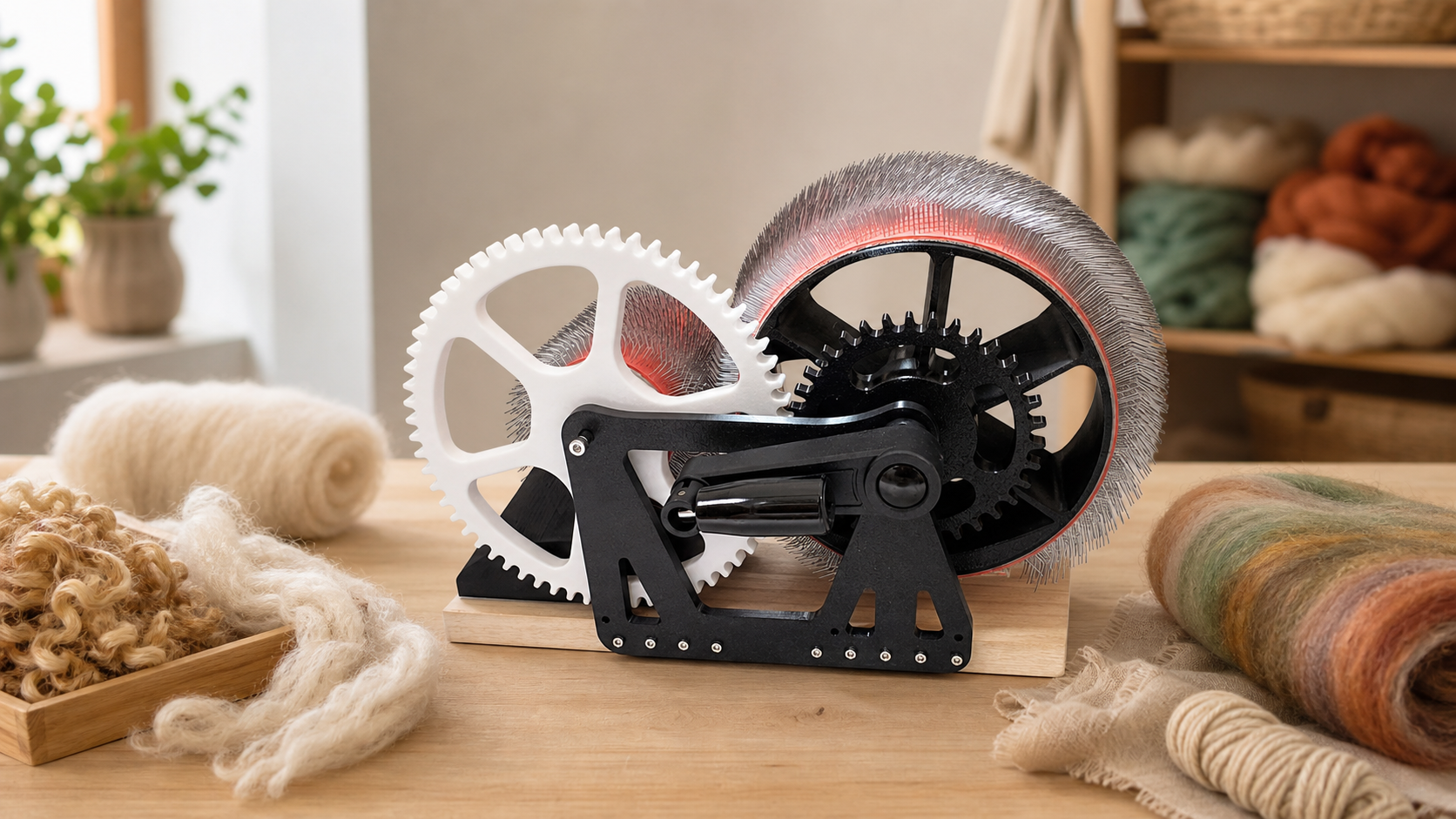
This workflow is for fiber artists who want lively dyed wool batts for spinning, felting, weaving, or art yarn. If you need a compact tool for repeatable color sessions, review the Studio Drum Carder.
Pick One Main Color
A strong blend usually has a leader. Choose the color that should be most visible in the finished batt. The other colors should support it. Without a main color, the batt can become a committee of shades competing for attention.
Use the largest amount of the main color, a smaller amount of support color, and very small amounts of accent. This does not have to be mathematical, but it should be intentional. If every pile is the same size, the carder will mix them without knowing which one matters.
Use Bridge Shades For Difficult Transitions
Some colors fight when blended directly. Bright orange and blue, purple and yellow, or red and green can create dull centers if overmixed. A bridge shade can make the transition smoother. For example, use rust between orange and brown, plum between red and purple, or gray-blue between blue and neutral wool.
Bridge shades are especially helpful with hand-dyed fiber that already contains variation. Pull small amounts from each color family and test a mini blend. If the sample looks tired, adjust before making a full batt.
Feed For Placement, Not Only Mixing
Color placement matters. Feed the main color as the base, then add support shades in sections or light layers. Add accents last if you want them visible. If you feed everything in a thick mixed handful, the batt may lose the color structure before it even builds on the drum.
For a lively batt, let some colors remain partly separate. For a smoother yarn, add a second light pass. For felting or weaving, keep more zones so you can pull the shade you need. The right level of blending depends on the finished use.
Think about viewing distance too. A batt for close needle felting can use tiny color shifts. A batt for a bold woven wall piece may need larger areas of color so the movement still reads after the fiber is packed into the work.
Stop Before The Batt Turns Flat
Overblending is one of the fastest routes to muddy color. A first pass may look bold and interesting. A second pass may soften it. A third pass may flatten it. After each pass, pause and ask whether the batt improved or simply became more average.
If the blend is close but not perfect, consider adjusting with a surface layer rather than sending the whole batt through again. A small amount of fresh main color on top can revive a batt that is becoming dull.
Keep Neutrals Under Control
Natural gray, brown, black, and cream can make dyed wool more sophisticated, but they can also mute a blend quickly. Add neutrals with a clear purpose. Cream can lighten. Gray can calm. Brown can warm. Black can deepen, but too much can dirty bright colors.
If you are unsure, use less neutral fiber and make a test batt. It is easier to add another light layer than to remove a neutral that has swallowed the color.
Label neutral tests carefully, because a small change in gray or brown can shift the whole mood of the batt.
Make Notes For Repeatable Color
When a dyed wool blend works, write down the recipe: main color, support colors, bridge shade, accent amount, feed order, and pass count. Fiber artists often remember the mood of a batt but forget the practical choices that made it work. Notes help you repeat the color family later.
Use the DrumCarder home page, contact page, shipping policy, and refund and returns policy when evaluating the buying path. A product should support your color workflow and your practical studio needs.
Blend Dyed Wool With More Color Control
Use a focused carding setup to keep dyed wool lively, intentional, and repeatable across small studio batches.
View the product: https://drumcarder.com/product/studio-drum-carder/
FAQ
Why do dyed wool batts turn muddy?
Muddy batts often come from too many unrelated colors, too many equal color amounts, too many passes, or heavy feeding that mixes accents too deeply.
How many colors should I blend at once?
Start with one main color, one or two support colors, and one accent. Add bridge shades when two colors do not transition well.
Can complementary colors work in a batt?
Yes, but use them carefully. Keep them partly separated, add a bridge shade, or use one as a small accent to avoid a dull center.
Should I use multiple carding passes for dyed wool?
Use only as many as the blend needs. One pass preserves liveliness. A second pass softens. Too many passes may flatten the color.
How do I rescue a dull dyed wool batt?
Add a light surface layer of the main color or a brighter support shade. Avoid repeatedly carding the whole batt unless it truly improves the blend.