
Blog
How to Make Gradient Batts on a Drum Carder
Jul
Quick answer: make gradient batts on a drum carder by planning the color order first, feeding thin overlapping bands, and limiting passes so the transition stays visible. A strong gradient comes from controlled placement, not from throwing every shade into the carder and hoping the batt blends itself.
Gradient batts are useful for spinning, felting, weaving, and art yarn because they let color move across a project with intention. The challenge is keeping the shift clear. Too little overlap creates stripes. Too much mixing creates a flat middle color. The drum carder gives you a surface to build the transition, but your feeding choices create the final effect.
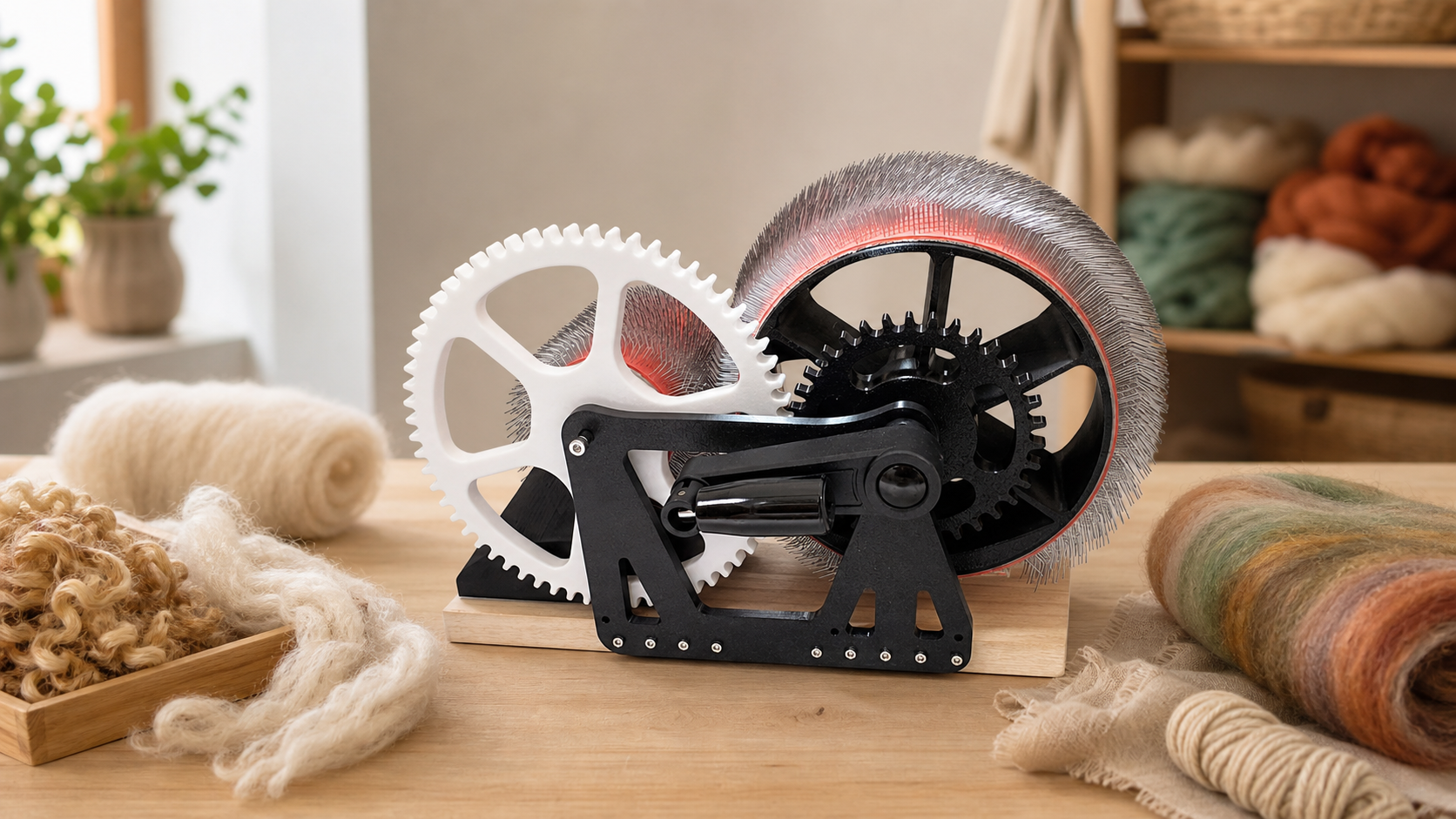
Use this workflow with a small test first. If you are comparing a tool for color work, review the Studio Drum Carder and imagine where each color band will sit on the drum.
Choose A Clear Color Path
Before touching the carder, decide the path: light to dark, warm to cool, one hue to another, or natural fleece shades moving across the batt. Pick three to five main steps. Too many colors can make the gradient harder to control, especially if they sit opposite each other on the color wheel.
Lay the fiber in order on the table. If two colors look harsh next to each other, add a bridge color or blend a small transition pile by hand. A good gradient often depends on the colors between the main colors, not only the endpoints.
Feed In Overlapping Bands
Start with the first color on one side of the drum. Feed the next color beside it with a small overlap. Continue across the width. Keep the pieces thin so each band can settle into the batt without creating ridges. The overlap area is what turns stripes into a gradient.
For a soft transition, widen the overlaps. For a more dramatic gradient, keep each color band stronger and use narrower bridges. Watch the surface as it builds. If one color dominates, pause and balance the next feeds before adding more.
Limit Passes To Protect The Transition
One pass can produce a lively gradient with visible movement. A second pass can soften hard boundaries. More passes may turn the batt into a single blended color. After the first pass, remove a small section or inspect the batt closely before deciding whether to card again.
If you do a second pass, split the batt lengthwise in a way that preserves the color order. Feed gently and avoid twisting the whole batt into a dense roll. The goal is to soften, not erase.
Plan For The Finished Craft
A spinning gradient may need strips pulled in order. A wet felting gradient may need thin veils that keep the color direction clear. A weaving gradient may need narrower bundles. Needle felting may use the batt as a color library, pulling tufts from each zone. The carding plan should match that use.
Before removing the batt, decide how you will store it. Roll it from one end if the order matters. Label the start and end colors. For multiple batts, write a simple recipe so the sequence can be repeated later.
Also decide whether the gradient should repeat or travel only once. A repeatable gradient can be split into matching strips for paired yarns or mirrored felt layouts. A one-way gradient can be saved for a shawl, wall piece, or skein where the color story moves from beginning to end.
Avoid Muddy Middle Colors
Muddy gradients often come from mixing complements too deeply, using too many passes, or adding a neutral fiber without a plan. If you want a brown, gray, or muted center, make it deliberate. If you want a bright transition, use bridge colors that share something with both neighbors.
Test tiny amounts before committing rare dyed fiber. A narrow sample batt can show whether your planned transition stays lively. This is especially helpful with hand-dyed wool, where colors may look different once opened and carded.
If the sample looks too abrupt, add a small bridge band. If it looks dull, reduce the overlap or remove the shade that is pulling the center down.
Use The Product Workflow For Repeatability
Gradient batts are easier to repeat when the carder, table, and notes stay consistent. The DrumCarder site and product page are useful references if you want a compact setup for this kind of color work. For questions, use the contact page.
Before checkout, also check the shipping policy and refund and returns policy. Color work is creative, but buying a tool should still be practical and clear.
Make Gradient Batts With A Repeatable Setup
Use controlled color bands and a focused drum carding workflow for spinning, felting, weaving, and art fiber projects.
View the product: https://drumcarder.com/product/studio-drum-carder/
FAQ
How many colors should I use in a gradient batt?
Three to five main steps are usually easier to control. Add small bridge colors if two shades jump too sharply from one to the next.
How many passes should a gradient batt get?
Start with one pass. Use a second pass only if the transition needs softening. Too many passes can erase the gradient.
How do I avoid stripes instead of a gradient?
Overlap adjacent colors in thin bands. The overlap creates the transition. Hard side-by-side blocks tend to read as stripes.
Can I make gradient batts from natural wool colors?
Yes. Natural shades can make beautiful gradients from cream to gray, brown, or black. Sort and sample first so the transition stays clean.
How should I store a gradient batt?
Roll or fold it so the color order remains visible. Label the start and end colors if you plan to spin, felt, or weave in sequence.