
Blog
Drum Carder Color Blending Recipes for Fiber Artists
Jul
Quick answer: useful drum carder color blending recipes for fiber artists are simple, repeatable, and tied to a finished use. Start with one base fiber, one main color, one support color, and one accent. Change only one thing at a time so you can tell whether the batt is better for spinning, felting, weaving, or art yarn.
Color recipes are not meant to remove creativity. They help you repeat the good surprises and avoid wasting dyed fiber on blends that turn flat. A recipe gives you a starting structure: amount, order, pass count, and intended use. From there, the carder becomes a controlled color bench rather than a mystery box.
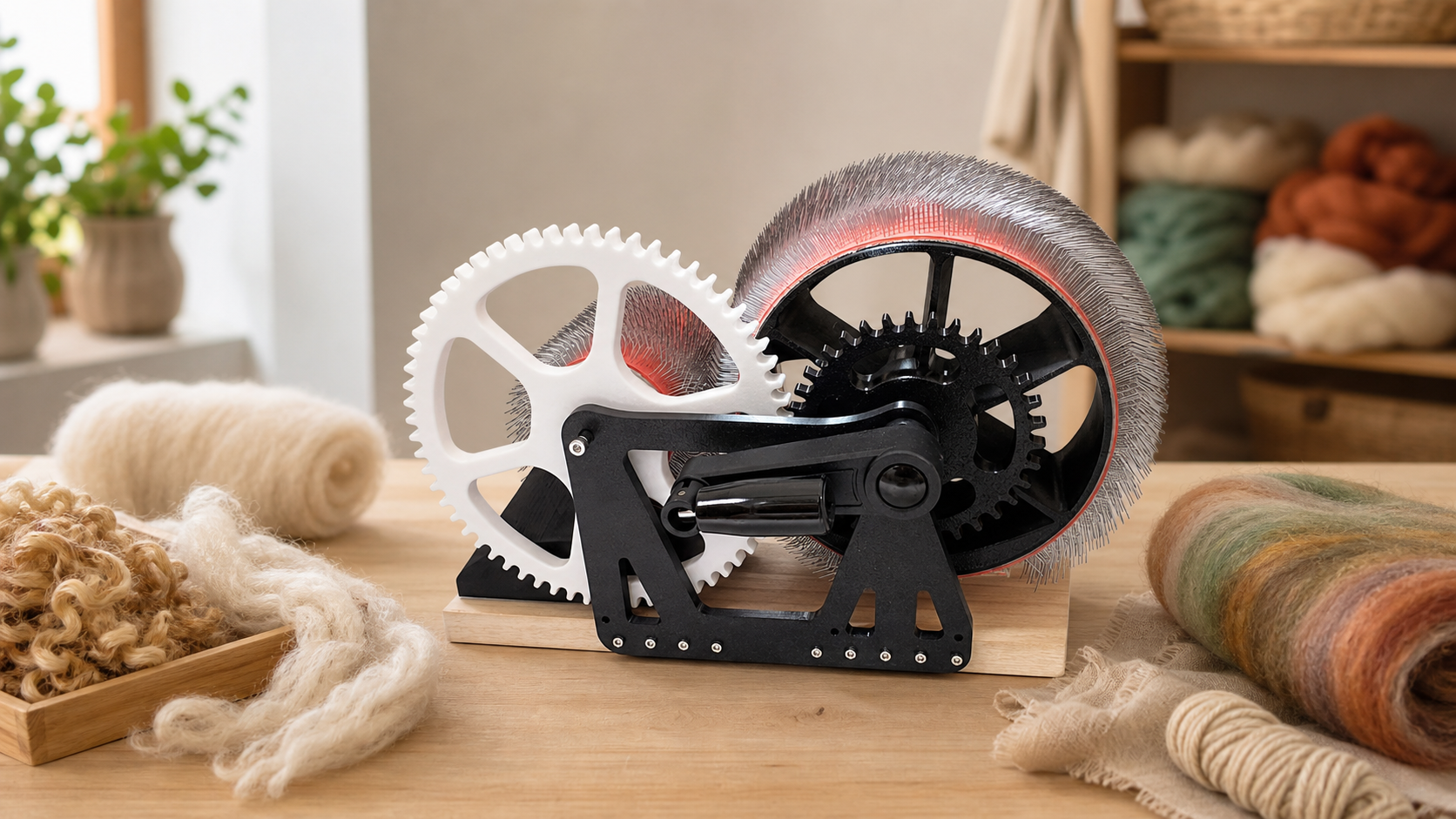
This guide gives practical recipe families rather than exact weights. Use small samples first, then adapt them to your own fiber. If you want a dedicated setup for this type of work, compare your routine with the Studio Drum Carder.
The Four-Part Recipe Format
A simple format keeps color decisions clear. Use a base fiber for structure, a main color for identity, a support color for depth, and an accent for movement. The base may be natural wool, dyed wool, or a blend you already trust. The main color should be the shade people notice first.
The support color can be related or contrasting. The accent should be small enough to stay special. This structure works because it prevents every color from competing at the same volume. If the batt feels chaotic, reduce the accent before changing everything else.
Recipe One: Tonal Spinning Batt
For a tonal batt, choose colors from the same family: cream, tan, caramel, and brown; or pale blue, denim, and navy. Feed the lightest shade first as a base, then add the middle shade, then the darkest shade in smaller amounts. One pass often keeps the batt lively. A second pass can make the yarn more even.
This recipe is useful for fine spinning, soft knitting yarn, and subtle weaving weft. The goal is depth without obvious stripes. If the batt becomes flat, add a small amount of the lightest shade as a final surface layer.
Recipe Two: Felting Color Library
Needle felters and wet felters often need color zones more than full blending. Place related colors in sections across the drum: light on one side, midtone in the center, shadow on the other side. Add only a light overlap between zones. Remove the batt carefully so each area remains usable.
This recipe turns one batt into a palette. You can pull small tufts for cheeks, petals, animal markings, landscape shadows, or layout transitions. Do not overcard it. The value comes from having choices inside the batt.
Recipe Three: Art Yarn Contrast Batt
For chunky art yarn, choose a wool base, a bold main color, a strong contrast, and a visible accent such as locks or shine. Feed the wool base first. Add the main color in broad areas. Add the contrast in smaller patches. Add accents last so they do not disappear.
This recipe should draft with personality. Test a strip before making a full batt. If the strip sheds or falls apart, add more base wool. If the contrast overwhelms the yarn, reduce it in the next sample rather than adding more colors.
Recipe Four: Neutral Bridge Blend
A neutral bridge blend is helpful when two colors are too loud together. Use a main color, a related neutral, and a small accent from the opposite side. For example, teal can bridge into gray with a tiny rust accent, or rose can settle into brown with a little cream. The neutral gives the eye a place to rest.
This recipe works well for wearables and home decor where you want color interest without noise. Feed the neutral as part of the base, then add the main color and accent lightly. Stop early so the accent still has life.
Keep A Recipe Card For Every Good Batt
Write down the fiber, color order, approximate amounts, number of passes, and how the batt was removed or stripped. Also note the finished use. A batt that is perfect for wet felting may be too open for fine spinning. A batt that spins beautifully may lose its color zones if used for felting.
Use the DrumCarder home page and contact page if you are comparing product fit for repeated color sampling. Before buying, review the shipping policy and refund and returns policy as part of the same practical check.
Attach a tiny fiber sample to the card when possible. Written notes are useful, but a real swatch remembers shine, texture, and value more honestly.
Build Repeatable Color Recipes On A Drum Carder
Use a compact carding workflow to sample, adjust, and repeat color blends for spinning, felting, weaving, and art yarn.
View the product: https://drumcarder.com/product/studio-drum-carder/
FAQ
What is the easiest color recipe for beginners?
Start with a tonal recipe: one color family in light, middle, and dark values. It is easier to control than strong complementary color.
Should I measure fiber for color recipes?
Measurements help repeatability, but notes can be simple. Record approximate amounts, feed order, pass count, and the finished use.
How do I keep accents visible?
Add accents late and use small amounts. If they go through too many passes, they may disappear or spread farther than intended.
Can one recipe work for spinning and felting?
Sometimes, but the best structure may differ. Spinning often needs draftable consistency, while felting may benefit from stronger color zones.
Why did my recipe look better as fiber than as a batt?
The colors may have been too equal, overblended, or missing a bridge shade. Make a smaller test and change only one part of the recipe.