
Blog
How Much Fiber to Feed Into a Drum Carder
Jul
Quick answer: decide fiber amount by the finished project unit you want: one spinning strip, one felting section, one sample batt, or one labeled shop batt. Start with a modest portion, spread it evenly, and judge the result by loft, removal, and usefulness. The right amount is not a universal handful. It is the amount that creates the batt your next step actually needs.
Amount planning is different from a general warning about overloading the tool. Here, the question is how to choose a repeatable portion for real work. A spinner, a felter, a shop seller, and a workshop teacher may all want different batt sizes even when they use the same carder.
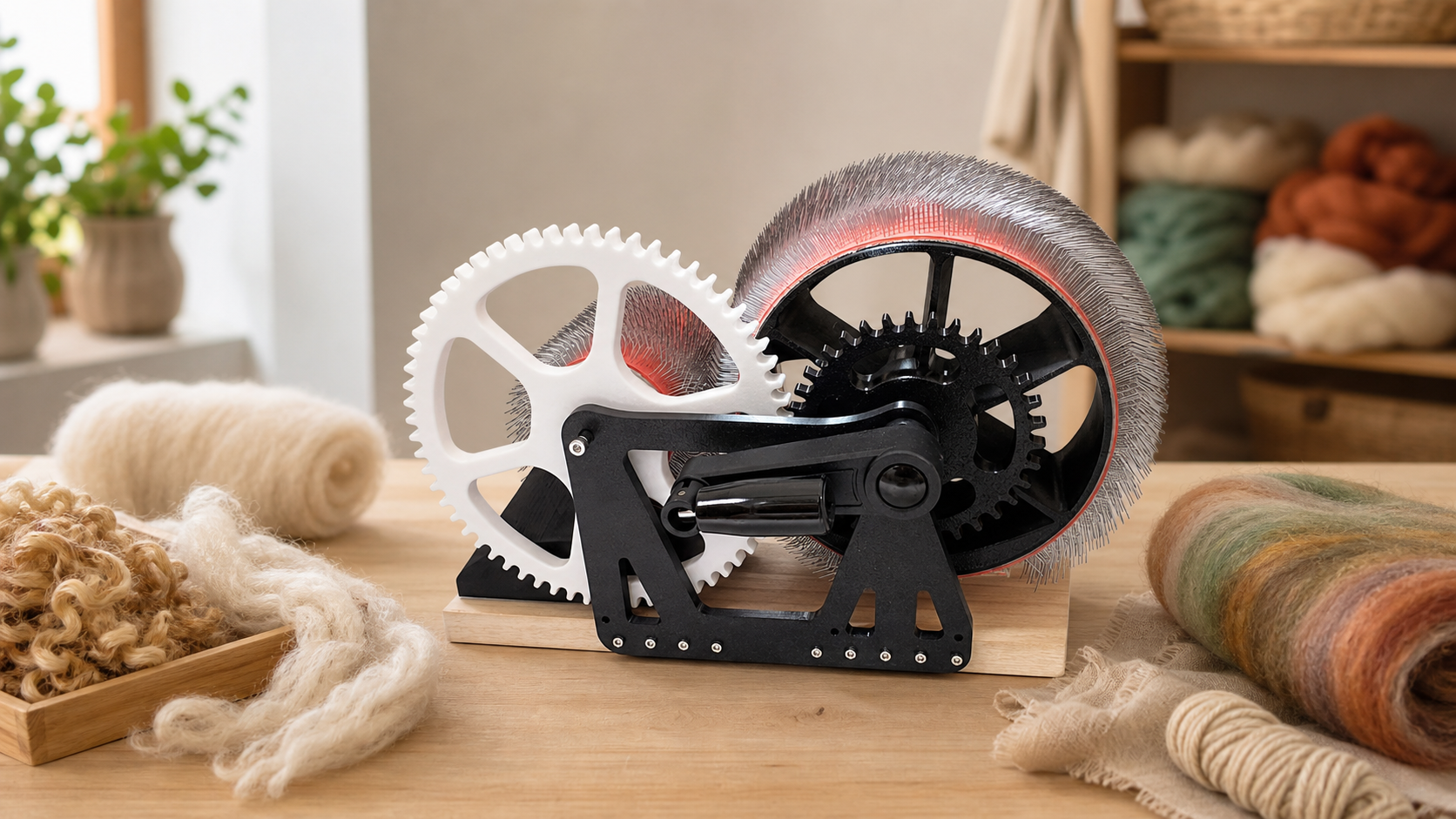
This guide gives you a practical way to judge amount by feel and result rather than by a fixed number. If you are building a home fiber workflow, compare it with the Studio Drum Carder and the support links on DrumCarder.
Let The Fiber Tell You The Amount
Different fibers feed differently. Open wool may glide in with little resistance. Dense alpaca may need smaller pieces. Dyed top may need to be spread wider before feeding. Locks, silk, and art batt add-ins should be used in lighter amounts because they can catch, clump, or disappear if overloaded.
Instead of asking for one universal amount, ask whether the fiber enters without pushing. If you have to force it, the piece is too large, too dense, or not opened enough. The carder should feel like it is accepting fiber, not being stuffed.
Build The Batt In Layers
Think of the batt as layers rather than a pile. Feed a thin base layer. Add another thin layer. Add color or texture after the base has begun to form. This gives you more control over thickness and helps prevent heavy areas from hiding inside the batt.
Layering is especially useful for gradient batts, felting layouts, and art yarn prep. You can place color where you want it instead of relying on a thick feed to mix itself. If the batt needs more body, add another light round rather than one heavy clump.
Watch The Edges And Center
Feeding amount is not only about total fiber. It is also about distribution. If you always feed the center, the batt may develop a thick middle and weak edges. If you favor the sides, removal can become uneven. Move across the width with small pieces so the batt builds evenly.
Pause often and look at the surface. A good batt shows a steady build. If you see a heavy ridge, correct with lighter feeds elsewhere. Do not wait until the drum is full and hope the next pass will solve everything.
Stop Before The Handle Complains
Handle feel is useful feedback. A slightly fuller batt may turn differently, but a sudden hard turn is a warning. Stop feeding and inspect. The batt may be too dense, a lock may be caught, or the fiber may need more opening before it can continue.
Stopping early is not failure. It is good carding judgment. Remove a lighter batt, test it, and adjust the next one. A clean small batt is better than a heavy batt that has to be pulled apart and corrected.
Match Amount To The Finished Use
Fine spinning wants even, airy preparation. Feed very lightly and test strips as you go. Needle felting can tolerate a slightly more open batt, but dense clumps still make shaping harder. Wet felting layouts need thin sheets that can be pulled into veils. Chunky art yarn batts can hold more texture, but they still need enough base wool to draft.
When in doubt, make two lighter batts instead of one dense batt. This gives you more options for blending, storage, and project matching. It also makes it easier to repeat the preparation later.
Use A Simple Session Habit
Keep a small scale or note card nearby if you want repeatability, but do not let measurements replace observation. Record the fiber type, how open it was, how many light feeds you used, and how the batt behaved. Over a few sessions, your hands will learn the right amount for your carder and fiber.
If you have questions about fit or product use, use the contact page. Before ordering, read the shipping policy and refund and returns policy so the buying path is as clear as the carding workflow.
That record also helps when you change fiber. Merino, alpaca, locks, and dyed top will not ask for the same feed amount, even on the same afternoon.
Measure By Project Unit
A practical way to learn amount is to define a project unit. For spinning practice, the unit might be one narrow strip from a batt. For needle felting, it might be one body-color section. For a shop batt, it might be the finished weight you want to label. The unit keeps the question tied to the finished use instead of an abstract handful.
After each session, write one sentence about the unit: “this amount made three easy drafting strips” or “this much core wool made one small animal body.” Those notes make the next carding session faster because you are repeating a useful project result, not guessing from memory.
Use A Portion Card
Create one small portion card for each recurring project type. A spinning card might list batt weight, strip count, and drafting feel. A felting card might list color zones, tearability, and whether the batt pulls into thin layout sheets. A shop card might list target weight, label language, photo order, and packaging fit.
This turns fiber amount into a studio system. You are not trying to remember exactly what your hands did last month. You are repeating the relationship between fiber, batt size, and final use. That is more useful than chasing a perfect number that ignores project context.
| Project unit | Useful record | What it prevents |
|---|---|---|
| Spinning practice strip | Strip count and drafting feel | Preparing more fiber than the practice block needs. |
| Needle felting color section | Body, shadow, highlight, or accent use | Mixing too much of a color that is only needed in small areas. |
| Shop batt | Finished weight and label notes | Creating inconsistent listings across related batts. |
| Workshop sample | Student portion and teaching step | Running short during class or making samples too large. |
Feed Lighter And Card With More Control
Review the product details and build a repeatable feeding routine for wool, alpaca, felting, and art batt sessions.
View the product: https://drumcarder.com/product/studio-drum-carder/
FAQ
How much fiber should I feed at once?
Use small airy pieces that enter without pushing. If the carder resists or the fiber bunches, use less and open the fiber more before feeding.
Is slow feeding better than fast feeding?
Usually yes. Slow feeding gives the carder time to take the fiber evenly and helps you correct thick areas before they become a problem.
Why does the handle get hard to turn?
The batt may be too full, the feed may be too heavy, or a dense lock may be caught. Stop feeding and inspect before continuing.
Can I fix a batt that was fed too heavily?
Sometimes. Remove it, split it into thinner sections, and feed lightly if another pass is appropriate. Do not force a dense roll back through.
Should art batts be fed more heavily?
They can include more texture, but the feed should still be controlled. Use a wool base and add texture in light layers so the batt drafts or felts predictably.