
Blog
How to Card Coarse Wool for Rug Yarn or Felting
Jul
Quick answer: card coarse wool rug yarn or felting with a different goal than fine spinning wool. Coarse fiber can be useful for durable yarns, sturdy batts, needle felting cores, wet felting layouts, and textured projects, but it needs sorting, opening, and realistic expectations. Do not try to make it behave like merino. Use its strength, body, and texture on purpose.
Coarse wool often gets dismissed because it is not soft against the skin. That can be a mistake. A fiber that feels too strong for a scarf may be excellent for rug yarn, wall pieces, sculptural felt, upholstery samples, or practice batts. The drum carder helps turn rough locks or opened fiber into a more usable sheet, but the carding plan should match the final use.
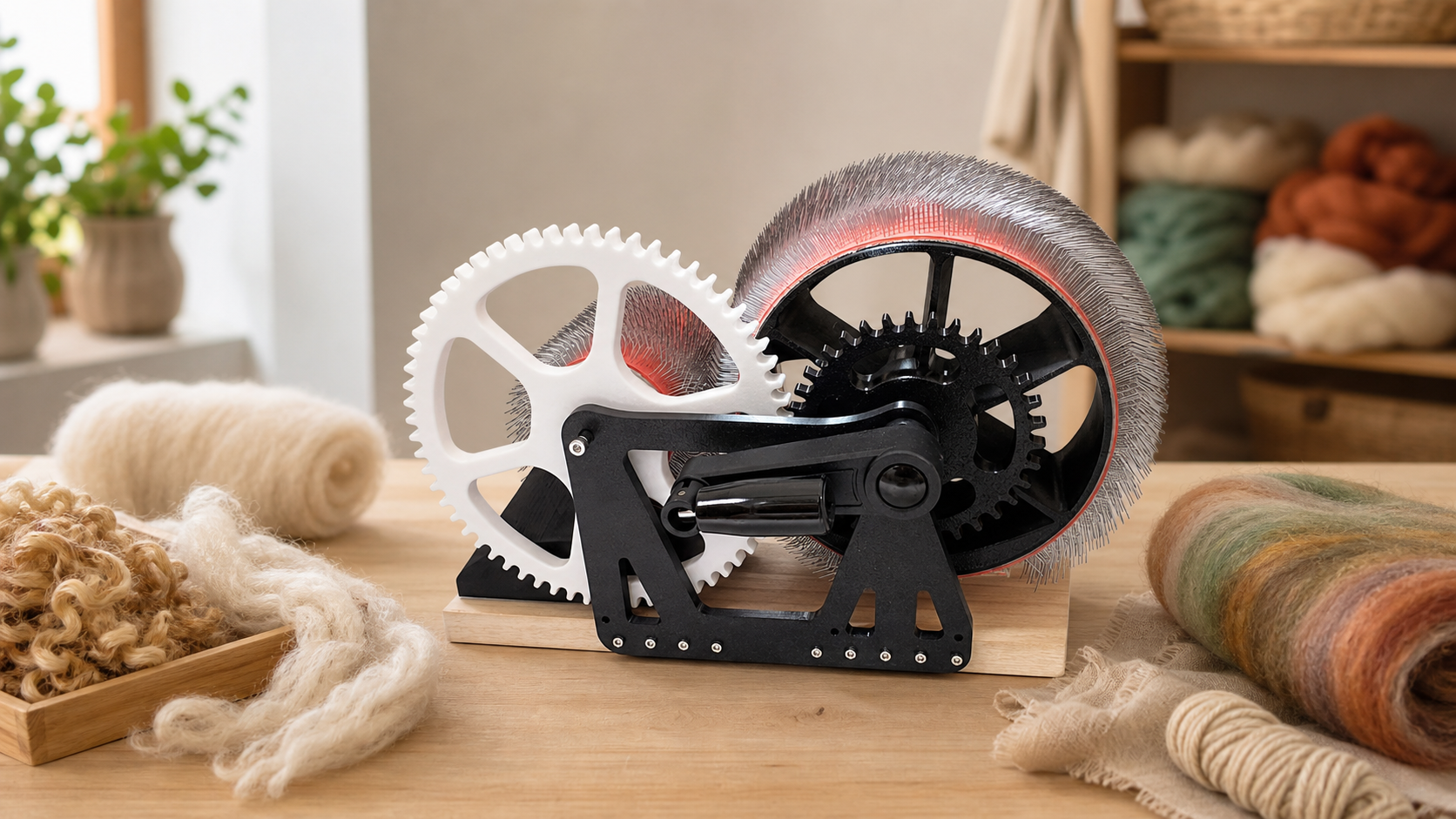
This guide assumes a small studio or home workspace. For the product referenced on this site, see the DrumCarder Studio Fiber Carder. You can also check support options and site information through the contact page before preparing a large batch.
Sort Coarse Wool Before Carding
Sorting matters more than force. Separate clean usable fiber from brittle tips, heavy vegetable matter, stained sections, and second cuts. A drum carder can open and organize fiber, but it should not be asked to solve every problem in the fleece. If a section feels weak, snaps easily, or contains debris that will not shake out, remove it before the carding session.
Next, divide the wool by purpose. Longer stronger locks may be useful for rug yarn. Shorter or more irregular sections may become felting material. Very rough leftovers may be better kept for stuffing, garden use, or experiments rather than your main project. Sorting gives the carder a clearer job.
Open The Fiber Without Over-Refining It
Coarse wool can tolerate more handling than fine wool, but that does not mean it should be rammed into the intake. Tease dense locks open by hand. Remove tight clumps. Feed the carder in thin, even amounts so the teeth can catch the fiber cleanly. If you feed a heavy chunk, you may create thick ridges that make the batt hard to use.
Keep the result appropriate for the project. Rug yarn often benefits from body and grip, so the batt does not need to look silky. Felting batts need enough openness for layers to connect. A perfectly smooth batt may not be necessary. The aim is controlled texture, not cosmetic perfection.
Carding For Rug Yarn
For rug yarn, focus on strength, consistency, and easy drafting. Make a sample batt and spin a short length before preparing the rest. If the yarn feels too harsh but strong, that may still be suitable for a floor or wall piece. If it sheds or breaks, sort more carefully or blend with a compatible wool that adds cohesion.
Feed layers in the direction that helps you draft later. If the wool is long, avoid repeated passes that tangle the staple. If the wool is short, avoid overloading the drum, because short fibers can form dense patches. Remove the batt and divide it into strips or nests that match your spinning style.
Carding For Felting
For wet felting or needle felting, coarse wool can bring structure and speed. It may not be ideal for a smooth next-to-skin finish, but it can build strong forms. Card it into open batts, then pull layers from the batt for layout. If the batt is too dense, the fibers may not migrate well. If it is too uneven, the felt may show ridges.
For sculptural work, use coarse wool as a core and add finer fiber on the visible surface. For rug or mat work, keep the coarse fiber visible if texture is part of the design. The carder lets you prepare repeatable sheets, which is especially useful when you need several layers with similar thickness.
FAQ
Can coarse wool be made soft by carding?
Carding can open and organize the fiber, but it cannot change the basic feel of a coarse fleece. Use coarse wool where strength and body are helpful. If softness is essential, blend carefully or choose a softer fiber for the surface.
How many passes should coarse wool need?
Often one or two passes are enough. Use the first pass to open the fiber and the second only if the batt needs more consistency. Too many passes can make long coarse fibers tangle or turn the batt into a dense mat.
Should I blend coarse wool with finer wool?
You can, but sample first. Finer wool can soften the feel and help cohesion, while coarse wool adds durability. The blend should fit the project. A rug yarn blend does not need to meet the same comfort standard as a hat or scarf.
Why is my coarse wool batt full of ridges?
The feed was probably uneven or too heavy. Open the locks more, feed thinner layers, and spread the fiber across the carding width instead of letting it enter in ropes.
Can I use coarse wool for needle felting?
Yes, especially for cores and structural shapes. Carded coarse wool can felt firmly and quickly. Add finer wool over the surface when you want a cleaner finish or more color control.
A Practical Sample Before The Full Batch
Make three small samples: one plain coarse wool batt, one batt blended with a softer wool, and one batt reserved for felting. Spin, felt, or tug each sample according to its planned use. The best result may not be the prettiest batt. It is the one that performs correctly in the finished project.
Once you know the purpose, repeat the feed amount, pass count, and sorting standard. Coarse wool becomes much easier to use when you stop apologizing for its texture and start assigning it the right job. For order policies before buying, review the shipping policy and the refund and returns policy.
Prepare Coarse Wool With More Control
Use a compact drum carder to sample sturdy batts for rug yarn, felting layouts, textured projects, and small studio fiber prep.