
Blog
Longwool Lock Texture Checklist for Art Batts
Jul
Quick answer: longwool locks should be checked for three things before they touch the drum carder: clean tips, open butt ends, and a clear reason for being in the batt. If the lock is meant to show shine or curl, treat it as a surface feature. If it is meant to add body, open it more and use it sparingly. The wrong choice is feeding a pretty lock as a dense rope and hoping the carder will preserve the look.
This checklist is for makers who already know they want longwool texture but need a better decision process before carding. It is not a general art batt lesson. The goal is to decide which locks deserve the surface, which should be opened into the base, and which should be set aside before they create drag, tangles, or a muddy batt.
For the current product path, review the Studio Drum Carder product page. For broader wool and alpaca carding context, start from DrumCarder.com.
Sort Locks By Job Before Sorting By Color
Color is tempting, but job comes first. A glossy lock with beautiful tips may be wasted if it is buried deep in a base layer. A shorter lock with broken tips may still work well inside the batt as body and texture. Put each lock into a job group: showpiece, supporting texture, blending fiber, or reject.
This small sorting step changes the whole session. Showpiece locks should stay more intact. Supporting texture can be lightly opened. Blending fiber can be opened further. Reject pieces should not be forced into a batt just because they match the palette.
Check The Butt End And Tip Separately
The butt end is the part that needs to connect. The tip is often the part you want people to see. Treat them differently. Open the butt end enough that it can grip a base. Protect the tip if curl, shine, or color change matters. If the whole lock is teased into fluff, the finished batt may still be useful, but it will no longer read as lock texture.
A lock with a sticky butt end and a clean tip may still be usable if you open it carefully. A lock with weak tips and a clean butt end may belong inside the batt instead of on top. Separating those decisions prevents wasted texture.
Use A Three-Sample Test
Before using your best locks, make three small samples. First, place a few locks on a thin base and remove the batt after one pass. Second, open the same kind of lock more and blend it into the base. Third, make a mixed sample with some surface locks and some opened locks. Compare curl, shine, draft, and how well the lock stayed attached.
The sample tells you what the fiber wants to do. Some longwool stays bold after one pass. Some collapses quickly. Some looks better when only the tips show. A small sample prevents the common mistake of learning on the entire batch.
Keep Surface Locks Away From Heavy Traffic
Surface locks should usually enter late in the session. Build the base first, then add feature locks in small groups. If a lock is added early and sent through several passes, it may become ordinary texture instead of the feature you planned. That can be fine for some yarn, but it is not the same outcome.
Think of the carder as a placement tool for these locks, not only a blending tool. Place locks where the finished batt needs movement. Leave quiet areas quiet. Too many locks in every section can make the batt heavy and harder to use.
Watch For Drag And Early Warning Signs
Long locks give early warnings when they are not happy. A lock may enter sideways, pull as a strip, catch near an edge, or make the handle feel heavier. Stop early when that happens. Open the butt end more, use a smaller section, or move that lock into the blending-fiber group.
If the issue is repeated wrapping, use the guide on why fiber wraps around the licker-in. If the handle feels hard even with a small sample, read why the handle feels hard to turn before continuing.
Match Lock Texture To The Final Use
Spinners, felters, weavers, and mixed-media makers may need different amounts of structure. A lock-spun yarn may welcome bold tips. A wet-felted surface may need locks placed so they attach without disappearing. A tapestry texture blend may use shorter opened locks for dimension rather than dramatic curls.
Write the final use on a small note before you start. Then judge each lock against that use. This keeps the carding session from drifting into a generic pretty batt that does not behave the way the project needs.
Test Lock Texture In A Small-Studio Workflow
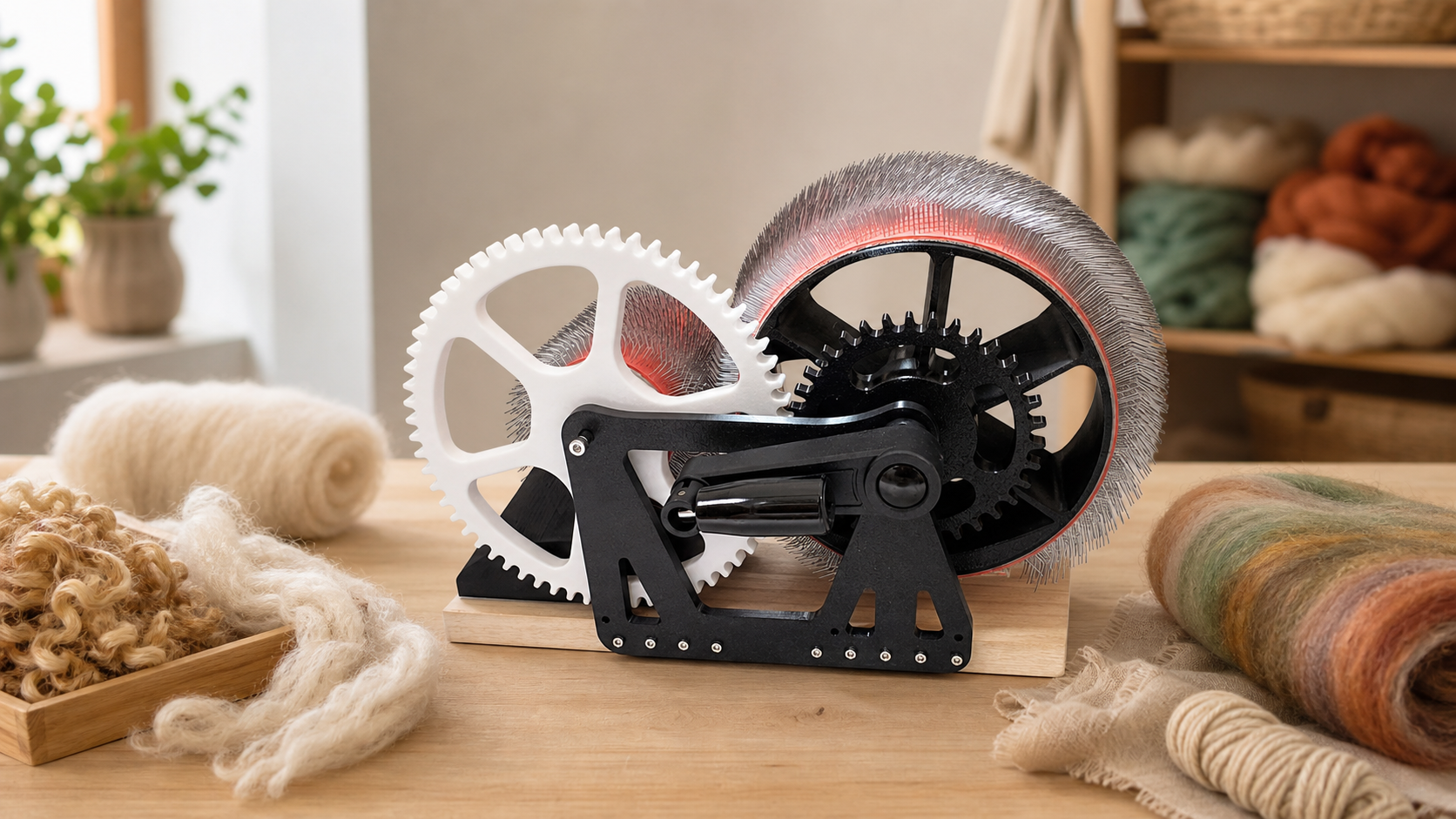
Use a compact carding routine to sample base layers, surface locks, and opened longwool before committing a full batch.
FAQ
Should all longwool locks stay intact?
No. Keep feature locks more intact, but open supporting locks when they need to blend into the base or draft more smoothly.
What makes a lock worth placing on the surface?
Clean tips, visible curl, strong shine, color interest, and enough strength to survive gentle handling all make a lock a better surface candidate.
Can I use damaged locks in a batt?
Sometimes. Remove weak or dirty parts first. Damaged locks may work as opened blending fiber, but they should not be the visible feature.
How many passes should longwool locks need?
Often fewer than plain wool. Start with one controlled pass and sample before adding another. Extra passes usually reduce visible lock character.
Why do my longwool batts look flat?
The locks may be over-opened, added too early, passed too many times, or spread too evenly. Treat the best locks as placed texture, not filler.