
Blog
Drum Carding Merino Without Making Pills
Jul
Quick answer: drum carding merino making pills usually means the fiber is being fed too thickly, handled after it has started to felt, or passed through the drums more times than the preparation can tolerate. Merino is fine, springy, and easy to compact. To keep it smooth, open it gently, feed whisper-thin layers, keep the handle speed steady, and stop as soon as the batt is even enough for your project.
Merino rewards patience. It can become a soft spinning batt, a smooth felting layer, or a base for color blending, but it does not like being treated like a coarse utility wool. If you push clumps into the intake, crank quickly, or chase perfect alignment for too long, the surface can turn into little balls, knots, or tight specks that are hard to draft later.
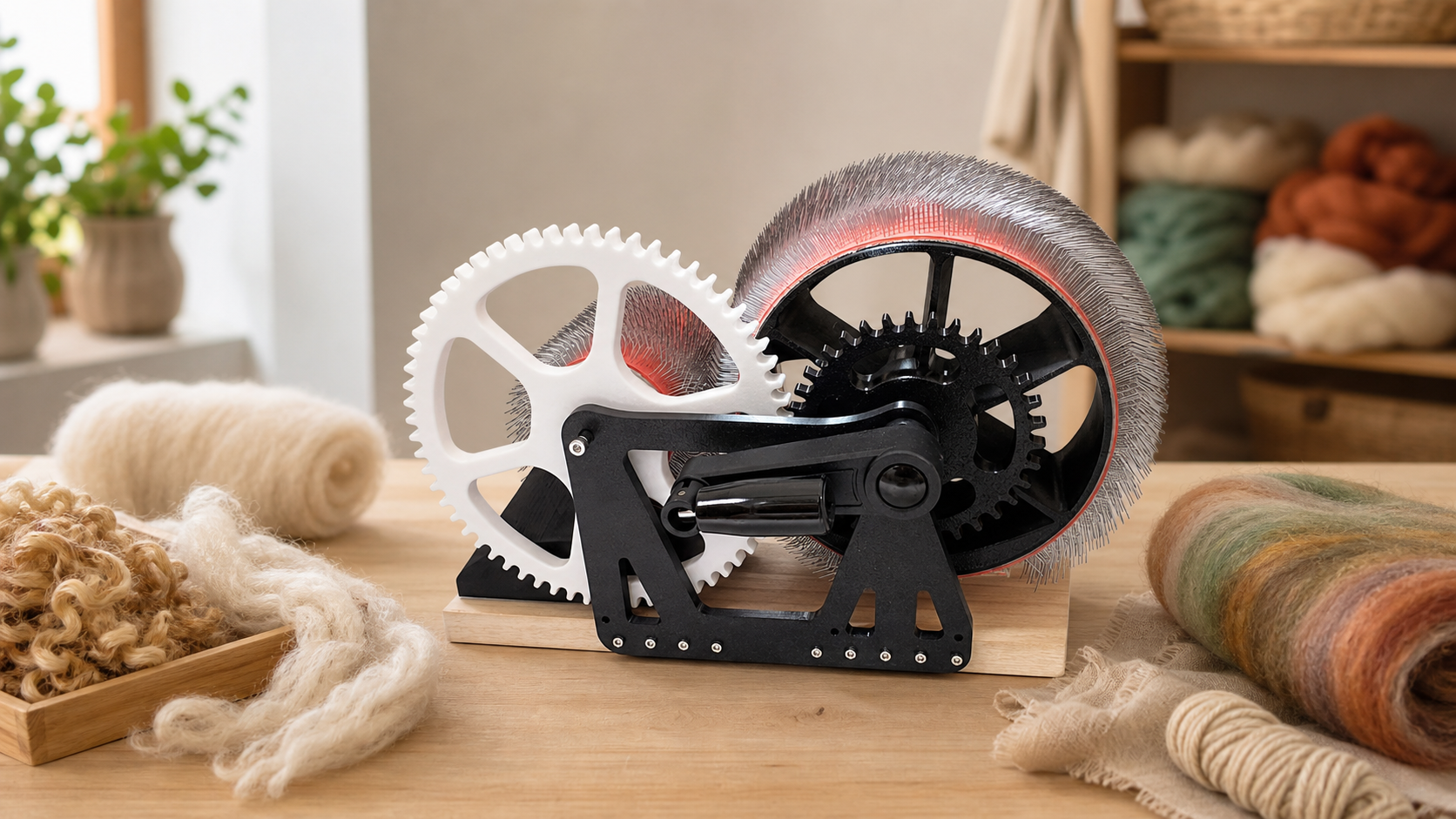
This guide focuses on small studio practice with a compact drum carder. For the tool used on this site, see the DrumCarder Studio Fiber Carder. If you are still comparing carding setups, start from the DrumCarder home page and then return to this workflow when you are ready to test merino.
Why Merino Pills On A Drum Carder
Pills form when fine fibers grab each other before they have been spread into a stable layer. With merino, that can happen before carding if the fiber is damp, compressed in storage, or handled with warm hands for too long. It can also happen during carding when the feed layer is heavy enough for the licker-in to pull clumps instead of individual wisps.
The first decision is whether the merino is ready for the carder at all. Clean top, roving, or lightly opened fleece behaves differently from a matted lock. If you can already see tight knots, felted tips, or sticky areas, do not expect the carder to erase them. Remove the worst sections, test a small amount, and save your main batch until the sample tells you the fiber will cooperate.
Open The Fiber Before Feeding
Before turning the handle, separate the merino into thin sheets. Pull lengthwise rather than tearing sideways. The goal is not to make a cloud of fuzz. The goal is to reduce pressure at the intake so the teeth can lift fibers gradually. If the fiber arrives as a thick strip, split it into narrower strips, then spread each strip into a light veil.
Work with small amounts. A merino batt that looks modest on the first pass is usually easier to improve than an overloaded batt that already contains pills. If you want a heavier batt, build it slowly with several light layers instead of one dense feed. This is especially important when blending merino with alpaca, silk, sparkle, or other slippery accents.
Use Thin Layers And A Steady Handle
Feed merino so slowly that the carder never feels hungry or crowded. Place the fiber on the feed area in short, even sections. Let the drum take it. Do not push the fiber into the teeth with force. A steady handle speed gives the teeth time to transfer fiber without grabbing large chunks.
If you hear a rough change in sound, feel sudden resistance, or see the intake chewing a lump, pause. Pull back the unfed fiber, open it more, and resume with less material. Small corrections during the session are easier than trying to repair an entire batt after pills have been distributed through it.
For color work, layer colors in repeated thin passes rather than one dramatic stack. Fine merino can blur quickly. If your aim is a heathered batt, stop when the colors are related but still visible. If your aim is a solid shade, expect more integration, but keep checking the surface for little knots before adding another pass.
Know When To Stop
Many merino problems come from one extra pass. The first pass opens and gathers the fiber. The second pass may smooth the batt. A third pass can help a stubborn blend, but it can also compact the fiber and make pills more likely. Before recarding, ask what is missing. If the batt is slightly striped but drafts well, it may already be useful. If the batt is thick in one area, split it and feed the heavy section lightly rather than running the whole batt again.
Remove the batt gently. Lift it without scraping aggressively across the carding cloth. If the batt resists, work in smaller sections and avoid tugging. Harsh removal can create the same tight spots you worked to prevent during feeding.
FAQ
Can pills be removed after carding?
Some loose pills can be picked out by hand, but a batt full of tight specks is difficult to rescue. The better fix is prevention: lighter feeding, less handling, and fewer passes. If only one section is affected, remove that section and use the cleaner part of the batt.
Should merino be misted before carding?
Use caution. Slight humidity in the room can reduce flyaway fiber, but wet or tacky merino can compact fast. If you use any conditioning method, test a small amount first and make sure the fiber feels open, dry enough, and easy to separate before it reaches the drum.
Is merino harder to card than coarse wool?
It is less forgiving. Coarser wool often tolerates stronger handling and more texture. Merino asks for lighter layers and earlier stopping points. That does not make it a bad fiber for drum carding; it simply means the session should be slower and more controlled.
How much merino should I feed at once?
Use less than you think you need. If the fiber covers the intake as a thick strip, split it. A thin, almost transparent layer is safer. Add more layers only after the previous layer has transferred cleanly onto the main drum.
Can I blend merino with longer locks?
Yes, but add long locks with intention. Use merino as a base and place locks lightly so they keep some movement. Too many passes will shorten the visual texture and may turn the whole batt dense.
A Simple Merino Test Routine
Start with a small sample, not the whole braid or fleece. Open the fiber, feed a light layer, remove the batt, and inspect it under good light. Draft a little from the edge. If it drafts smoothly, repeat the same method at a larger size. If you see pills, change only one variable at a time: lighter feed, slower handle, less pass count, or better pre-opening.
Keep notes for fiber type, amount, pass count, and result. Merino practice improves quickly when you can compare sessions instead of guessing. For product questions, shipping timing, or fit for your workspace, use the contact page before planning a full batch.
Build A Smoother Merino Workflow
Use a compact drum carder for light merino layers, sampling, color blending, and small studio batt preparation.