
Blog
How to Make Smoother Batts for Fine Spinning
Jul
Quick answer: to make smoother batts for fine spinning, open the fiber well, feed the drum carder in very thin layers, limit the number of passes, and remove the batt without compressing it. The goal is an even preparation that drafts easily into a finer yarn, not a dense batt that looks tidy but fights your hands.
Fine spinning exposes every uneven spot. A clump becomes a slub. A thick edge becomes a lumpy join. Overworked fiber can feel tired before it reaches the wheel. Drum carding can help, but only when the workflow is gentle and consistent. Smooth batts are made through careful preparation, not pressure.
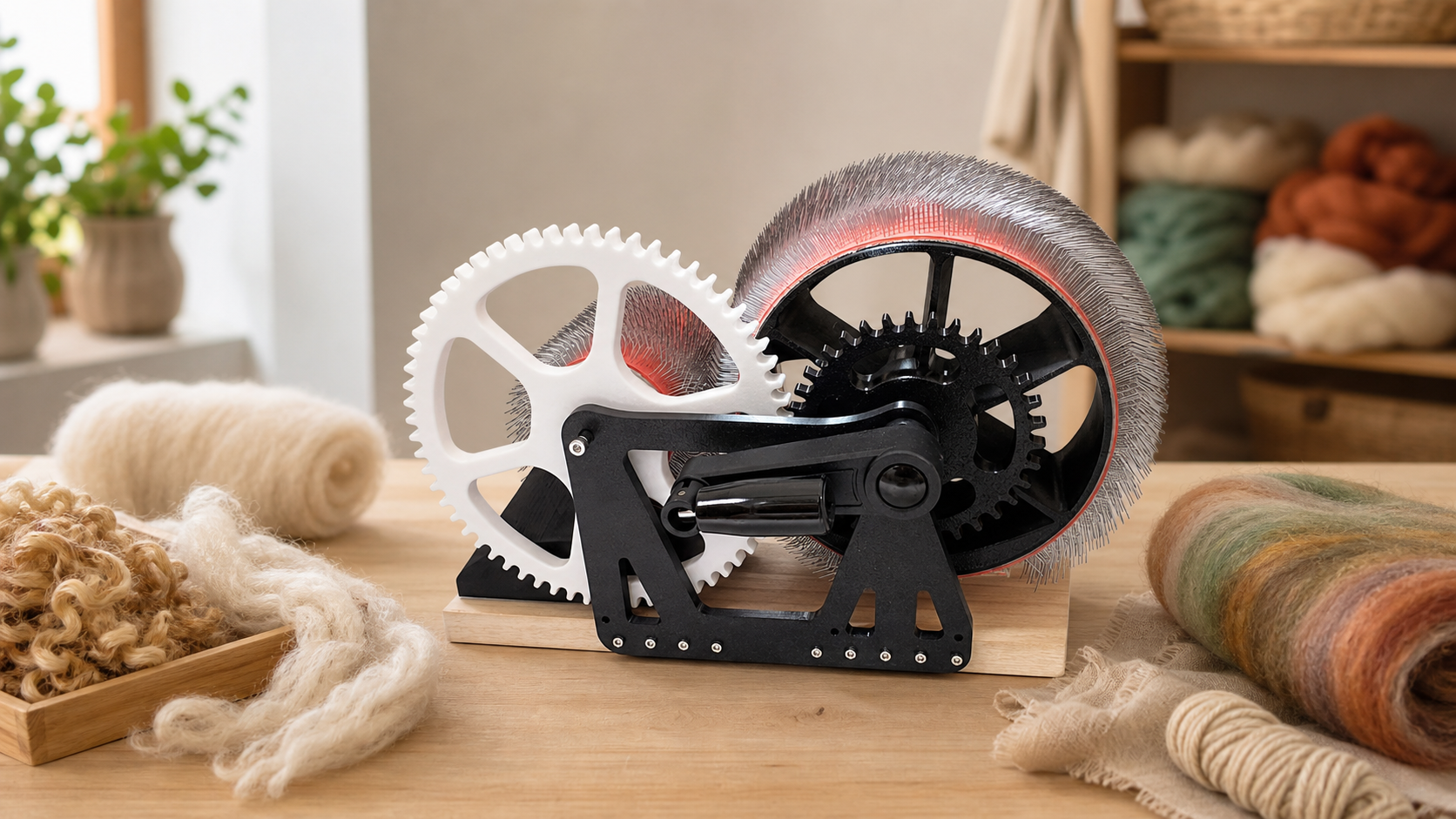
This guide is for spinners who want cleaner drafting from wool, alpaca blends, or similar studio fibers. If you are comparing tools, keep the Studio Drum Carder product page open and consider whether your bench routine supports patient, light feeding.
Start With Fiber That Deserves Fine Prep
A drum carder cannot turn every fiber pile into fine spinning preparation. The fiber should be clean, dry, and reasonably aligned or opened before carding. Remove second cuts, vegetable matter, tight nepps, and matted sections before they reach the drum. Fine yarn magnifies those flaws.
Match the prep to the fiber. Fine wool needs a gentle hand. Alpaca may need support from wool if it feels slippery or dense. Dyed top can be opened carefully before carding so it does not enter as a compact rope. The better the fiber feels before the carder, the smoother the batt can become.
Feed Less Fiber Than Seems Necessary
For fine spinning, light feeding is the main rule. Pull the fiber into thin, airy pieces and feed slowly across the width. Avoid the urge to fill the drum quickly. Heavy feeding creates thick spots that may hide until you start drafting. If your hands want to push, pause and make the fiber thinner instead.
Watch the batt as it builds. If one side looks heavier, correct it immediately with lighter feeding on that side. Smooth batts come from small choices repeated across the whole drum, not from trying to fix a dense batt at the end.
Use Passes As A Tool, Not A Habit
Many spinners assume more passes always mean smoother batts. Sometimes that is true, but only up to a point. Extra passes can shorten the feel of the preparation, blend colors beyond what you wanted, or create static and fatigue in delicate fibers. After the first pass, pull a small strip and draft it. Let that test decide whether another pass is needed.
If you do use a second pass, split the batt into thin sections and feed them evenly. Do not roll the whole batt into a thick rope and force it back through. That adds the very density you are trying to avoid.
Control Edges And Centers
Fine spinning batts often fail at the edges. Thick edges make uneven strips, while thin centers create weak drafting zones. Feed all the way across the working width, but keep each feed light. If the edges collect too much fiber, spend the next few feeds in the center. If the center is heavy, feather the next feeds toward the sides.
When removing the batt, keep the sheet as even as possible. If one edge is thicker, strip it separately and use it for a slightly heavier yarn or a sample. Do not mix a thick strip into your fine spinning plan and hope it disappears at the wheel.
Remove, Strip, And Store Without Crushing
A smooth batt should stay airy. Remove it gently, then decide whether to roll, fold, or strip it for spinning. For fine yarn, many spinners prefer narrow strips that pre-draft lightly. Keep the strips in order if color direction matters. If the batt is a blend, rotate strips only if that improves consistency.
Storage matters. A batt pressed under books or packed tightly into a bag can become harder to draft. Use loose storage and spin the preparation while it still feels fresh. If you need to wait, protect it from dust without compressing the fiber.
Make A Small Sample Before The Full Batch
Fine spinning rewards sampling. Card a small amount, strip it, spin a short length, and check the yarn. Does it draft smoothly? Are there nepps? Is the blend too slippery? Does the yarn want more twist than expected? This sample tells you whether to change feeding, fiber ratio, or number of passes before preparing the full amount.
The Studio Drum Carder can support this kind of repeatable sampling when you want a focused bench tool for wool, alpaca blends, and small-batch prep. For questions about product fit or order details, start with the contact page.
Prepare Smoother Batts For Fine Spinning
Use light feeding, practical sampling, and a dedicated carding workflow to make finer yarn prep less frustrating.
FAQ
How many passes should I use for fine spinning batts?
Start with one careful pass and draft a test strip. Add a second pass only if the fiber needs more blending or opening. More passes are not automatically better.
Why do my smooth batts still make lumpy yarn?
The fiber may have hidden nepps, thick feed areas, compressed storage, or uneven batt edges. Fine spinning reveals small prep problems quickly.
Should I pre-draft strips from a carded batt?
Light pre-drafting can help fine spinning, especially if the batt is slightly dense. Keep the motion gentle so you do not pull the strip apart before spinning.
Can alpaca be carded into smooth batts for fine yarn?
Yes, but alpaca can feel dense or slippery. Many spinners blend it with wool or feed it very lightly so the batt drafts with more control.
What is the biggest mistake when making fine spinning batts?
Feeding too much fiber at once is the common mistake. Thin, patient feeding usually improves smoothness more than extra passes after a heavy feed.