
Blog
Drum Carder FAQ for Wool Alpaca and Art Batts
Jul
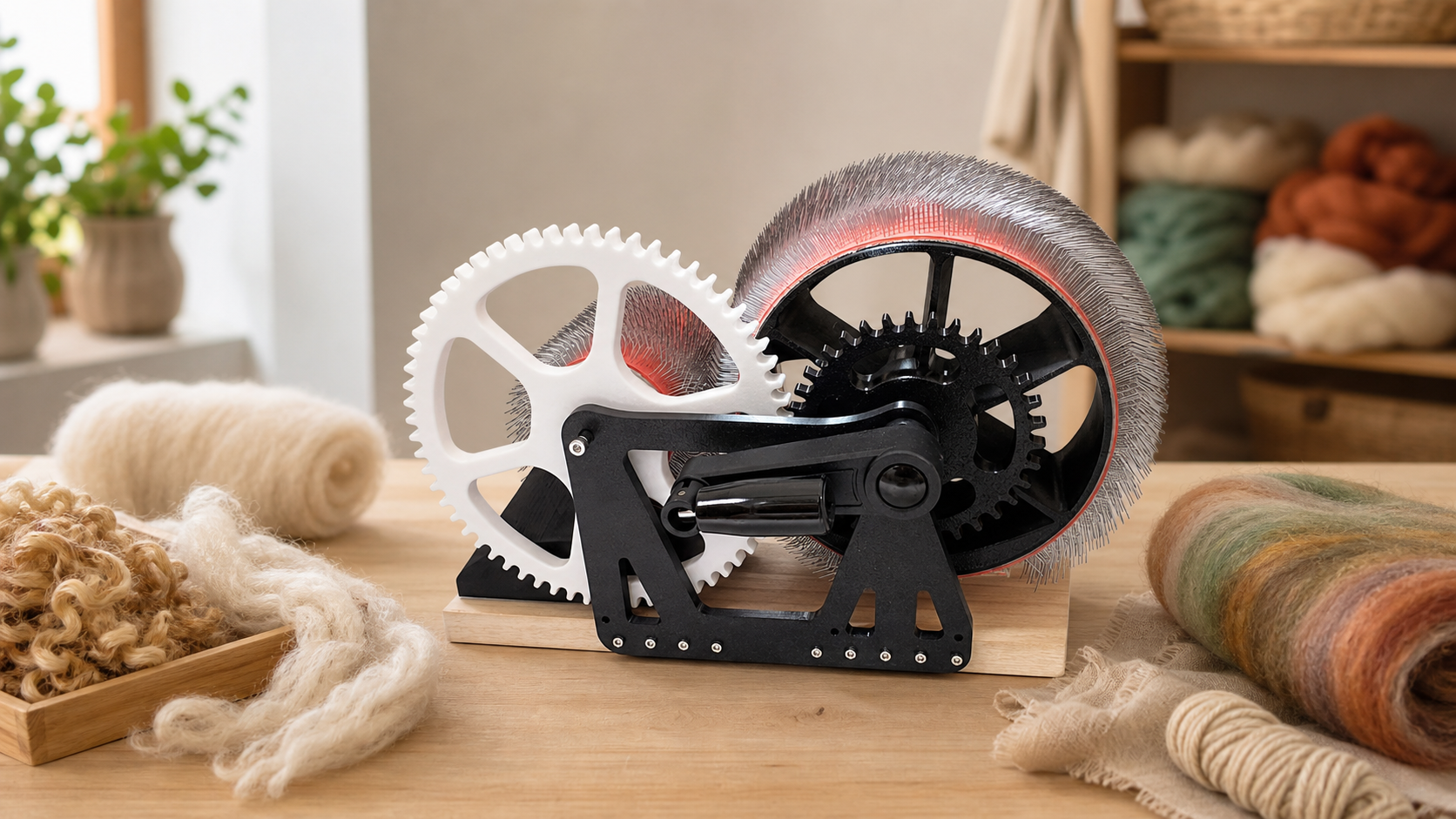
Quick answer: a drum carder is used to prepare fibers such as wool and alpaca into batts for spinning, felting, blending, sampling, and art-fiber projects. It is not a magic fix for dirty or badly prepared fiber. The best results come from clean fiber, light feeding, realistic batch sizes, and a clear plan for color, texture, and cleanup.
This FAQ gathers the questions that usually appear before someone buys or uses a drum carder. Some are basic. Some are the quiet practical questions people ask after watching a few videos and realizing there is more to the process than turning a handle. The goal is to give fast, conservative answers without pretending that every product or every fleece behaves the same.
If you want a deeper buying overview, use the drum carder buying guide for wool and alpaca. To see the compact product page, visit the DrumCarder Studio Fiber Carder.
Drum Carder Basics
What is a drum carder used for?
A drum carder is used to align, open, and blend fiber into batts. Handspinners use batts for yarn. Felters use prepared fiber for layouts. Fiber artists use the carder to combine color, texture, and small accents. Small studios may also use it for sampling blends before making a larger batch.
Is a drum carder only for wool?
No. Wool is common because it cards well and gives structure, but alpaca and other fibers can be blended too. The important point is suitability. Some fibers need more preparation, lighter feeding, or support from wool so the batt does not become dense, slippery, or hard to remove.
Does a drum carder clean raw fleece?
No. It should not be treated as a washer or a rescue tool for dirty fiber. Fiber should be cleaned and reasonably prepared before carding. Vegetable matter, grease, weak locks, and matted areas can still cause problems.
Wool Alpaca And Art Batt Questions
Can I blend wool and alpaca on a drum carder?
Yes, many fiber artists blend wool and alpaca. Wool can add structure, while alpaca can add softness and drape. Start with modest amounts of alpaca and test the result, because too much soft fiber can make a batt feel dense or harder to manage.
Can I make art batts with sparkle locks and nepps?
Yes, but use accents with restraint. Place texture and sparkle where they support the design, and avoid repeated passes that bury the interesting parts. A clear wool base often helps hold the batt together while still allowing decorative fibers to show.
How many passes should fiber go through?
Use as many passes as the fiber and design need, but not more. One pass may keep color lively. A second pass may integrate a blend. Too many passes can flatten texture, muddy color, or make the batt feel compact. Stop and inspect before deciding.
Setup And Space Questions
How much space do I need for a drum carder?
You need more than the tool’s footprint. Leave room for fiber waiting to be fed, your hands, batt removal, notes, and cleanup. Small studios should plan the whole carding session, not just the storage spot.
Is a compact drum carder good for a small studio?
A compact drum carder can fit small-studio routines when your batches are modest and you value quick setup, sampling, and manageable storage. If your goal is large-volume processing, compare larger or more specialized options too.
Can I use a drum carder at a kitchen table?
Possibly, if the surface is stable, clear, and comfortable. Think about fiber lint, cleanup, nearby food areas, and whether the carder can be stored safely after the session. A dedicated board or craft surface may make shared spaces easier.
Buying Questions
What should I check before buying a drum carder?
Check your main fiber, batch size, workspace, support needs, seller documentation, policy pages, and unanswered product questions. Do not assume specifications, included tools, warranty, or shipping timing unless they are clearly stated for the exact product.
Should beginners buy the largest carder they can afford?
Not automatically. Beginners often benefit from a tool that is easy to set up, easy to understand, and realistic for normal practice sessions. Capacity only helps if it matches the way you will actually prepare fiber.
How do I compare drum carder brands?
Compare current model information, support, workspace fit, fiber goals, cleaning needs, and seller clarity. Brand reputation can help you build a shortlist, but it should not replace product-specific questions.
Use And Troubleshooting Questions
Why are my batts lumpy?
Lumps often come from feeding too much fiber at once, using fiber that is not opened enough, rushing the session, or expecting one pass to fix a difficult preparation. Feed lighter layers and test with a small amount.
Why do my colors look muddy?
Muddy color usually comes from too many colors, too many passes, or mixing complements without a plan. Use a smaller palette, keep accents intentional, and stop while the colors still have life.
How should I clean between projects?
Remove the batt, inspect the carding area, and lift leftover fiber gently before starting the next blend. Cleaning is especially important after dark fiber, sparkle, nepps, or alpaca if the next project is pale or natural.
Simple First Projects
For a first session, make a plain wool batt. For a second, add a small amount of alpaca. For a third, try two related colors. After that, test locks, sparkle, or nepps in small amounts. This order is not boring. It is how you learn what the tool does before asking it to manage every creative idea at once.
Keep notes. Write down fiber type, color order, number of passes, and what changed after carding. A basic notebook can prevent repeated mistakes and help you rebuild a blend you liked. For product-specific questions, use the contact page.
Explore A Compact Drum Carder
Review the DrumCarder Studio Fiber Carder for wool, alpaca, art batt blending, sampling, and small studio preparation.