
Blog
Drum Carder Workflow for Needle Felting Batts
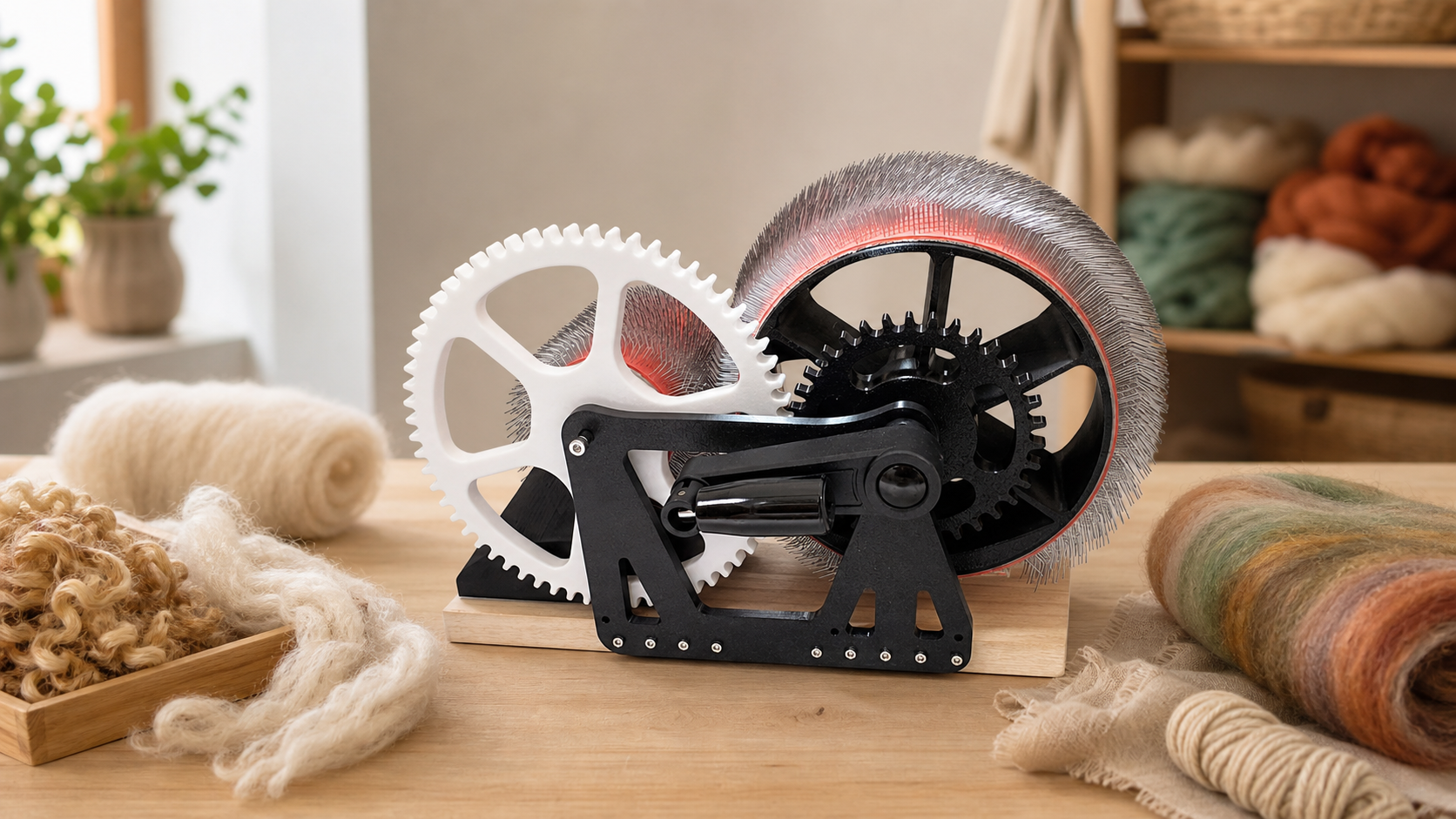
Jul
Quick answer: a good drum carder workflow for needle felting batts keeps fiber open, layered, and easy to tear into small working pieces. Instead of making one overworked batt, build light layers of core wool, color, and texture so the batt can support firm shapes, smooth surface felting, or painterly details without fighting your needles.
Needle felting asks different things from a batt than spinning does. A spinner may want a long, even preparation that drafts predictably. A needle felter often wants a batt that pulls apart cleanly, packs down when stabbed, and still keeps enough loft for shaping. That difference changes how you feed the drum carder, how many passes you use, and how you store the finished fiber beside your work mat.
If you are still deciding whether a carder belongs in your studio, compare the workflow below with the Studio Drum Carder product page and the broader DrumCarder home page. The best tool choice is the one that supports the kind of felting you actually do.
Plan The Batt Around The Felted Object
Start with the object, not the fiber pile. A small animal, ornament, brooch, sculptural face, and flat applique all need different batt behavior. Core shapes usually work best with plain wool that compacts firmly. Surface layers need cleaner color control and may benefit from softer fiber. Decorative accents can include locks, silk, or sparkle, but those add-ins should be used lightly so they do not make the batt hard to needle.
Before carding, divide your materials into three small groups: structure, surface color, and accent texture. This keeps the session from turning into an accidental blend where everything disappears into one muddy batt. Needle felting is slow enough already; a little planning at the carder saves a lot of picking through fiber later.
Open Fiber Before It Reaches The Carder
A drum carder works best when the fiber enters in thin, open wisps. Dense clumps create stripes, bumps, and hard spots that are annoying during needle felting. Tease washed wool by hand, loosen dyed top, and separate locks before feeding. If the fiber resists opening, slow down. Forcing it through the carder usually makes a batt that feels uneven in the hand.
For core wool, aim for airy but practical preparation. You do not need a polished spinning batt. You need fiber that is clean enough to grab with the needle and consistent enough to build form. For surface color, open the fiber more carefully because color streaks are easier to see on the outside of a felted piece.
Build Light Layers Instead Of One Heavy Feed
The most reliable workflow is a thin base layer, a second balancing layer, and then small color or texture passes. Feed each layer gently. Let the drum take the fiber instead of pushing a thick roll into the teeth. If you want a firm batt for core shapes, keep the blend simple and avoid slick add-ins. If you want surface color, place the colors in sections so you can pull off the shade you need later.
Needle felting batts often benefit from restraint. One or two passes may be enough. Too many passes can erase useful color placement and make decorative fibers less visible. After the first pass, remove a small strip and test it with a needle. If it compacts evenly and tears into usable tufts, the batt may be finished even if it is not perfectly uniform.
Keep Color Zones Usable
Many needle felters want color control more than total blending. Instead of feeding all colors across the full width, try zones. Put brown on one side, cream in the middle, and a darker accent on the other side. When the batt comes off, you can pull from the area you need. This is helpful for animals, faces, flowers, and small decorative details where a full mixed batt would waste color.
For gradient effects, feed related colors in overlapping strips. Avoid high contrast overload unless you want a mottled look. Needle felting makes every color decision visible because the surface is built slowly. A controlled batt gives you more choices while you work.
Remove And Store Batts For Small-Piece Work
When the batt is ready, remove it gently and keep the direction visible. Roll it loosely or fold it once. Do not crush it into a storage bin, because compressed fiber loses the easy tear-and-place quality that makes the batt useful. If the batt has distinct color zones, label or fold it so the zones remain easy to find.
For active projects, tear the batt into strips and keep them in shallow trays near the felting mat. Put core wool, surface color, and accents in separate areas. This small habit keeps the carding work from being undone by a messy table. It also helps you return to the same color later if the piece needs repair or extra shaping.
When The Product Workflow Helps
A focused studio carder is useful when you prepare needle felting fiber often enough that hand teasing becomes a bottleneck. The Studio Drum Carder can be part of that workflow when you want repeatable small batts, clearer color organization, and a cleaner route from loose wool to felting-ready fiber. For order questions or fit questions, use the contact page before buying.
It is not necessary for every felter. If you make one tiny project every few months, hand prep may be fine. If you teach workshops, sell kits, build many forms, or work through dyed wool quickly, a carder can make the fiber station feel calmer and more repeatable.
Prepare Needle Felting Batts With Less Table Chaos
Review the carder, product page details, and support path before adding a dedicated batt workflow to your felting bench.
FAQ
How many passes should a needle felting batt need?
Usually one or two passes are enough. Stop when the fiber tears cleanly, compacts with the needle, and keeps the color placement you need. Extra passes can overblend surface colors.
Should needle felting batts be smooth like spinning batts?
Not always. Needle felting batts can stay a little more open and lofty because they need to pull apart into small tufts and felt into shapes. Smoothness matters most for visible surface layers.
Can I card core wool and decorative fiber together?
You can, but keep decorative fiber light. Too much silk, sparkle, or long lock texture can make the batt harder to needle and may distract from the felted shape.
What is the best way to store needle felting batts?
Store them loosely in shallow bags, trays, or boxes. Avoid heavy compression, and keep color-zoned batts labeled or folded so you can find each shade during the project.
When is a drum carder worth it for needle felting?
It is worth considering when you prepare fiber often, need repeatable kit or workshop batts, or want cleaner separation between core wool, surface color, and accents.