
Blog
Best Drum Carder for Beginners: A Practical Checklist
Jul
Quick answer: the best drum carder for beginners is the one that fits your fiber, batch size, bench space, and learning style with clear support from the seller. Do not buy on a vague “best” claim. Use a checklist: what fiber you will card, how much you prepare at a time, where the tool will live, how you will clean it, and which product details are confirmed before purchase.
Beginners often want one clean recommendation because drum carder research becomes noisy fast. There are brand names, used listings, hand cards, blending boards, large tools, compact tools, and many confident opinions. The better path is to define what “best” means for your first six months of use. A beginner preparing small wool batts after a spinning class does not need the same decision process as a fiber seller planning weekly shop updates.
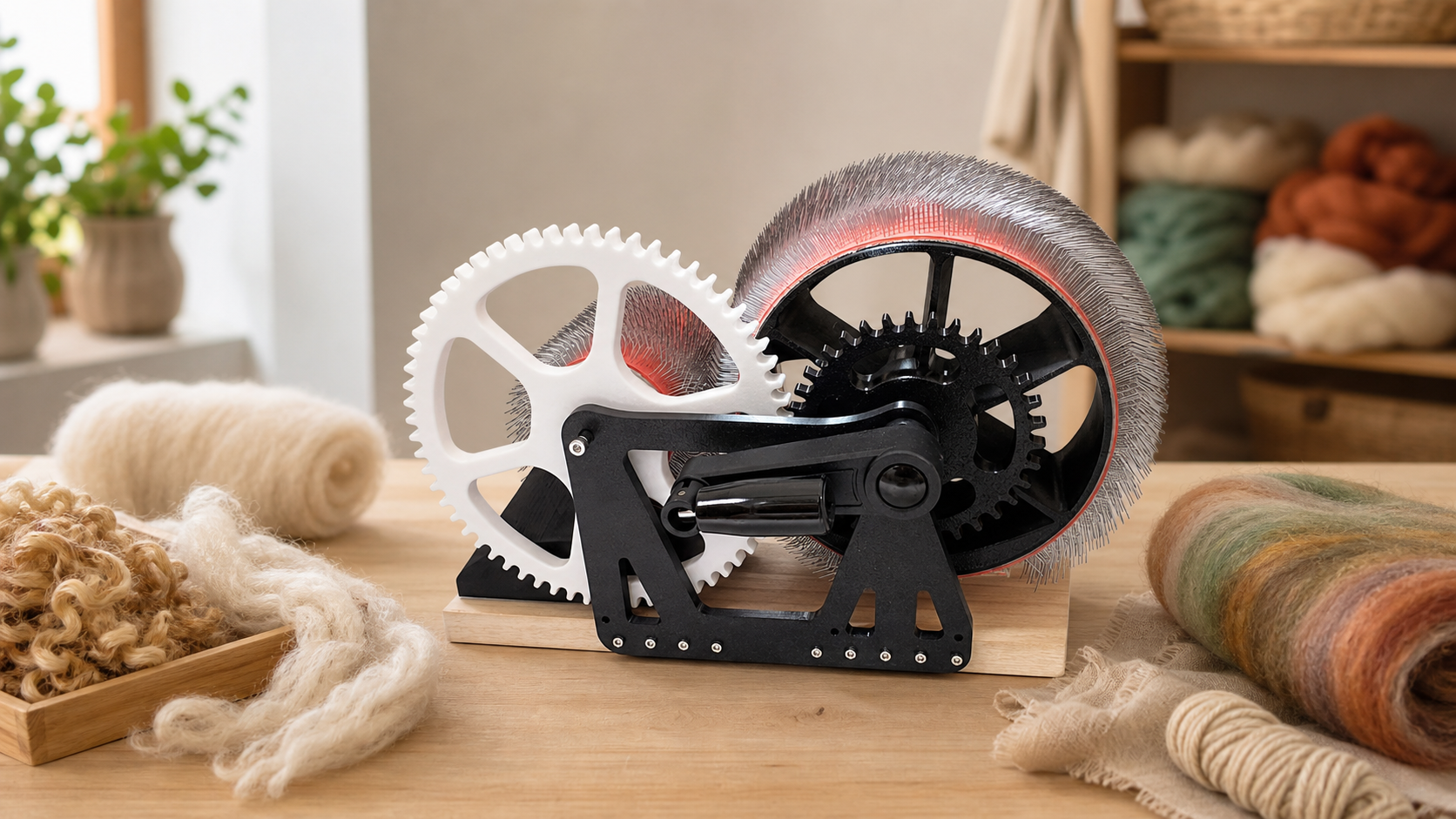
This practical checklist keeps the decision grounded. For broader context, read the buying guide for wool and alpaca. If you want a compact product page to compare, visit the DrumCarder Studio Fiber Carder.
Checklist Item One: Your Main Fiber
Start with the fiber you are most likely to use. Wool is the common learning fiber because it has body and can teach layering, batt removal, and pass control. Alpaca can be lovely, but beginners should think about density and softness. Dyed locks, sparkle, nepps, and other art-batt ingredients are fun, but they add variables before you have learned the basic rhythm.
Write down your first three projects. If they are mostly wool batts, choose a tool and learning plan that makes wool prep clear. If alpaca is central, look for guidance on blending it gently, often with supportive wool. If art batts are the dream, still learn a plain batt first. The basics make the decorative work easier.
Checklist Item Two: Your Batch Size
A beginner may not know exact production needs yet, so use your current habits. Do you buy small braids, process one fleece at a time, make samples, or prepare fiber for a single project? A compact carder can suit learners who want manageable sessions and a low-friction setup. Larger options may be worth comparing if you already know you will prepare bigger amounts regularly.
Avoid buying for an imaginary future that may not arrive. Buy for the way you will practice. Consistent use is more valuable than impressive equipment that feels like too much trouble to set up.
Checklist Item Three: Your Bench And Storage
Beginners underestimate space. You need room for the carder, fiber waiting to be fed, a place to set removed batts, and enough clearance to work comfortably. If you share a table with family, sewing, dyeing, or office tasks, storage matters too. A tool that can be set up quickly is more beginner-friendly than one that requires a full room reset every time.
Before buying, choose the exact surface where you will use the carder. Then choose where it will live when you are not using it. If those answers are vague, pause. A carder should enter a real studio routine, not become another object waiting for the perfect afternoon.
Checklist Item Four: Your Learning Support
Beginners need support more than slogans. Look for clear product pages, setup notes, contact options, and plain-language explanations. If a detail matters to you and is not stated, ask before buying. Do not assume carding cloth details, materials, included accessories, warranty, or shipping timing unless the seller confirms them for the exact product.
Good beginner support also means knowing when not to overdo a batt. Too much fiber, too many passes, or too many ingredients can make early results frustrating. A seller or guide that encourages simple first projects is doing you a favor.
Checklist Item Five: Your First Projects
Choose a beginner drum carder by imagining the first projects, not the hundredth. A good first project is a plain wool batt. A second might be wool with a small amount of alpaca. A third might be a two-color blend. Only then add locks, sparkle, nepps, or complex layers. This order builds control.
If a carder fits that learning sequence, it is more likely to stay useful. If the tool only makes sense for advanced textures or large batches you do not yet make, it may be the wrong first purchase.
Checklist Item Six: Your Comparison Set
Compare at least two or three options. Include different types if you are unsure: hand cards, a blending board, a compact drum carder, and any larger drum carder you are seriously considering. The point is not to make the decision harder. The point is to see what each tool does well.
Hand cards can be inexpensive and tactile for small amounts. A blending board can be creative for rolags and color layouts. A drum carder can help make batts and repeat blends more efficiently. A compact drum carder may sit in the middle for a small studio beginner who wants a real batt-making routine without overbuilding the setup.
Turn The Checklist Into A Decision
Score each option in plain language: good fit, possible fit, or poor fit. Use your main fiber, batch size, space, cleaning comfort, support clarity, and budget. Do not let one dramatic feature erase three practical problems. Beginners usually do best with tools that are easy to start, easy to understand, and easy to clean after a normal session.
The best drum carder for beginners is not a universal winner. It is the tool that helps you practice often, waste less fiber, and make better notes from one batt to the next. That is a sturdier definition of best.
Use The Checklist With A Compact Option
Review the DrumCarder Studio Fiber Carder as one compact option for beginner wool, alpaca, sampling, and art batt preparation.
FAQ
What is the best drum carder for beginners?
The best beginner choice is the carder that fits your main fiber, normal batch size, workspace, support needs, and first projects.
Should beginners start with wool or alpaca?
Many beginners start with wool because it has body and teaches control. Alpaca can be added carefully once the basic batt process feels familiar.
Is a compact drum carder beginner-friendly?
It can be beginner-friendly when your batches are small, your space is limited, and the product information answers the questions you need answered.
Should I buy a drum carder before trying hand cards?
You can, but it helps to compare the methods. Hand cards teach small-scale control, while a drum carder supports batt making and repeatable blending.
What beginner mistakes should I avoid?
Avoid feeding too much fiber, adding too many textures at once, skipping cleanup, and buying based only on a broad “best” claim.