
Blog
How to Card Longwool Locks Without Flattening Texture
Jul
Quick answer: card longwool locks for texture by opening them lightly, using a supportive base layer, placing locks deliberately, and limiting passes. If you feed locks as a thick mass or run them until they disappear, the batt may become smoother, but the curl, shine, and lock structure you wanted can be flattened.
Longwool locks are often chosen because they bring visible life to a batt. The curl, length, luster, and tips can create drama in spinning, felting, weaving, and mixed media work. A drum carder can help anchor those locks into a batt, but it can also hide them if the session is treated like ordinary smoothing.
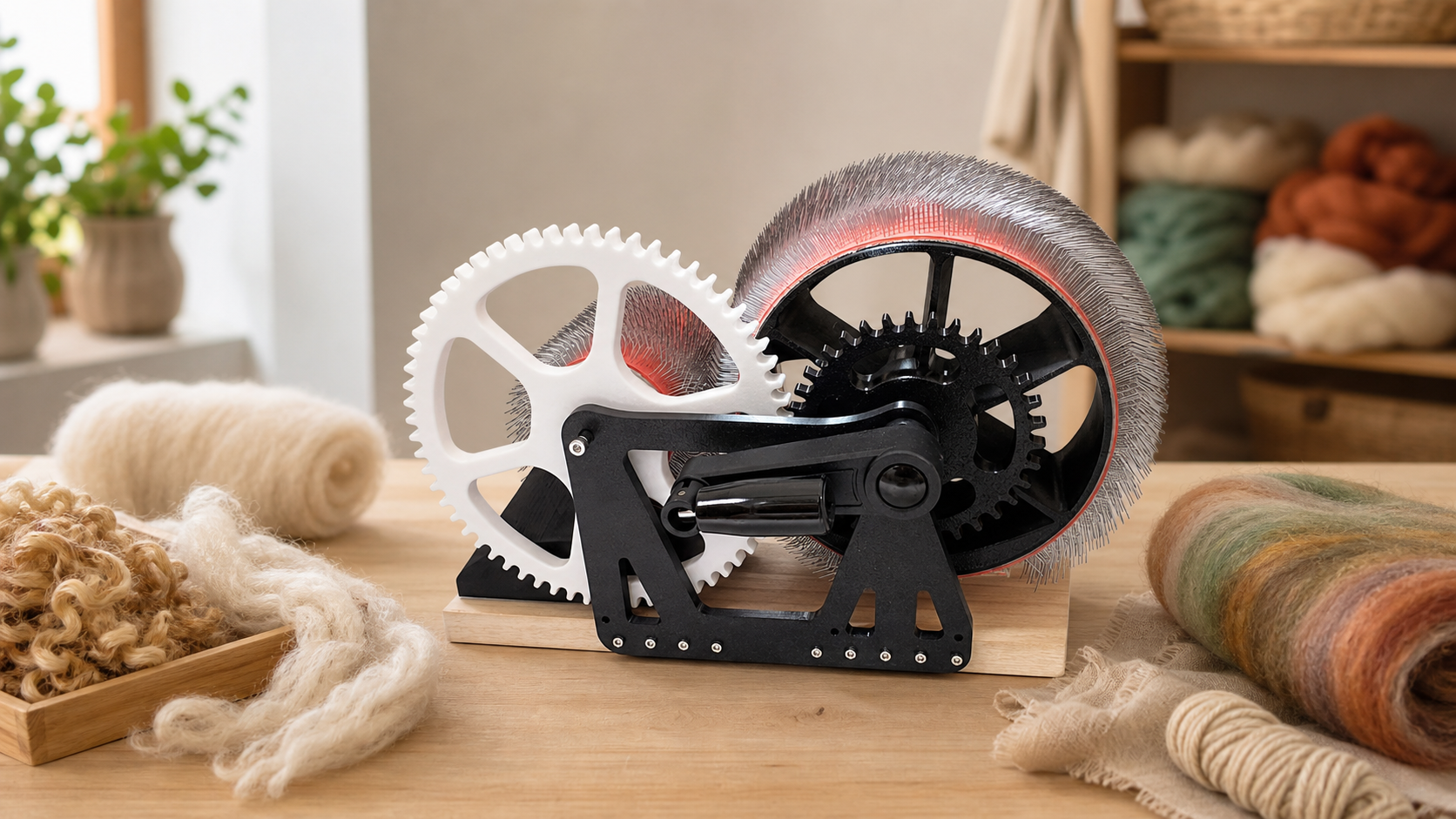
This guide is separate from general art batt blending. If you want broad color and texture ideas, start with art batt blending with a drum carder. If your main question is lock placement and visible texture, stay here and use the DrumCarder Studio Fiber Carder page for current product details.
Decide Which Texture You Want To Keep
Not all locks are used the same way. Some makers want tips showing on the surface. Others want curls distributed through the batt. Some want only a hint of lock texture in a smoother spinning batt. Before carding, decide which part of the lock matters: the curl, the length, the color change, the shine, or the tipped end.
That decision controls the method. If the tips matter, do not bury them under several passes. If the length matters, avoid feeding tangled bundles. If the curl matters, do not comb it into a flat sheet before the carder even sees it. Texture is easier to preserve when you name it first.
Open Locks Without Destroying Their Shape
Longwool locks often need a little preparation. Shake out loose debris, separate clumps, and open the butt end enough that the lock can attach to the batt. Keep the tips as intact as possible if they are part of the look. If a lock is matted or dirty, remove it or save it for a different project.
Avoid turning every lock into fluff before carding. Full teasing may be right for a smooth blend, but it defeats the purpose of a texture batt. The best preparation is usually selective: open the part that needs to grip and preserve the part that should remain visible.
Use A Base Layer As A Foundation
A base layer helps locks stay in the batt without needing too many passes. Card a thin layer of wool or another suitable fiber first. This gives the locks something to grip. Then place the locks over that foundation in small groups instead of throwing a pile into the feed area.
The base can be neutral, tonal, or part of the color design. A quiet base makes locks stand out. A dyed base can create depth behind pale or glossy locks. Keep the base open enough that the lock fibers can connect, but not so thick that they disappear into it.
Place Locks Deliberately Across The Width
Placement matters more than quantity. A few well-placed locks can look richer than a batt overloaded with texture. Spread locks across the width of the carder so the finished batt has rhythm. Vary the spacing if you want a natural look, or keep the spacing consistent if you are making repeatable batts for a project.
Feed lock sections slowly. Let each section catch before adding the next. If the carder pulls a lock in too aggressively, use less fiber and open the butt end more next time. Do not force a tangled lock through just because it is pretty. The finished batt will show that struggle.
Limit Passes To Protect Curl And Luster
Longwool texture can disappear quickly with repeated carding. One careful pass over a prepared base may be enough. A second pass can soften the texture, but it may also pull curls apart and bury tips. Before adding another pass, ask whether the batt needs more blending or whether you are only trying to make it look tidy.
For art yarn, visible locks may draft out in interesting ways even if the batt looks uneven. For felting, surface texture may be the point. For a smoother spinning batt, you can use fewer locks or open them more before carding. The method should follow the finished use.
Combine Locks With Color Without Making A Mess
Locks already bring visual detail, so the rest of the batt can stay simpler. Choose a base color, a supporting shade, and perhaps one accent. If every ingredient is loud, the lock texture may compete with the color plan. If the color plan is calm, the locks can become the feature.
When using dyed locks, think about where the tips will show. Placing bright tips near the surface can create sparks of color. Burying them can soften the effect. Natural locks can also be beautiful against a dyed base, especially when the contrast highlights curl and shine.
Clean Up After Textured Batts
Textured work can leave stray fibers around the drums and feed area. After the session, remove loose fiber gently and check for wrapped pieces. Regular cleaning helps the next batt start clean and prevents leftover texture from appearing where you do not want it.
If you have questions about whether a current product detail fits your textured-batt routine, use the contact page. Describe the fiber type, lock length, and whether you plan to make smooth batts, art batts, or both.
Build Texture Without Flattening The Locks
Review the DrumCarder Studio Fiber Carder for wool, alpaca, longwool locks, and small-studio art batt blending.
FAQ
Can longwool locks go through a drum carder?
Yes, when they are opened and placed carefully. Use a light hand, avoid tangled bundles, and consider a base layer so the locks attach without repeated passes.
How do I keep lock tips visible?
Open the butt end, protect the tips, place the locks near the surface, and use as few passes as possible. Too much carding can bury or flatten the tips.
Should locks be washed before carding?
Use clean, dry locks that are appropriate for your project. Dirty, sticky, or damp locks can create problems and may leave residue or debris in the batt.
Can I mix longwool locks with merino?
Yes. Merino can make a soft base, while longwool locks add visible texture. Keep the merino layer light and place the locks deliberately so they do not vanish into the fine wool.