
Blog
Drum Carding Alpaca Without Losing Loft
Jul
Quick answer: drum carding alpaca without losing loft is mostly about restraint. Start with clean, dry, opened fiber, feed it in loose wisps instead of thick ropes, build the batt in light layers, and stop before extra passes turn the fiber into a compact sheet. Alpaca rewards patience because its softness can disappear when it is packed too tightly.
Alpaca often feels different from sheep wool at the carder. It can be silky, fine, slippery, and warm in the hand, but it does not always have the same natural crimp and spring that help some wools rebound after pressure. That means the goal is not to force alpaca into a perfectly flat batt. The goal is to open it enough for spinning, blending, or felting while keeping air inside the preparation.
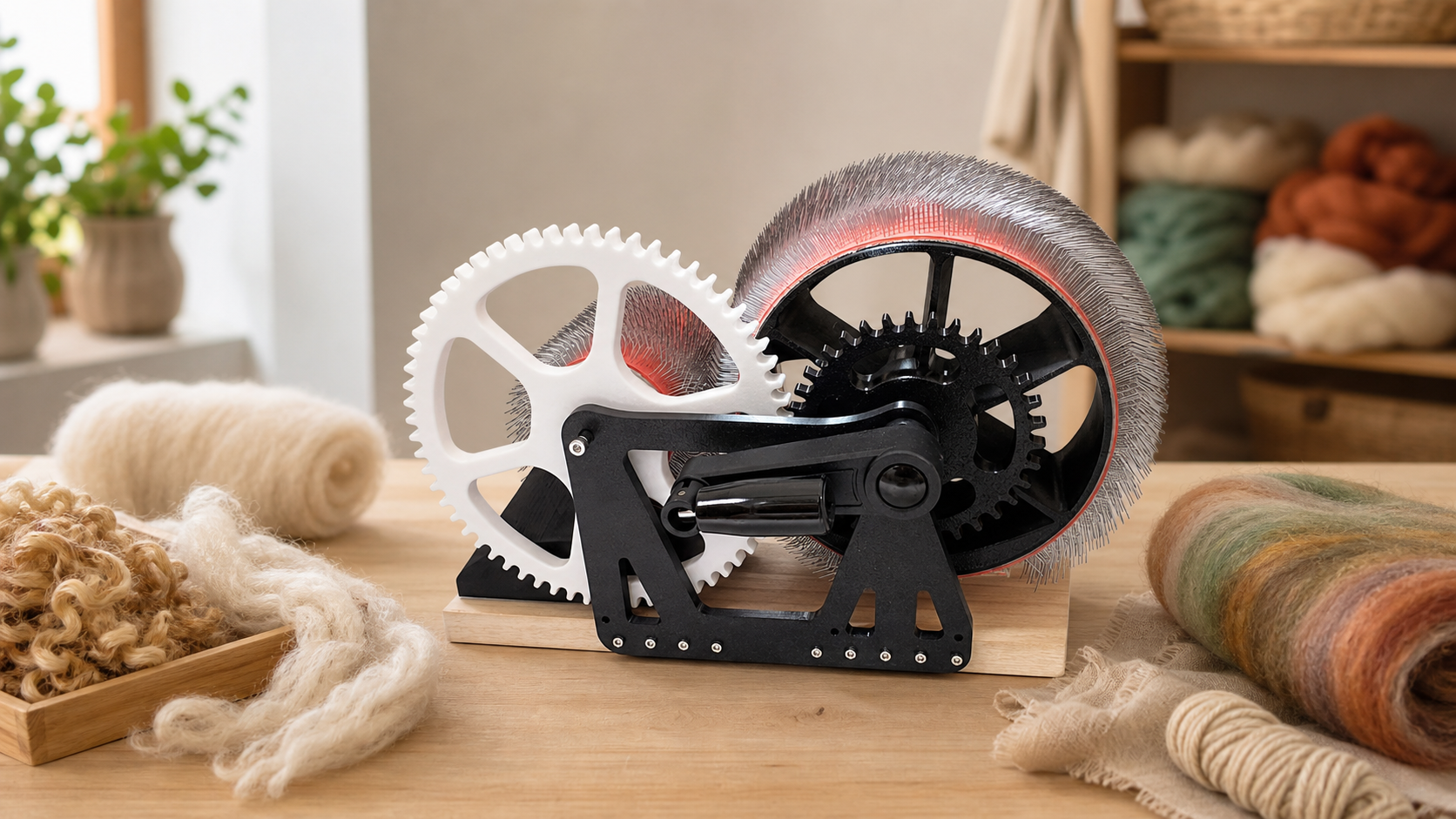
This guide focuses on small-studio alpaca prep, not large processing. If you are still choosing a tool, compare this method with the broader wool drum carder guide and review the DrumCarder Studio Fiber Carder for the current product details.
Why Alpaca Needs A Lighter Touch
Many alpaca fleeces have lovely drape and softness, but they can compact quickly when handled like a springier wool. If you press too much fiber into the feed area, the carder has to grab a dense strip instead of a cloud. That can create tight layers, clumps, and batts that feel heavy rather than airy.
Loft comes from space between fibers. The carder can help organize that space, but it cannot restore air if the fiber has already been mashed, dampened, or fed in a heavy wad. Think of alpaca carding as opening and arranging, not grinding. The slower approach often gives a more usable batt and makes the finished fiber easier to draft.
Prepare The Fiber Before It Reaches The Carder
Good alpaca carding starts before the first turn of the handle. Remove obvious debris, separate compacted tips, and tease the fiber enough that it can enter the carder loosely. If the fiber is still in tight locks, open the butt and tip ends with your fingers or a suitable prep tool before carding. If it is matted, very dirty, or damp, solve that problem first.
A drum carder is not a substitute for washing, drying, or basic sorting. It works better when the fiber has already been prepared for a gentle pass. Shorter, open pieces usually feed more evenly than long clumps. If a handful resists opening, set it aside instead of forcing it through and risking a dense patch in the batt.
Feed Wisps Instead Of Ropes
The most common alpaca mistake is overfeeding. A thick strip may seem faster, but it gives the teeth too much fiber at once. Pull the alpaca into thin, wide wisps. Let each wisp catch before adding the next. Keep the feed slow enough that the carder is opening the fiber, not swallowing clumps.
Watch the surface of the main drum. If you see ridges, lumps, or a heavy band, pause and reduce the amount you feed. A lighter feed can feel inefficient for the first few minutes, but it often saves time because you do not need as many corrective passes. If the fiber starts wrapping unevenly, stop and clean the path before continuing.
Build Loft With Thin Layers
An airy alpaca batt is built in layers. Spread fiber across the width of the drum, rather than piling it in the center. Try to make each layer look like a veil. When the batt has enough coverage for your purpose, remove it instead of trying to fill every visible space.
For a smoother preparation, you may choose a second light pass. Split the first batt into sections, open each section gently, and feed it again in thin pieces. For a more textured preparation, one careful pass may be enough. The right number of passes depends on the fleece, the end use, and how much loft remains in the batt.
Blend Alpaca Without Smothering It
Alpaca can be blended with wool when you want more bounce, with silk when you want shine, or with color accents when you want a more decorative batt. The same light-feeding rule still applies. Add small amounts of each fiber and give every material room to show its character.
If you blend alpaca with wool, use the wool as structure rather than burying the alpaca. If you add dyed fiber, keep the palette simple so the softness does not disappear into visual noise. If you add sparkle or silk, place it lightly on the surface or in thin layers. The carder should bring the blend together without making every ingredient indistinguishable.
Remove The Batt Without Crushing The Work
Batt removal matters because a careful carding session can be flattened at the final step. Lift the batt gradually, support it with both hands, and avoid rolling it tightly unless your next step requires it. If you store alpaca batts, keep them loose and protected so they do not become compressed before spinning or felting.
Use the finished batt as feedback. If it feels dense, reduce feed amount next time. If it has clumps, open the fiber more before carding. If it drafts beautifully but still has texture, do not chase perfection just because the batt does not look machine-made.
When To Ask Product Questions
If alpaca is your main fiber, review the visible details on the product page and ask questions before buying. Focus on the way you work: the fiber you prep, whether you make small batts or larger batches, how much bench space you have, and what kind of maintenance access you expect. The contact page is the best path for details that are not clear from the product page.
Card Alpaca With A Lighter Studio Workflow
Review the DrumCarder Studio Fiber Carder for wool, alpaca, art batt blending, and small-batch fiber prep.
FAQ
Can alpaca be carded on a drum carder?
Yes, alpaca can be carded on a drum carder when it is clean, dry, opened, and fed lightly. The main adjustment is to avoid heavy feeding that compresses the fiber.
How many passes should alpaca need?
Use the fewest passes that give the prep you want. One light pass may work for textured prep, while a second careful pass can smooth the batt. Extra passes can reduce loft.
Should alpaca be blended with wool?
It can be, especially when you want more bounce or easier drafting. Blend in thin layers and sample first, because the best ratio depends on the alpaca, the wool, and the intended yarn or felt.
Why did my alpaca batt feel flat?
The usual causes are overfeeding, starting with compacted fiber, using too many passes, or compressing the batt during removal and storage. Open the fiber more and feed smaller amounts next time.