Blog
Wool Carder vs Drum Carder: Which Tool Fits Your Fiber Prep
Jul
Quick answer: wool carder is a broad search phrase, while drum carder is a specific tool type. Someone searching for a wool carder may mean hand cards, a blending board, a drum carder, combs, or a larger carding machine. A drum carder is the right interpretation when the buyer wants to open and blend wool into batts with a bench-based tool rather than card tiny samples by hand.
This guide is a terminology map. It helps you translate search results and product titles before you decide what to click. If you already know that you want a batt-making tool for wool, alpaca, or art batt work, the DrumCarder Studio Fiber Carder product page is the product page to review. If you are still sorting out vocabulary, start here.

Why Wool Carder Search Results Feel Mixed
Search engines group language by words, not by the exact job on your workbench. The phrase wool carder can bring up hand carders, drum carders, dog brushes used in crafts, blending boards, vintage tools, replacement cloth, and large equipment. Some of those results may be useful. Others may be the wrong tool for the fiber preparation you imagined.
The fastest way to sort the results is to ask what the tool produces. Are you trying to make a small handful of blended fiber, a rolag, a full batt, a combed top, or a larger production preparation? The answer usually tells you whether the broad wool carder phrase should narrow toward drum carder, hand cards, blending board, or combs.
Use Output Shape To Decode The Tool
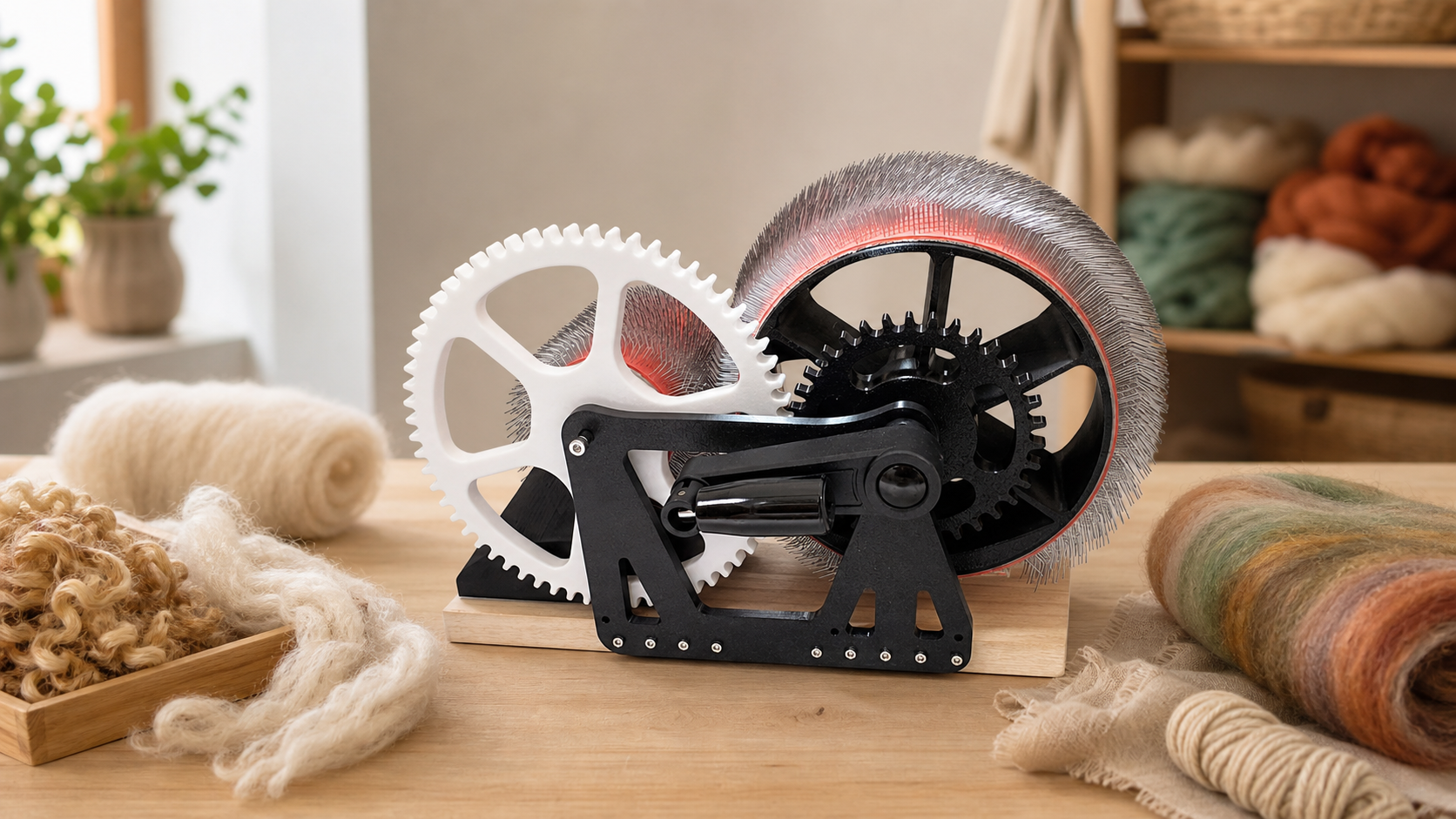
Output shape is clearer than product naming. Hand cards usually create small, hand-held preparations. A blending board is often used for rolags, gradients, and surface design. Wool combs align fibers in a different way and are not the same as carding. A drum carder builds fiber on a rotating drum and removes it as a batt.
If the product description talks about batts, drum surface, batt removal, layered color, and small-batch studio prep, you are probably looking at a drum carder. If it talks about a pair of paddles, portable brushing, or very small samples, you are probably looking at hand cards. If it talks about painting fiber on a board, you are in blending-board territory.

When Wool Carder Should Mean Drum Carder
For many studio buyers, the broad phrase becomes drum carder when the goal is repeatable batt work. That may mean preparing wool for spinning, opening alpaca more gently, building art batts, blending dyed fiber, or creating small product batches for a fiber shop. The tool is not chosen because the name sounds more technical. It is chosen because the output matches the job.
Use a drum carder interpretation when you want a bench-based workflow, a wider preparation, visible layering, repeatable blends, and a tool that can become part of a routine. The DrumCarder homepage uses that small-studio language because it is focused on fiber-prep sessions rather than every possible wool-carding tool.
When Wool Carder Should Not Mean Drum Carder
Sometimes the broad search should lead somewhere else. If you want a very low-cost starter tool for a tiny amount of wool, hand cards may be enough. If you want to paint fiber into rolags with visible surface design, a blending board may be closer. If you want highly aligned fibers for a worsted-style preparation, combs may be part of the conversation.
That does not make a drum carder wrong. It simply means the buyer’s job is different. A useful search path narrows from wool carder to the tool format that solves the job, instead of forcing every wool-prep need into one product name.
Read Product Titles With Care
Product titles can mix broad and narrow language. A page may use wool carder because buyers search that phrase, then describe a drum carder in the body. Another page may say carder but sell a pair of hand cards. A third page may use carding machine language for a tool that is much larger than a home studio needs.
Do not stop at the title. Read the description, inspect the photos, and check whether the page explains the working motion. For a drum carder, look for a drum, feed area, batt removal, and small-studio use language. If the page does not answer the format question, contact the seller before checkout.

Simple Decision Path
- If you want batts, layered blends, and a bench-based routine, narrow the search to drum carder.
- If you want tiny portable samples, look at hand cards first.
- If you want painterly rolags or surface design, compare blending boards.
- If you want aligned fiber rather than carded fiber, learn about combs before buying.
- If a product page uses broad wording, verify the photos and description before checkout.

Compare A Drum Carder For Wool Prep
If your wool carder search is really about making batts and repeatable blends, review the DrumCarder product page for the current product details and support path.
FAQ
Is a wool carder the same as a drum carder?
No. Wool carder is a broad phrase. A drum carder is one specific type of wool-prep tool used to create batts on a rotating drum.
Why do search results show hand cards for wool carder?
Because many buyers use wool carder to describe any tool that cards wool. Hand cards are a common result, but they are not the only meaning.
When should I choose a drum carder?
Choose a drum carder when you want batts, layered blends, and a repeatable bench workflow for wool, alpaca, or art batt preparation.
What should I check before buying?
Check the product format, photos, included items, support contact, shipping information, and whether the output shape matches the fiber prep you want.