Blog
When a Blending Board Is Enough and When It Is Not
Jul
Quick answer: when blending board is enough when it is not depends on output shape, quantity, repeatability, and texture goals. A blending board is excellent for small color play, rolags, decorative layers, and quick samples. A drum carder becomes more useful when you want broader batts, more repeatable blends, larger prep sessions, and easier scaling beyond a few handfuls.
Blending boards and drum carders are not enemies. They solve different problems. A blending board is direct, visual, and wonderfully flexible for small designs. A drum carder is better when the work needs more fiber prepared in a consistent sheet. Choosing between them is less about which tool is more serious and more about what the project asks from your hands.
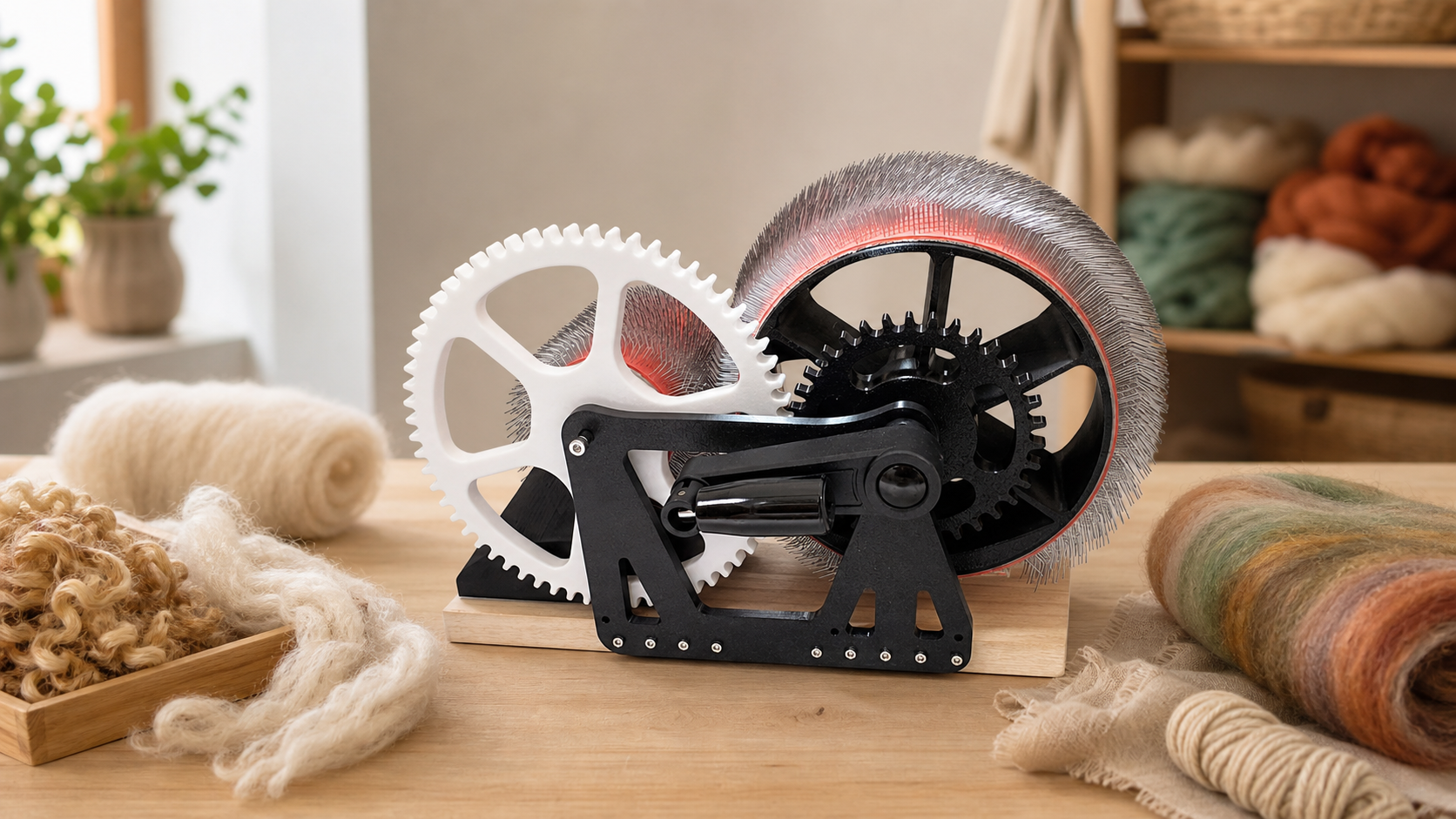
For a compact carding option, see the DrumCarder Studio Fiber Carder. You can also begin at the DrumCarder home page to review product and support information.
Use A Blending Board For Small Visual Decisions
A blending board shines when you want to paint with fiber. You can place colors by hand, add sparkle or silk in tiny amounts, and pull rolags with visible stripes. The tool is especially satisfying for one-off color studies, textured rolags, and small art yarn ingredients.
It is also simple to store and quick to set up. If you are testing whether two colors belong together, the board may be enough. If you only need a few rolags for a spindle session or a small accent yarn, there may be no reason to bring out a larger tool.
Use A Drum Carder For Wider Batts And Repeatability
A drum carder becomes more useful when the project grows. Batts are broader and easier to divide for spinning, felting, or packaging. You can repeat a blend by measuring fiber amounts, feeding layers in order, and keeping notes on pass count. That repeatability matters when you want several similar batts rather than one expressive rolag.
A carder also helps when you need a base fiber to hold a blend together. Wool, alpaca, locks, natural colors, and dyed accents can be arranged in a more stable sheet. The result may be easier to store, photograph, sell, or use in a larger project.
Think About Fiber Quantity
Quantity is often the deciding factor. A blending board is efficient for small amounts. It can feel slow if you need to prepare enough fiber for multiple skeins, a felted panel, or a set of batts for sale. A drum carder lets you process more fiber per session while still working at a home-studio scale.
That does not mean you should abandon the board. Many makers use the board to test color placement, then translate the best sample to the carder. The board acts like a sketch. The carder prepares the usable batch.
Match Texture To The Tool
For dramatic stripes, surface sparkle, or highly placed texture, a blending board may preserve the design better. For integrated heathers, repeatable base blends, and fuller art batts, a drum carder may be easier. The tool affects how much structure remains visible.
Before buying, compare product fit and support details. Review the shipping policy, refund and returns policy, and contact page if you have questions about carder use.
One useful workflow is to make a board sample first, then decide what should stay visible in the larger batt. If the best part is sharp stripe placement, keep the board as the final tool. If the best part is the color relationship, move the ratio to the carder and let the wider batt make the blend more usable.
Another workflow is to use the carder for a base batt and the board for finishing touches. This can give you structure from the carder and small decorative control from the board. The tools can cooperate instead of forcing an either-or choice.
Storage can also decide the matter. A board slips onto a shelf and comes out quickly. A carder needs more protected storage and a stable work surface. If your space is tiny, start with the project you make most often and choose the tool that supports that routine.
FAQ
Can a blending board replace a drum carder?
It can replace one for small color work, rolags, and light sampling. It does not fully replace a drum carder when you want wider batts, larger batches, or more repeatable preparation.
Which tool is better for art batts?
A drum carder is usually better for full art batts. A blending board is excellent for small textured elements and color placement. Many makers use both.
Which tool is better for beginners?
A blending board is approachable and visual. A drum carder teaches broader preparation and batch control. Beginners should choose based on the project they want to make first.
Can I test on a board and scale on a carder?
Yes. This is often a smart workflow. Use the board to test color and texture, then use the carder to prepare enough fiber for the actual project.
When is the board clearly enough?
The board is enough when you need only a small amount, want strong visual placement, or enjoy making rolags directly from the surface. If you need many matching batts, consider a carder.
A Practical Tool Choice
Choose the blending board when your project is small, visual, and immediate. Choose the drum carder when the project needs width, consistency, and repeatable small-batch production. The strongest studio setup may include both, with the board helping you design and the carder helping you prepare enough fiber to use.
Move From Color Tests To Full Batts
Use the DrumCarder Studio Fiber Carder when your blending board samples need to become broader, repeatable batts.