
Blog
How to Prepare Fiber for Core Wool Projects
Jul
Quick answer: to prepare fiber for core wool projects, make firm, plain, easy-to-control batts for structure first, then keep surface colors and decorative fiber separate. Core wool should support shape, needle work, stuffing, or base layers without wasting your best color blends inside the project.
Core wool projects are practical. They may become the inside of a felted animal, a base form for a sculpture, a cushion under surface color, or a neutral layer beneath a felted layout. The fiber does not need to be glamorous. It needs to be consistent, easy to pull, and predictable once pressure, needles, or wet work begin.
Define What The Core Must Do
Core wool can have different jobs. For needle felting, it often needs to compact into a stable shape. For wet felting, it may need to create an even base layer. For art batts, a neutral core may support surface texture or color. Before carding, name the job: shape, support, loft, padding, or structure.
Once the job is clear, you can avoid overworking the wrong fiber. A core batt does not need perfect color. It does need even distribution. It should pull apart without dense knots and should not hide surprise clumps that later create hard spots.
Keep Core And Surface Fiber Separate
A common beginner mistake is blending everything together too early. If your bright dyed wool, silk, locks, or special fiber gets mixed into the core, it may disappear inside the project. Card neutral or ordinary support fiber first. Then prepare surface color separately for the visible layer.
This separation also keeps costs and effort sensible. Save your carefully dyed fiber for the part people will see. Use the core batt to create form and consistency. If you make needle felted animals, the guide to blending fiber for needle felted animals shows how body, shadow, and marking blends can stay separate.
Card For Easy Pulling
Core wool should be easy to pull into small working pieces. Feed opened fiber lightly and inspect the batt before adding another pass. If it feels rope-like, packed, or lumpy, pull it apart and recard only as needed. A firm project can start from an airy batt; you do not need to make the batt dense on the carder.
When a project needs more firmness, create that firmness during shaping, felting, or layering. Let the carder prepare the fiber evenly. Let the project technique build the structure.
This distinction saves your hands. The batt should be cooperative at the table so your later shaping work can be precise rather than corrective.
Use Neutral Blends With Intention
Core fiber is often natural, white, gray, brown, or mixed leftovers. That is fine, but keep notes if color might show through. A dark core under a pale surface can change the final look. A warm core under cool surface colors can shift the mood. If the outer layer will be thin, make a small sample before committing.
For wet felted scarves or panels, surface coverage matters. The guide to preparing batts for wet felted scarves explains why thin, even layers can matter more than sheer volume.
Build A Repeatable Core Batch
If you make the same kind of project often, prepare a small stack of core batts in one session. Keep them plain, labeled, and close to the same thickness. A repeatable core saves time later because the visible work can begin from a predictable base.
Do not overfill the drum just to speed up the session. More fiber at once can create heavier, less even batts. A few light batts are usually more useful than one thick sheet that must be torn apart and repaired.
Store core batts separately from surface batts. Label them by project type, not just by fiber. “Animal body base” and “scarf support layer” tell you more than “white wool” when you return to the shelf later. Clear labels reduce waste because the right batt gets used for the right hidden job.
That one label can prevent a surprising amount of rework.
Match The Tool To The Routine
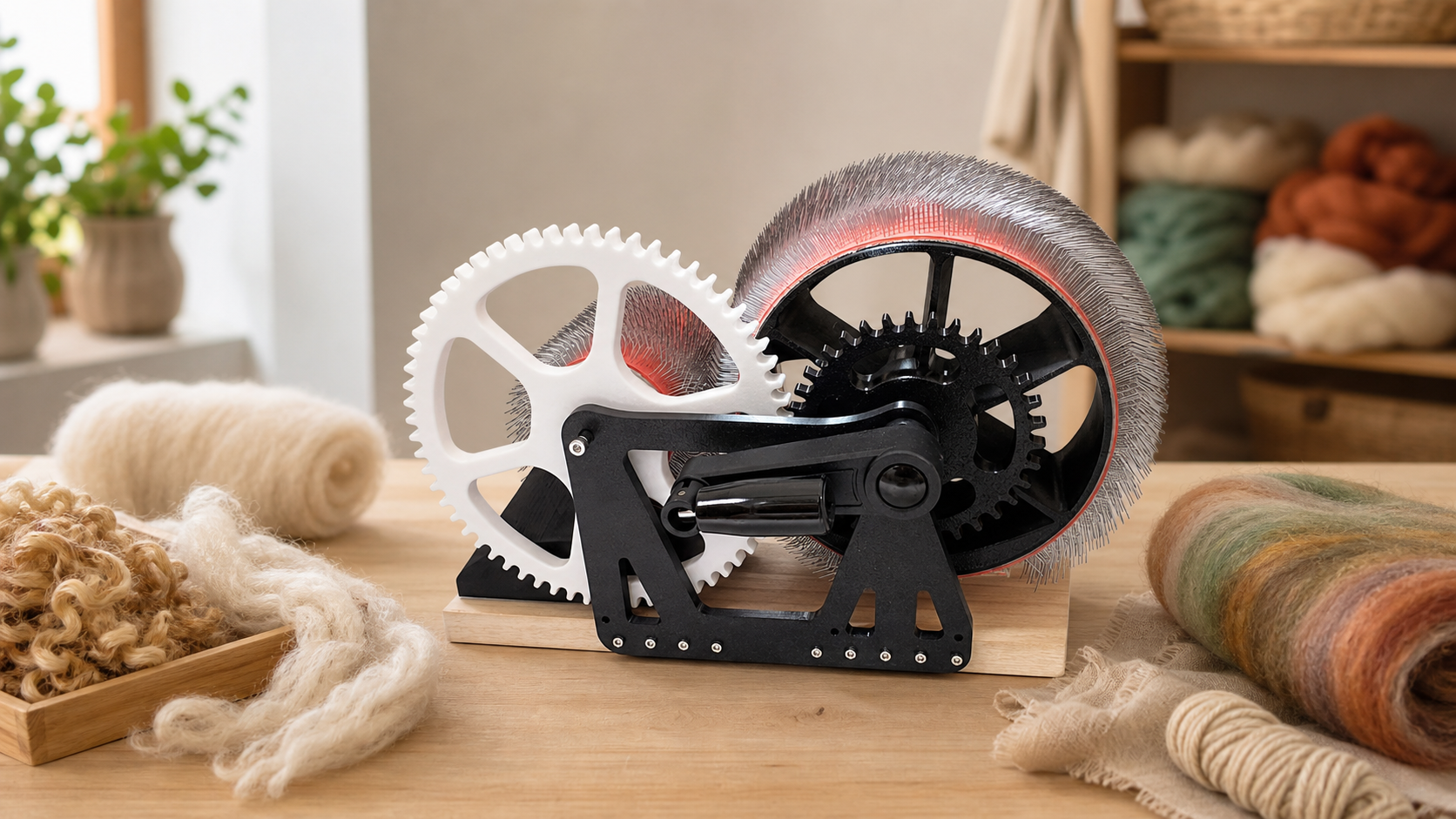
The Studio Drum Carder is a practical option to review when your small studio needs repeatable wool, alpaca, art batt, and support-fiber preparation. Start from the DrumCarder homepage to see the product path and current store links.
Before ordering, check the shipping policy and refund and returns policy. If you are unsure whether your project type fits the tool, use the contact page and describe the fiber, project size, and whether the batt is for structure or surface color.
Prepare Cleaner Core Batts
Review the Studio Drum Carder for repeatable core wool prep, surface color batches, felting bases, and small-studio fiber work.
FAQ
What is core wool used for?
Core wool is used for structure, shaping, padding, or base layers inside felting and fiber projects. It supports the visible fiber rather than replacing it.
Should core wool be blended with decorative fiber?
Usually no. Keep decorative fiber separate unless you truly want it inside the project. Surface fiber is easier to place when it has not been mixed into the core.
How many passes should core wool need?
Use enough to make the batt even and pullable. One or two light passes are often better than repeated carding that packs the fiber down.
Can leftover fiber become core wool?
Yes, if it is clean, usable, and appropriate for the project. Keep color show-through in mind when the surface layer will be pale or thin.
Should core batts be thick?
Not necessarily. Thin, even batts can be layered into firm shapes. A very thick batt may be harder to pull apart and control.