Blog
Beginner Fiber Prep Terms for Drum Carder Buyers
Jul
Quick answer: beginner fiber prep terms for drum carder buyers are practical words, not gatekeeping. Learn batt, locks, staple length, teasing, opening, carding cloth, feed area, main drum, pass count, doffing, and overcarding. Those terms help you understand product pages, ask clearer questions, and choose a tool that fits the fiber work you actually plan to do.
You do not need expert vocabulary to enjoy fiber. Still, a few terms can prevent expensive confusion. When a product page mentions batts or carding, it is describing a workflow. When another maker talks about too many passes, they are warning you about the finished feel of the fiber. Language turns vague shopping into a practical comparison.
Terms For The Fiber Itself
Locks are natural clusters from a fleece. Some are open and easy to separate. Others have tight tips, dense ends, or bits that need sorting. A drum carder works better when locks are prepared before feeding.
Staple length means the length of the fiber. Very short, very long, very slippery, or very fine fiber can behave differently on a carder. Beginners do not need to memorize every fiber type, but they should understand that not all wool, alpaca, or decorative fiber handles the same way.
Base fiber is the main fiber that gives the batt structure. Accent fiber is used in smaller amounts for color, shine, or texture. Many beginner color problems come from using accent fiber like base fiber.
Clean fiber does not mean perfect fiber. It means fiber that is dry, reasonably free of debris, and ready for gentle handling. A carder can organize prepared fiber, but it is not a washing step or a substitute for sorting before the session.
Terms For Preparation Before Carding
Teasing means gently pulling fiber apart before carding. Opening is the broader goal of making fiber airy, separated, and easier to feed. These steps matter because dense fiber encourages pushing, and pushing makes both safety and batt quality worse.
Picking usually refers to opening fiber more aggressively before carding, often as a separate prep step. A drum carder should not be expected to wash dirty fleece or rescue badly matted fiber. If you want smoother results, start with the guide on how to card wool into smoother batts.
Terms For The Carder
Carding cloth is the working surface with many small teeth or pins that help open and organize fiber. Product pages may describe it in detail, or they may not. If a detail matters to your work, ask before buying instead of assuming from a photo.
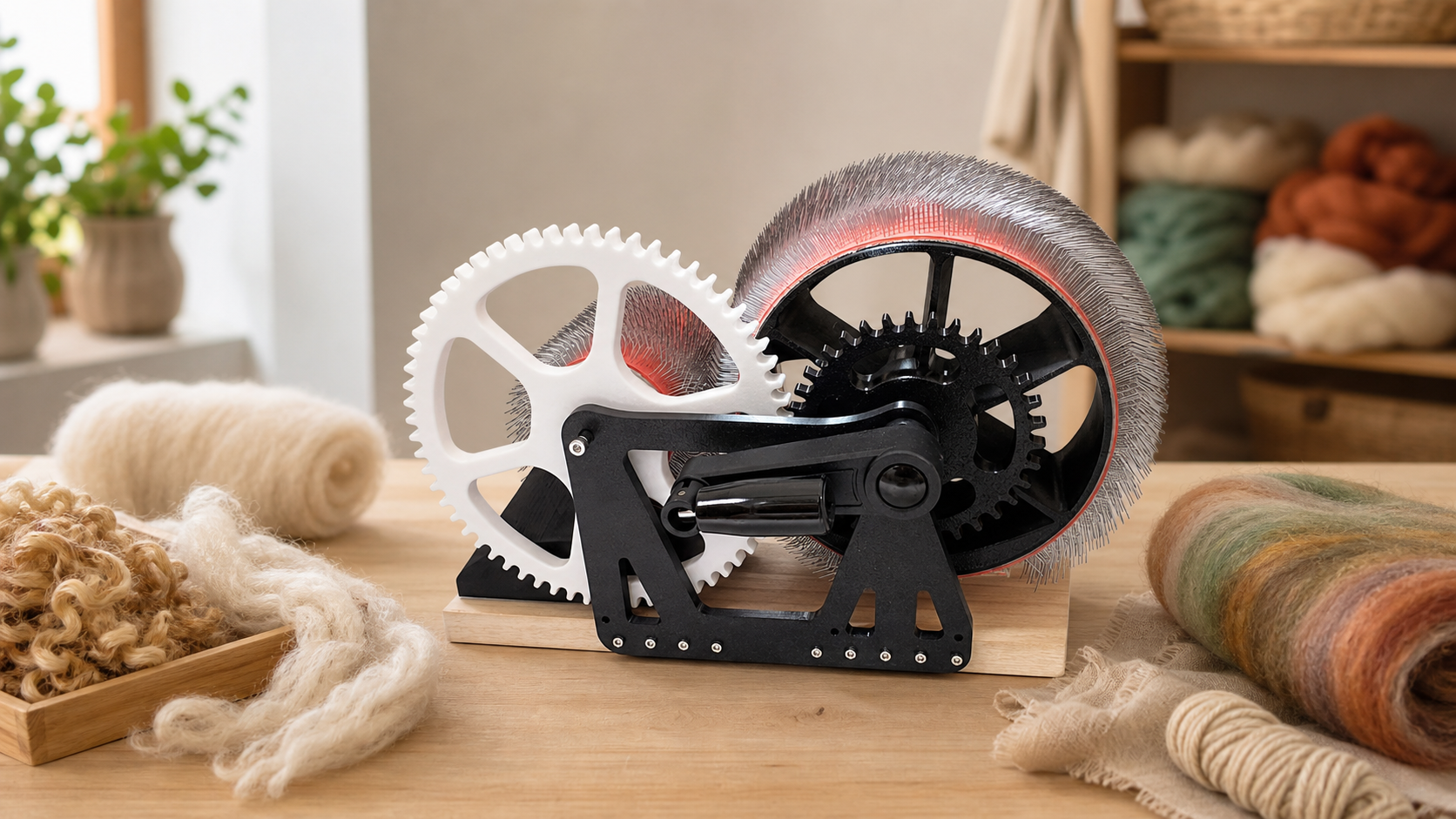
Main drum is the larger area where the batt builds. Feed area is where fiber enters the carding path. Some carders also have a smaller intake drum often called a licker-in. Designs vary, so read the product page and look at the photos with your hands and workspace in mind.
Terms For The Finished Fiber
Batt is the sheet or web of fiber removed from a drum carder. A batt can be smooth for spinning, layered for felting, or textured for art-fiber work. A good batt is not always perfectly flat. It is good when it matches the project.
Rolag usually means a rolled preparation often made with hand cards or a blending board. Roving is a longer, narrower preparation. These forms draft and store differently. If you are choosing between tools, the comparison of drum carders, hand cards, and blending boards helps connect the terms to real buying choices.
Terms For The Session
Pass count is the number of times fiber goes through the carder. One pass can preserve color and texture. Two passes can blend more evenly. Too many passes can flatten the batt. Doffing means removing the batt from the drum. Overcarding means working fiber past the point where it improves.
These words are useful because they lead to better questions. Instead of asking whether a carder is “good,” you can ask whether it fits your fiber, your batch size, your workspace, and the type of batt you want to make.
Sampling is the habit of testing a small amount before making a full batt. For beginners, sampling is less wasteful than guessing. It shows whether the fiber opens easily, whether the color stays lively, and whether another pass will help.
Use The Terms When Comparing A Product
Open the Studio Drum Carder product page and read it through this vocabulary. Can you picture where fiber feeds in, where the batt builds, how you would remove it, and what support questions remain? If a detail is not listed, use the contact page rather than guessing.
The DrumCarder homepage is the main starting point for product and support links. Review policy pages before ordering, including the refund and returns policy, so your buying decision is based on both fiber fit and store fit.
Compare A Drum Carder With Clearer Language
Use the Studio Drum Carder page to connect fiber prep terms with your real wool, alpaca, art batt, and small-batch workflow.
FAQ
Do beginners need to know every fiber term?
No. Start with the terms that affect buying and use: batt, locks, teasing, carding cloth, pass count, doffing, and overcarding.
What is the difference between teasing and carding?
Teasing opens fiber before it reaches the tool. Carding organizes and blends that prepared fiber into a batt or other usable form.
What does pass count mean?
Pass count is how many times fiber goes through the carder. More passes can blend more, but they can also flatten texture and mute color.
What is doffing?
Doffing is removing the batt from the drum. Careful removal helps the batt stay even instead of tearing, stretching, or rolling into dense edges.
Which term matters most before buying?
Fiber fit matters most. Know the fiber you plan to prepare, then use the other terms to judge workspace, feeding, batt removal, cleaning, and support questions.