
Blog
How to Make Sample Batts for Breed Study
Jul
Quick answer: make sample batts for breed study by using small consistent fiber amounts, preparing each breed the same way, labeling every batt and test sample, and recording how the fiber behaves before, during, and after carding. Breed study is comparison work. The less you change your method, the more clearly the wool can speak.
Wool breed study can become wonderfully detailed. Crimp, staple length, shine, loft, bounce, grip, and handle start to feel distinct when samples sit side by side. A drum carder can help prepare small batts for spinning or felting tests, but consistency matters more than speed.
Choose A Narrow Study Question
Do not begin with every sheep breed. That is a lifetime, not a weekend. Choose one question: which of three breeds makes the springiest practice batt, which felts fastest, which blends best with alpaca, or which drafts most comfortably on your wheel?
A narrow question keeps the sample batts useful. You are not ranking the whole wool world. You are learning how specific fibers behave in your studio, with your prep method, for your projects.
Keep Sample Size Consistent
Use a similar amount of fiber for each sample. A scale is helpful, especially when the comparison matters. If you do not weigh, use visually similar amounts and note that the study is informal. Honest notes are better than false precision.
Small batts are enough. You need enough fiber to observe feeding, removal, drafting, and finished behavior. You do not need a production-size batt for every breed.
Prepare Each Breed The Same Way
Consistency is the heart of breed study. If one sample is teased carefully and another is fed compacted, the result reflects your handling as much as the breed. Open each fiber similarly, feed at a similar pace, and use the same number of passes unless pass count is the question.
Some fibers may need a different approach. Write that down. If one breed resists the standard method, that is useful information. Just do not quietly change the method and compare the results as if nothing changed.
Record Behavior During Carding
Take notes during the carding process, not only after spinning. Does the fiber feed smoothly? Does it cling, clump, spread, or lift cleanly? Does the batt feel airy or dense? These observations help you understand future uses.
For process quality, use the smoother batt guide as a reference. The goal is not to force every breed into identical perfection. The goal is to notice differences without adding avoidable mistakes.
Label Before You Forget
Breed samples become useless when labels fall behind. Label the fiber bag, batt, spun sample, and felted swatch. Include breed name, date, prep method, pass count, and intended test. If the sample came from a known flock, record that in private notes when relevant.
Do not trust memory when several cream or grey samples are on the table. They may look distinct today. Next week they can all become “the nice one” unless the labels do their job.
Test Samples Under Similar Conditions
Carding is only one part of the study. Spin or felt each sample under similar conditions. Use the same wheel or spindle, similar drafting style, and similar attention level. For felting, keep layout, moisture, soap, agitation, and time as consistent as practical.
You do not need laboratory formality. You need enough fairness that the comparison teaches you about the fiber rather than the mood of the day.
Separate Breed Character From Prep Problems
When a sample feels difficult, pause before blaming the breed. Check whether the fiber was compacted, overfed, damp, or carded with a different pass count. Some breeds truly behave differently, but inconsistent preparation can imitate breed behavior. A short note about the condition of the fiber keeps your conclusion grounded in what actually happened at the carder.
This is especially important with older samples, dyed locks, or fiber from mixed storage. Breed study is most useful when the sample condition is recorded honestly. If the fiber was not ideal, keep the batt in the library but mark the result as a handling note rather than a final judgment.
Build A Tiny Breed Library
Store each batt, yarn, swatch, and note together. A clear bag, envelope, or card system can become a reference library for your hands. Add one line for best use: next-to-skin yarn, textured spinning, felting sample, sturdy outerwear, or blend base.
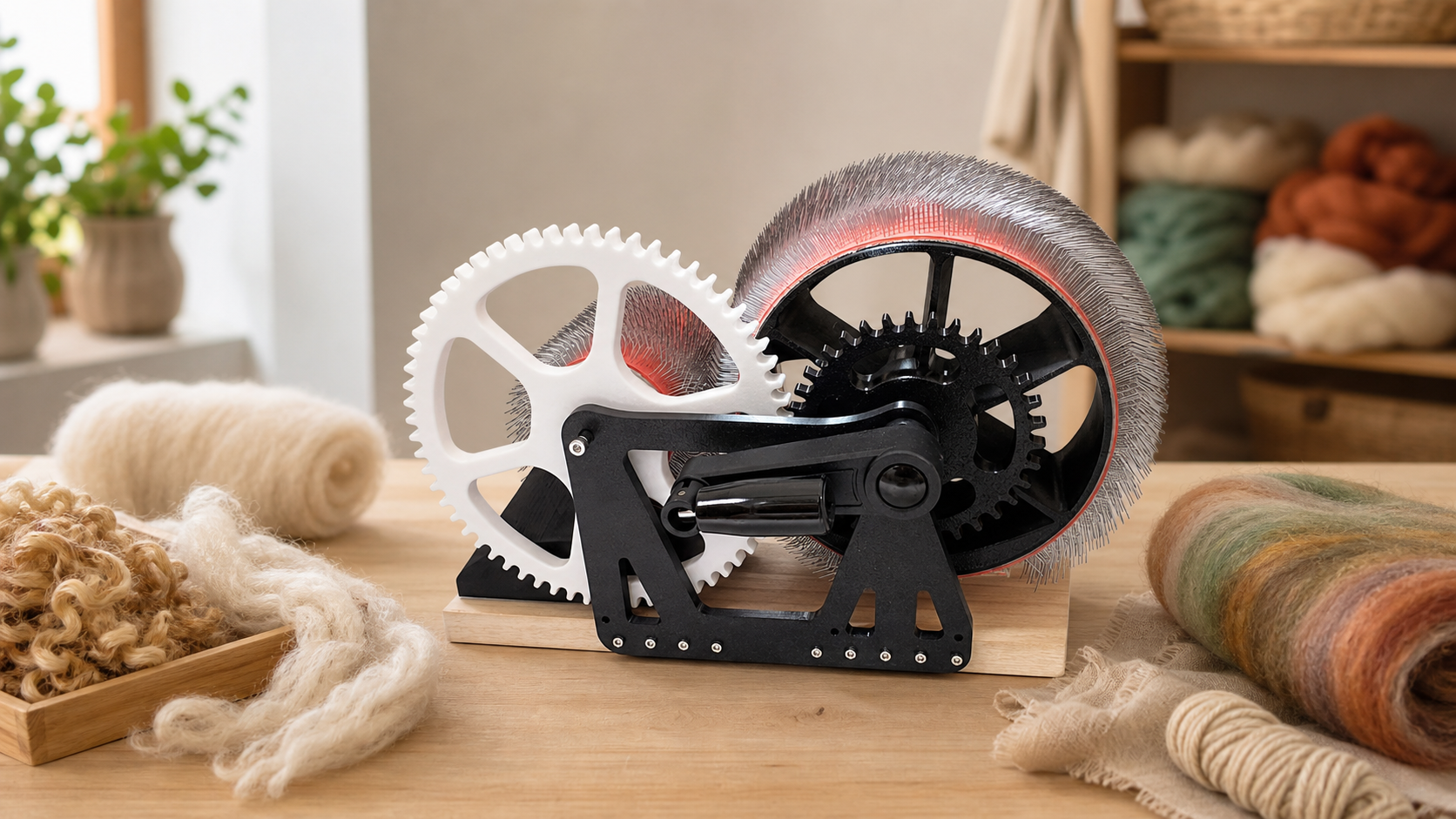
Review the DrumCarder Studio Fiber Carder if you want a focused setup for small comparison batts. Start from the DrumCarder homepage, use the contact page for current questions, and check the shipping policy and refund and returns policy before a time-sensitive study purchase.
Make Breed Study Batts With A Repeatable Workflow
Use DrumCarder to prepare small labeled comparison batts for wool breed study, spinning samples, and felting tests.
FAQ
How much fiber do I need for a breed study batt?
Use a small consistent amount for each sample. Enough to card, remove, and test is plenty. Weighing helps when comparison matters.
Should I blend breeds during a breed study?
Start with single-breed samples first. Once you know each fiber alone, blends become more meaningful because you understand each contribution.
How many carding passes should each breed get?
Use the same number of passes unless your study question is about pass count. If a breed needs a different approach, record that clearly.
What should I record after spinning a sample?
Record drafting feel, yarn texture, loft, strength impression, next change, and the project where you would use that breed again.
How should breed study samples be stored?
Keep the batt, yarn, swatch, and notes together in a labeled envelope, bag, or card system so comparisons remain useful later.