Blog
Drum Carder vs Sending Fiber to a Mini Mill
Jul
Quick answer: drum carder vs sending fiber mini mill comes down to control, volume, time, cost, and how much of the preparation you want to do yourself. A mini mill can help when you have a large batch or need specialized processing. A drum carder makes sense when you want hands-on sampling, color control, small-batch flexibility, and repeatable studio practice.
Both options can be useful. The mistake is treating them as the same service in different sizes. A drum carder is a studio tool you use directly. A mini mill is a processing choice where you hand over fiber and wait for a finished preparation. The right path depends on the fiber, the project, and your appetite for involvement.
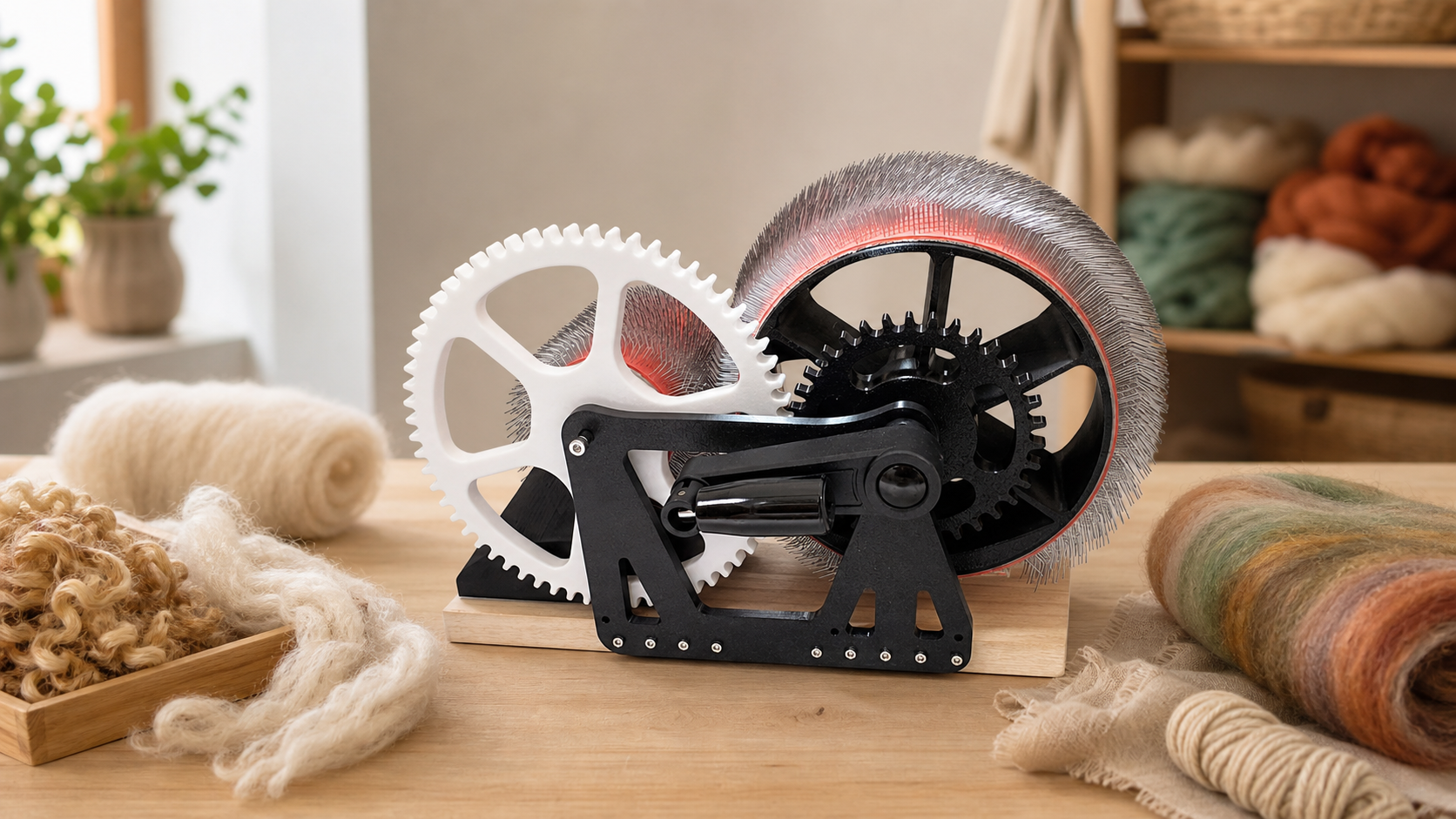
For a compact home-studio tool, review the DrumCarder Studio Fiber Carder. You can also begin at DrumCarder.com to move through product and policy pages.
Use A Drum Carder When You Want Control
A drum carder keeps decisions in your hands. You choose color order, pass count, accent placement, blend ratio, and when to stop. That control is especially helpful for art batts, natural color blending, small dye batches, longwool texture, and quick tests before a larger project.
Hands-on control also builds skill. You learn how your fiber behaves by seeing what happens immediately. If a batt becomes too dense or a color turns dull, you can adjust the next sample the same afternoon.
Use A Mini Mill When Volume Or Process Demands It
A mini mill may be the better choice for larger fleece quantities, preparation steps you do not want to do at home, or a more standardized output. If you have many pounds of fiber and limited time, professional processing can be practical. It can also help when the fiber needs equipment beyond a small studio setup.
The tradeoff is that you give up some immediate control. Turnaround time, preparation requirements, minimums, and final texture can vary by mill. You need to understand instructions before sending fiber away.
Compare Cost By Project, Not By Tool Alone
A drum carder is a tool purchase. A mini mill is a processing expense per batch. If you prepare fiber regularly in small amounts, a carder can become part of your routine. If you only have one large fleece and no desire to process future batches, mill service may be more logical.
Also include shipping, waiting time, and risk of results not matching your preferred texture. With a drum carder, the cost includes your labor. With a mill, the cost includes convenience and distance from the process. Neither is automatically cheaper for every maker.
Think About Sampling Before Sending Fiber Away
Even if you plan to use a mini mill, a drum carder can help you test color, fiber condition, or blend ideas first. A small sample may reveal that a fleece is too weak, a color blend needs adjustment, or a texture should be preserved differently.
Before making any purchase, check practical terms. Review the shipping policy, refund and returns policy, and contact page if you have questions about the product path.
A hybrid routine can work well. Keep unusual color blends, lock placement, and small dye batches in the studio, then reserve outside processing for fiber that truly benefits from scale. This keeps creative decisions close while letting larger or more repetitive jobs move through a different path.
Think about timing too. Studio carding can happen when inspiration is fresh. Mill processing may require scheduling, packing, waiting, and accepting the finished preparation later. That delay can be worthwhile for volume, but it may not suit a project that depends on quick testing and adjustment.
There is also an emotional difference. Some makers enjoy knowing every step their fiber has taken. Others are relieved to send a large batch out and receive it ready for the next stage. Neither preference is more authentic. The better choice is the one that keeps the project moving.
Fiber risk should be considered too. If the fiber is rare, sentimental, or from a special animal, you may want to sample at home before committing the full amount to any larger process.
For mixed fleeces, sampling can also separate decisions. You may discover that one section is worth careful hand-controlled blending while another section is better sent out for volume. Treating the entire fleece as one decision can hide useful differences.
FAQ
Is a drum carder a replacement for a mini mill?
Not completely. A drum carder is excellent for small-batch preparation, sampling, and hands-on blending. A mini mill can handle larger quantities and specialized processing steps.
When should I send fiber to a mini mill?
Consider a mill when the batch is large, the prep is beyond your space or equipment, or you want a standardized result without doing the whole process yourself.
When should I keep fiber in the studio?
Keep it in the studio when color placement, texture, small samples, or immediate adjustment matter. A carder lets you test and change direction quickly.
Can I use both options?
Yes. Many makers sample at home and use larger processing options only when needed. The combination can reduce guesswork before committing a big batch.
What should beginners choose?
Beginners with small batches may learn more from a drum carder. Beginners with a large fleece and no prep space may prefer professional processing first.
A Clear Decision Rule
Choose a drum carder when you want learning, control, small batches, and flexible blending. Choose a mini mill when volume, time savings, or specialized processing matter more. If you are uncertain, start with a small carded sample. The sample will tell you whether you want to stay hands-on or send the larger batch out.
Keep Small-Batch Prep In Your Studio
Use the DrumCarder Studio Fiber Carder for sampling, blending, and hands-on fiber preparation before larger processing decisions.