
Blog
Manual vs Electric Drum Carder for Home Makers
Jul
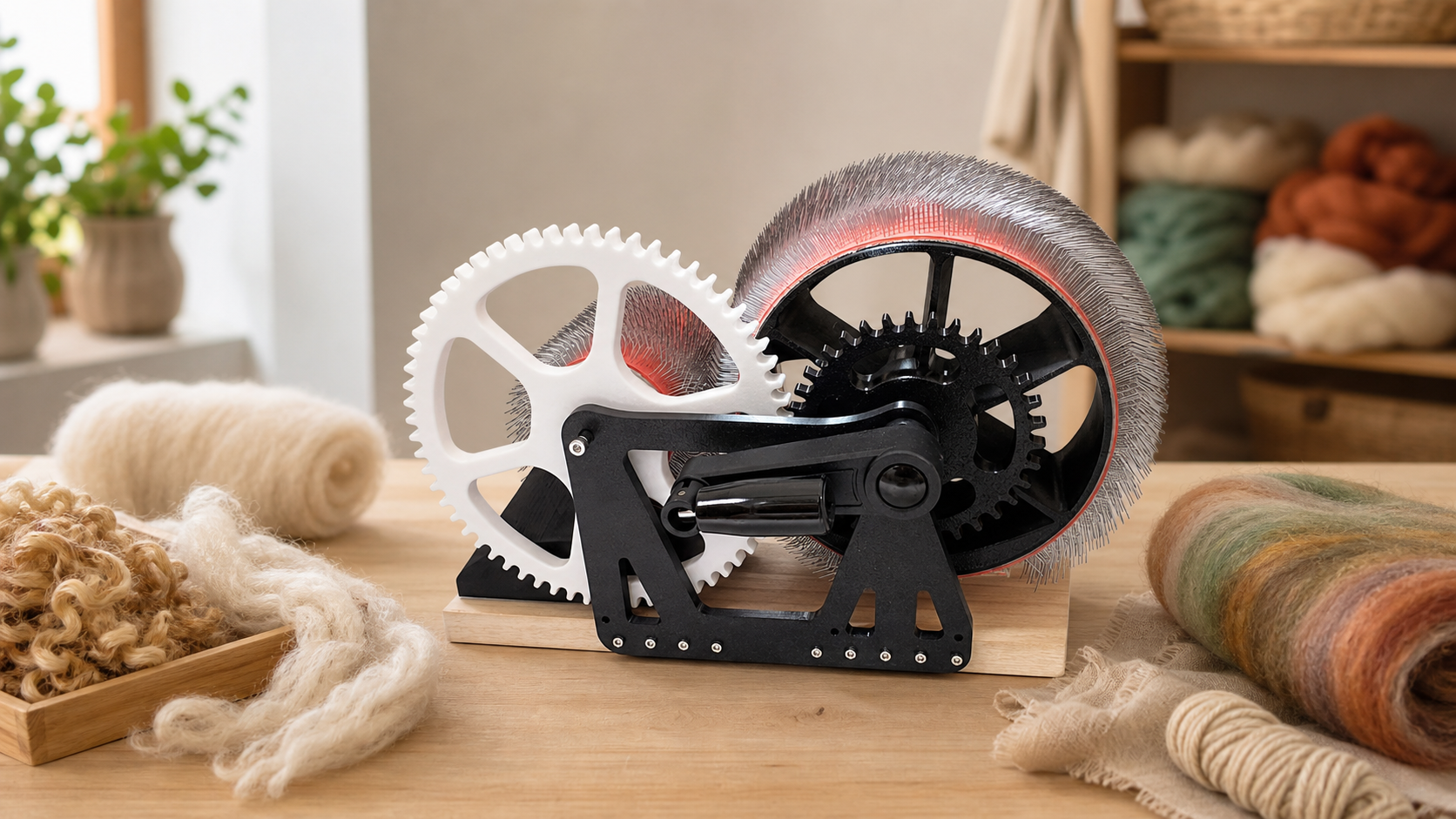
Quick answer: manual vs electric drum carder home makers should be decided by control, noise, batch size, comfort, safety, budget, and how often you prepare fiber. Manual carders suit many home studios because they are quieter, simpler, and easier to pace. Electric carders may help larger-volume work, but they add speed, noise, and safety considerations.
Home makers often imagine electric equipment as the automatic upgrade. Sometimes it is. But drum carding is not only about moving fiber faster. It is about feeding the right amount, watching transfer, stopping before over-blending, and learning how each fiber behaves. For many small-batch users, hand control is a benefit rather than a limitation.
For a compact manual product reference, see the DrumCarder Studio Fiber Carder. The DrumCarder home page can also help you move between product, contact, and policy information.
Manual Carders Give You Pace Control
A manual drum carder lets you feel resistance through the handle. That feedback helps you notice when you are feeding too much fiber, when a lock is catching, or when the batt is becoming dense. Beginners often benefit from this slower conversation with the tool.
Manual control is also useful for textured art batts, natural color blends, longwool locks, and delicate fibers. You can pause instantly, reposition fiber, or stop after one pass. The pace supports observation, which is often more important than speed.
Electric Carders Favor Volume
Electric carders can make sense when you prepare larger amounts of fiber often and already understand your process. They may reduce hand turning and speed up repeat work. The tradeoff is that speed can magnify mistakes. If you feed too heavily or choose the wrong pass count, an electric carder can spread that decision through the batt quickly.
Electric tools also bring noise, power access, moving-part awareness, and a different safety mindset. That does not make them wrong. It means they should match a real volume need, not just the idea of an upgrade.
Consider Space, Sound, And Storage
Home studios are often shared spaces. A manual carder can be easier to use at a table, store between projects, and operate without much noise. If you work in an apartment, a spare room, or a multi-use craft space, those details matter.
Electric setups may need more dedicated space and a consistent power location. They may also feel less welcome in a shared living area. Before choosing, think about where the carder will live on an ordinary day, not just where it will sit for a product photo.
Match The Tool To Your Fiber Routine
If you make occasional batts, test blends, prepare fiber for personal spinning, or build small art batt batches, a manual carder may be enough. If you process many pounds, sell batts frequently, or repeat large production runs, electric carding may be worth comparing.
Policy clarity still matters for either choice. Before buying, review the shipping policy, refund and returns policy, and contact page so you understand the support path.
A useful test is to describe your normal month. Count how many times you prepare fiber, how much fiber you handle per session, and whether you value quiet control or faster throughput. If the answer is a handful of small creative sessions, manual often fits beautifully. If the answer is steady high-volume prep, electric options deserve a closer look.
Do not ignore learning style. Some makers enjoy feeling the fiber change as the handle turns. Others prefer a powered rhythm once the process is already familiar. The best choice is the one that supports attention rather than making you rush through important decisions.
Maintenance expectations are different too. A manual carder is usually simpler to understand because the movement is visible and direct. Electric tools add power components and a stronger need to keep hands, fiber, and loose clothing controlled. If you want the fewest moving complications in a home studio, manual deserves real consideration.
Noise can be the deciding detail in a shared home. A quiet manual session may fit around family, neighbors, or evening craft time in a way a powered tool does not, especially indoors.
Also think about interruption. If you often pause to check dinner, answer a question, or move supplies, manual control can be reassuring because the session stops when your hand stops. That rhythm suits many home makers better than a tool that wants a dedicated production block.
FAQ
Is an electric drum carder better than manual?
Not always. Electric carders can help with volume, but manual carders often give better pace control for learning, sampling, and textured work.
Will manual carding take too long?
It depends on your batch size. For small studio batts and personal projects, manual carding is often reasonable. For heavy repeated processing, compare electric options.
Is a manual carder safer for beginners?
Manual carders still require care, but the slower pace can make learning easier. You can stop turning immediately and adjust fiber before a small problem becomes bigger.
Can I make art batts on an electric carder?
Yes, but you need careful feeding and pass control. Speed can flatten texture if you are not watching closely. Manual tools make it easier to pause and place accents.
Which is better for a shared home space?
A manual carder is often quieter, simpler to store, and easier to use without dedicating a permanent power station. That can matter in small homes and apartments.
A Practical Choice For Home Makers
Choose manual when you value quiet use, close control, compact storage, and small-batch learning. Compare electric when your volume is high enough that speed will truly change your routine. If your goal is better batts rather than simply faster turning, start by choosing the tool that lets you observe fiber clearly.
Explore A Manual Studio Carder
Review the DrumCarder Studio Fiber Carder for compact, controlled, small-batch fiber preparation in a home studio.