
Blog
How Big Should a Drum Carder Be for Home Fiber Prep
Jul
Quick answer: a home fiber prep drum carder should be big enough for your normal batt size, but small enough to stay on the bench without becoming a storage problem. For most home spinners and felters, the right size is the one that supports repeatable small batches, easy feeding, clean batt removal, and comfortable cleanup after each session.
Size questions often sound technical, but they are really about rhythm. A carder that is too small for your real work can make every session feel slow. A carder that is larger than your space can sit unused because setting it up feels like a chore. Before buying, picture the whole process: opening fiber, feeding it lightly, turning the handle, removing the batt, cleaning the cloth, and putting the tool away.
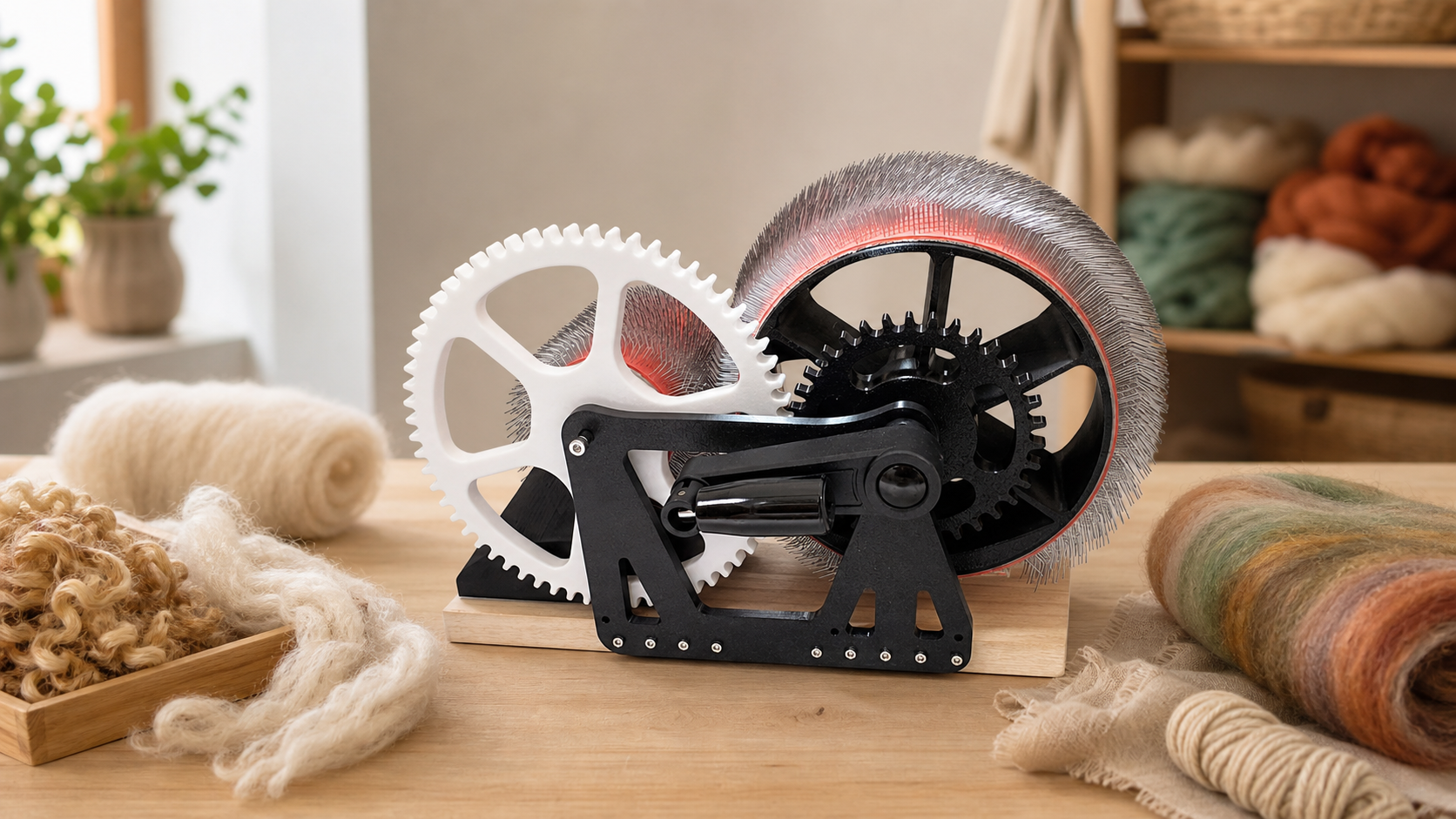
If you are choosing for a compact studio, start with the DrumCarder home page and compare your space against the Studio Drum Carder. The best size is not a trophy measurement. It is a tool you will actually use.
Start With Your Normal Batch
Think about the amount of fiber you prepare in a normal sitting, not the largest batch you can imagine. A person making sample batts, needle felting colors, or small spinning blends may not need a wide production setup. A person preparing fiber for shop updates, classes, or repeated art batts may want more working width and a smoother rhythm between batts.
Write down three recent sessions. How much fiber did you actually card, tease, or blend? How many colors were involved? Did you need one batt, several related batts, or a repeatable blend? Those answers matter more than general advice from another maker whose studio, hands, and project scale are different.
Measure The Working Area, Not Just The Footprint
The carder footprint is only the beginning. You also need elbow room, space for loose fiber, room to turn the handle, and a clean area where the batt can come off without catching on tools. If the carder will share space with a sewing machine, dye pans, packaging supplies, or a laptop, treat the surrounding area as part of the size decision.
A helpful test is to place a towel or sheet of paper on the bench in the rough size of the tool, then act out the session. Reach for fiber. Pretend to feed. Pretend to remove a batt. If the motion feels cramped before the tool arrives, a larger carder may create daily friction even if it looks appealing online.
Choose Capacity For Repetition
Capacity is useful only when it improves the way you work. A larger batt may save time if you often prepare the same blend in volume. For home fiber prep, though, many makers value repeatability more than maximum size. Several smaller batts can be easier to control, label, store, and test than one oversized batt that has uneven edges or muddled color.
For spinning, smaller repeatable batts can help you keep yarn consistent. For felting, smaller color batches let you pull exactly what the project needs. For fiber sellers, a clear recipe and repeatable size can make listings easier to photograph and pack. Bigger is useful when it serves one of those jobs.
Think About Storage Before Checkout
A home tool has to live somewhere between sessions. If you can leave the carder out, size is mainly about bench comfort. If you must store it, consider weight, shelf depth, carrying path, and whether you will avoid using it because setup feels heavy. A slightly smaller tool that comes out often can beat a larger tool that stays boxed.
Also think about fiber dust and household traffic. A carder stored in a shared room may need a cover. A tool near pets, kids, or cooking spaces needs more careful placement. These details are ordinary, but they decide whether the carder becomes part of the routine.
Use A Size Decision Checklist
Use a practical checklist before choosing. Can the carder handle your normal batch without constant stopping? Can you feed lightly without crowding the table? Can you remove the batt cleanly? Can you clean the cloth without moving the tool to another room? Can you store it safely? If the answer is yes, the size is probably realistic for home use.
When reviewing the Studio Drum Carder product page, compare visible layout and product details with your checklist. If you have a question about fit, order timing, or setup expectations, use the contact page before ordering. It is better to ask a boring size question early than to fight the tool later.
Match Size To The Way You Learn
Beginners often learn faster with a manageable tool because mistakes are smaller. Light feeding, edge control, pass count, and batt removal all take practice. A home carder should invite sampling, not pressure you to fill a wide drum before you understand how your fiber behaves.
If your work grows later, your habits will be clearer. You will know whether you need more width, more production speed, or simply better organization. For now, choose the size that makes your next twenty sessions easier.
Compare A Home-Friendly Drum Carder
Review the product page, support links, and store policies while measuring your real fiber prep space.
View the product: https://drumcarder.com/product/studio-drum-carder/
Before final purchase, check the shipping policy and refund and returns policy so the buying decision covers both tool fit and store terms.
FAQ
Is a bigger drum carder always better for home fiber prep?
No. Bigger can help with repeated volume, but it can also require more bench space, storage space, and cleanup effort. Home users should prioritize a size they will use often.
What should I measure before buying?
Measure the footprint, handle clearance, fiber staging area, batt removal area, and storage location. The working area matters more than the product footprint alone.
Can a small carder still make useful batts?
Yes. Smaller batts can be excellent for sampling, color testing, felting projects, and controlled spinning blends. They may also be easier to repeat and label.
When should I choose a larger carder?
Choose a larger option when you regularly prepare bigger batches and have enough permanent or easy-access space to use the tool without avoiding setup.
How do I know if a carder fits my routine?
Act out the full session on your bench before buying. If feeding, turning, removing, and cleaning all feel realistic, the size is more likely to fit.